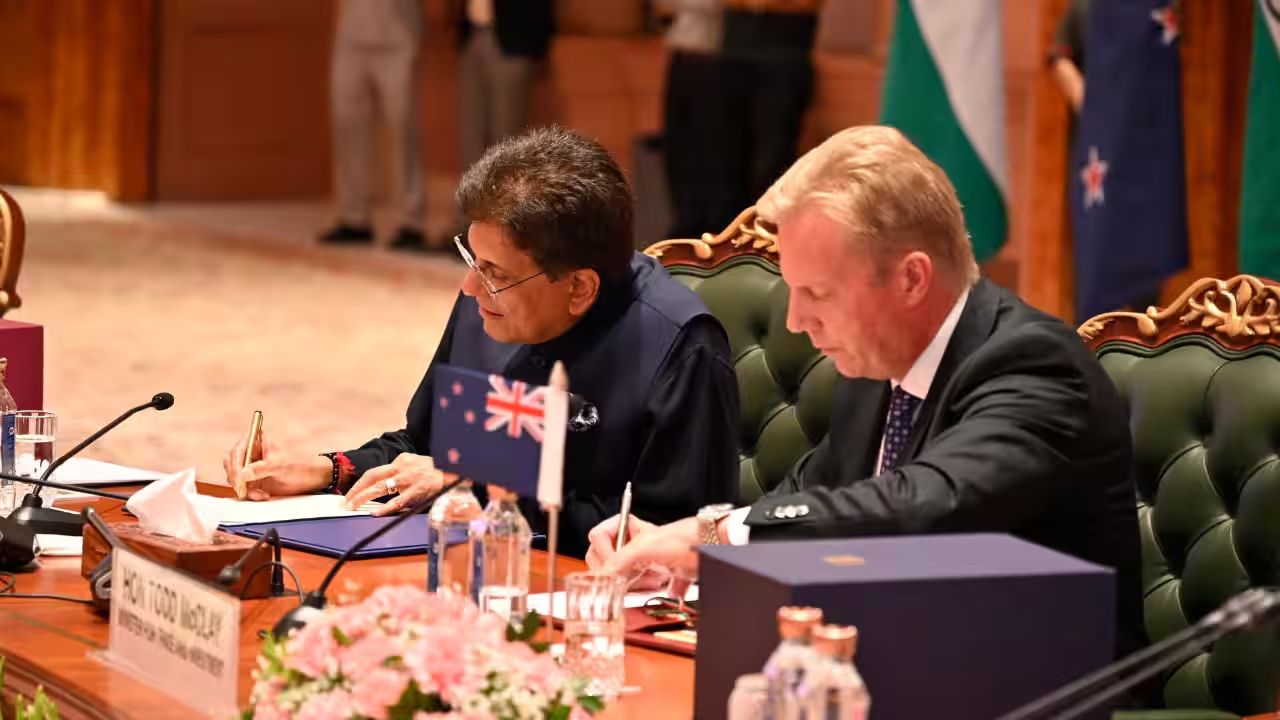
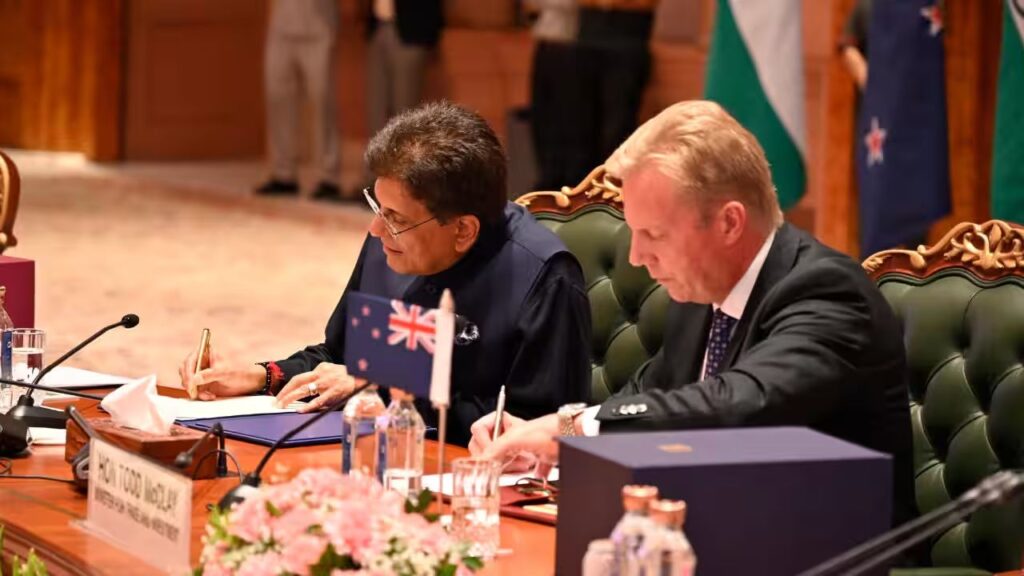

India has welcomed the passage of legislation by the Parliament of New Zealand on September 16, 2026, to implement the India-New Zealand Free Trade Agreement (FTA), describing the development as an important milestone in strengthening bilateral economic relations. The agreement was signed in New Delhi on April 27, 2026, and the latest legislative approval brings both countries closer to putting the pact into effect.
The passage of the legislation reflects the commitment of India and New Zealand to expand their economic partnership and create greater opportunities for businesses, professionals, students and communities in both countries. The two nations are now working to complete their respective domestic procedures to enable the agreement to enter into force at the earliest.
Momentum from Prime Minister Modi’s New Zealand Visit
The FTA received further momentum during Prime Minister Narendra Modi’s visit to New Zealand in July 2026. It was the first visit by an Indian Prime Minister to the country in four decades and provided an opportunity for both sides to reinforce their longstanding bilateral relationship.
During the visit, the Prime Ministers of India and New Zealand reiterated their intention to deepen economic cooperation and underlined the importance of implementing the trade agreement promptly. The discussions highlighted the potential of the FTA to broaden commercial engagement and support stronger investment and business links between the two countries.
India and New Zealand have traditionally maintained close relations, supported by substantial people-to-people connections. Bilateral cooperation has expanded over the years across several sectors, including trade and investment, agriculture, education, sports, technology and other areas.
Duty-Free Access for Indian Exports
A major feature of the agreement is the provision of duty-free access for 100 per cent of Indian exports to New Zealand from the date the FTA comes into force. The arrangement is expected to create additional market opportunities for Indian exporters across a wide range of sectors.
Indian industries that could benefit include textiles and apparel, leather and footwear, engineering products, pharmaceuticals, agriculture and processed food. Improved market access is expected to support greater trade engagement and provide exporters with opportunities to expand their presence in New Zealand.
The agreement also provides enhanced and preferential access to the Indian market for several New Zealand products. These include wood, wool, sheep meat and raw hides of leather. The provisions are intended to facilitate increased two-way trade while establishing a structured framework for closer economic cooperation.
Opportunities in Services, Investment and Mobility
Beyond merchandise trade, the India-New Zealand FTA contains provisions aimed at expanding cooperation in services and investment. The agreement also introduces opportunities relating to professional, student and youth mobility.
For Indian professionals and students, the pact provides enhanced pathways that can facilitate greater engagement with New Zealand. Such provisions are expected to contribute to stronger educational, professional and people-to-people connections between the two countries.
The agreement also includes arrangements to facilitate USD 20 billion in investment into India. This investment component is expected to provide an additional foundation for expanding commercial ties and encouraging greater participation by businesses and investors.
Wider Sectoral Cooperation
The FTA extends beyond tariff concessions and includes provisions for cooperation in areas of mutual interest. These include agricultural productivity, pharmaceuticals and medical devices, traditional medicine and AYUSH, technology and trade facilitation.
Cooperation in these fields is expected to complement the broader objectives of the agreement by supporting knowledge exchange, business collaboration and improved trade processes.
With New Zealand’s Parliament having approved the necessary legislation, India and New Zealand are continuing their domestic processes for implementation. Both sides are also working together to facilitate the early entry into force of the FTA.
The agreement marks a significant development in India-New Zealand economic relations and establishes a framework for expanding trade, investment, services and mobility ties. Its implementation is expected to provide a broader platform for businesses and communities in both countries while adding momentum to the longstanding bilateral partnership.
Also Read: India to Continue as Official Partner Country at Gulfood 2027

Author: Shivam
Shivam Dwivedi is a senior journalist with extensive experience in research-driven journalism, policy communication, and multi-platform storytelling. His areas of interest include international relations, defence, science & technology, education, urban development, agriculture, spirituality, and environmental sustainability. His work focuses on in-depth analysis, public discourse, and impactful narratives across governance and development sectors, with a strong commitment to the Sustainable Development Goals (SDGs). Contact: [email protected]