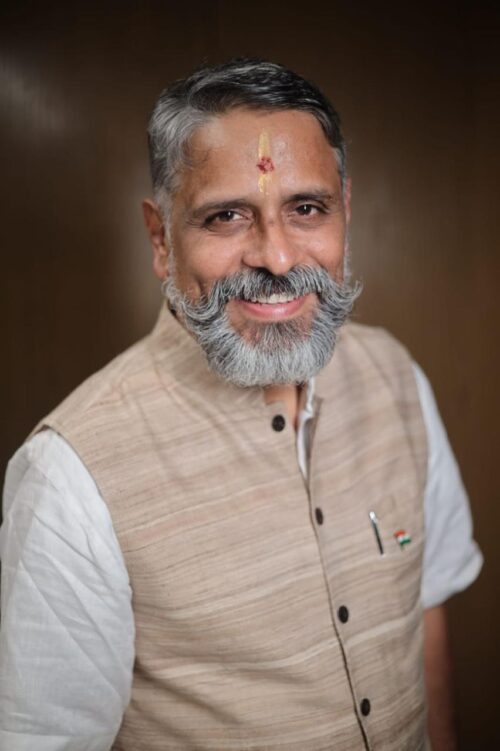
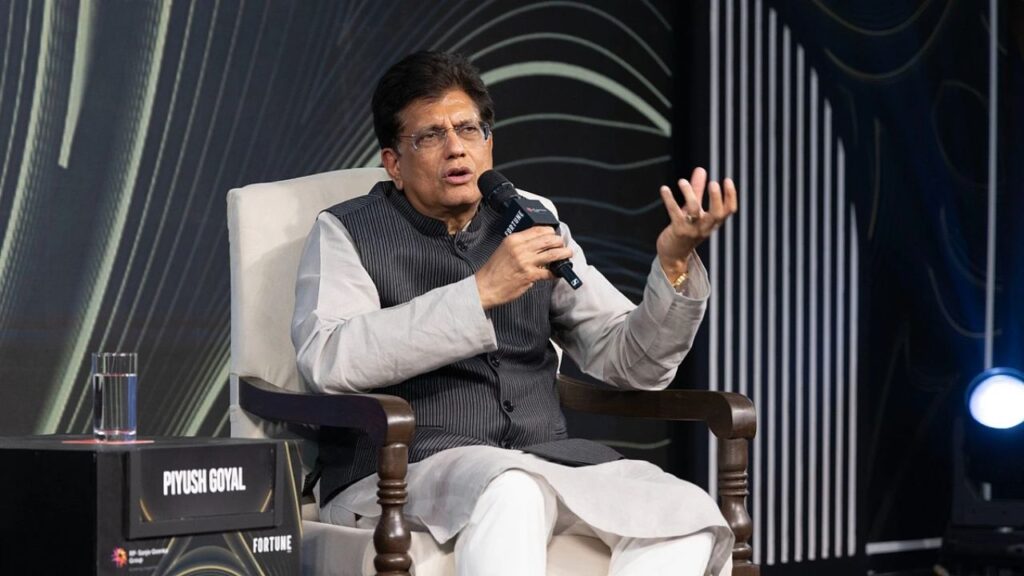

Union Commerce and Industry Minister Piyush Goyal has said that India’s ambition of becoming a developed nation by 2047 will be driven by innovation, advanced technologies, entrepreneurship and globally competitive manufacturing backed by world-class quality standards.
Speaking at the 22nd J.R.D. Tata Memorial Lecture held in New Delhi to mark the 122nd birth anniversary of Bharat Ratna J.R.D. Tata, the Minister outlined the government’s vision for building a future-ready economy centred on research, deep technology, startups, MSMEs and skill development.
Innovation at the Core of India’s Growth Story
Addressing the gathering, Goyal stressed that India’s future economic progress would rely on innovation-led growth rather than traditional competitive advantages. He said emerging technologies such as artificial intelligence, semiconductors, quantum computing, biotechnology, robotics and advanced materials will shape the next phase of industrial development and significantly strengthen the country’s manufacturing capabilities.
He noted that the government is creating an ecosystem that supports startups, promotes micro, small and medium enterprises (MSMEs), encourages deep-tech innovation and expands skill development initiatives. According to the Minister, while the government will continue improving ease of doing business, industries must take greater responsibility for developing a skilled workforce.
Major Push for Research and Deep Technology
Highlighting government initiatives, Goyal said a ₹1 lakh crore Research, Development and Innovation Fund has been established to provide long-term, affordable risk capital for emerging technologies and innovative enterprises.
He also pointed to the progress made under the IndiaAI Mission, stating that nearly 38,000 Graphics Processing Units (GPUs) have already been onboarded to provide affordable computing resources to startups and researchers. He added that the computing infrastructure will continue to expand to support India’s growing artificial intelligence ecosystem.
On semiconductor manufacturing, the Minister said the entire allocation under the first phase of the India Semiconductor Mission has already attracted commitments. Building on that success, the government has launched the second Semiconductor Mission with an allocation of nearly US$12–13 billion, inviting industry players to invest and participate in strengthening India’s semiconductor ecosystem.
Manufacturing Must Compete Globally
Goyal emphasized that innovation and manufacturing should advance together. He said future manufacturing will depend on automation, smarter production systems, superior product design, attractive packaging, strong branding and uncompromising quality standards.
He observed that India’s large domestic market offers manufacturers economies of scale, but urged businesses to increasingly target overseas markets by leveraging the country’s expanding network of Free Trade Agreements (FTAs).
FTAs Creating New Export Opportunities
The Minister highlighted India’s evolving trade strategy, stating that the country has concluded nine Free Trade Agreements covering 38 developed economies with a combined GDP of nearly US$60 trillion.
He contrasted these agreements with those signed before 2014, noting that the newer FTAs provide stronger market access and complement India’s industrial strengths. He said Indian businesses now have unprecedented opportunities to expand globally by making full use of these trade partnerships.
Resilient Economy Despite Global Challenges
Referring to India’s economic performance, Goyal said the country recorded 7.7% economic growth last year and 7.8% growth in the latest quarter, maintaining its position as the world’s fastest-growing major economy despite geopolitical uncertainties and global supply disruptions.
He added that both merchandise and services exports continued to rise during 2025–26, even amid disruptions in global trade, energy supply concerns and higher tariffs imposed by the United States. Merchandise exports, he said, have grown by 15% in the current financial year from April 1 onwards, reflecting the resilience of the Indian economy.
The Minister also noted that institutions such as the OECD, World Bank and IMF continue to project India as the fastest-growing large economy.
Startups Need Early-Stage Investment
Calling India’s startup ecosystem one of the strongest globally, Goyal said it is increasingly shifting toward deep technology.
Recalling the Bharat Innovates event held in Nice, France, where 120 Indian deep-tech startups showcased their innovations before global investors and technology leaders, he said the experience demonstrated the high quality of Indian innovation.
However, he expressed concern that many promising Indian startups are eventually acquired by overseas companies because domestic investors often hesitate to invest during the early stages. He urged Indian investors to back startups from the beginning and encouraged industry leaders to adopt innovative products and technologies developed by Indian entrepreneurs to help them achieve commercial success.
Excellence and Quality Must Define ‘Made in India’
Concluding his address, Goyal urged Indian industry to make the “Made in India” brand synonymous with quality, reliability and global excellence.
He called upon businesses to reinvest profits into research and development, innovation, education and skill development while taking advantage of India’s FTAs to expand internationally. Stressing that a nation’s progress depends not only on sound policies but also on the mindset of its people, he urged industry to pursue excellence in every sphere and contribute actively to India’s journey toward becoming a US$13 trillion economy by 2047.