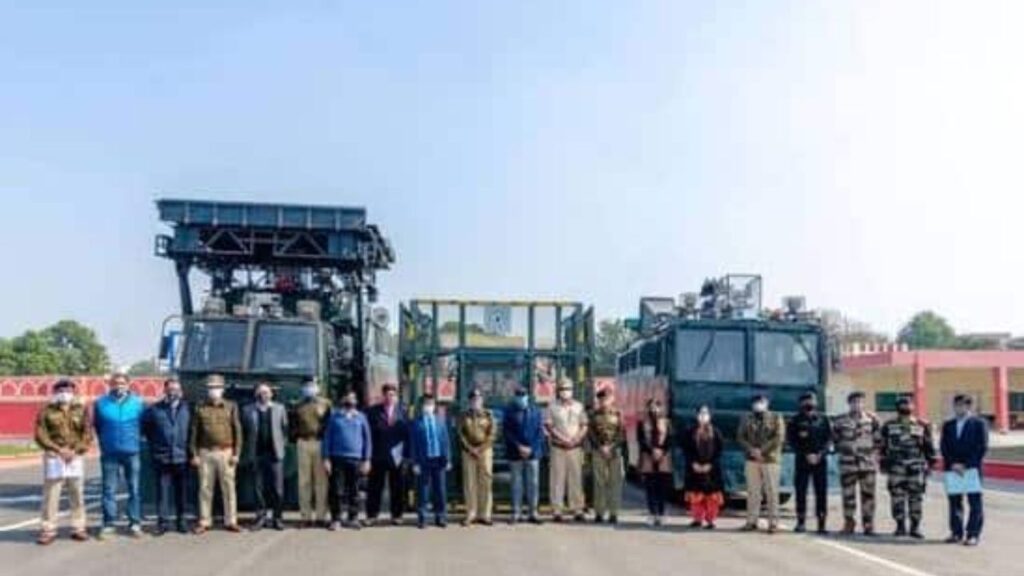

The Council of Scientific and Industrial Research–Central Road Research Institute (CSIR–CRRI), New Delhi, has taken a major step towards improving urban road infrastructure with the launch of an Indigenous Network Survey Vehicle (NSV). The newly acquired advanced vehicle was flagged off by Dr. Ch. Ravi Sekhar, Director, CSIR–CRRI, marking the beginning of comprehensive field surveys under the project titled “Implementation of the Standard Framework for Paving and Greening of Urban Roads in Delhi NCR.”
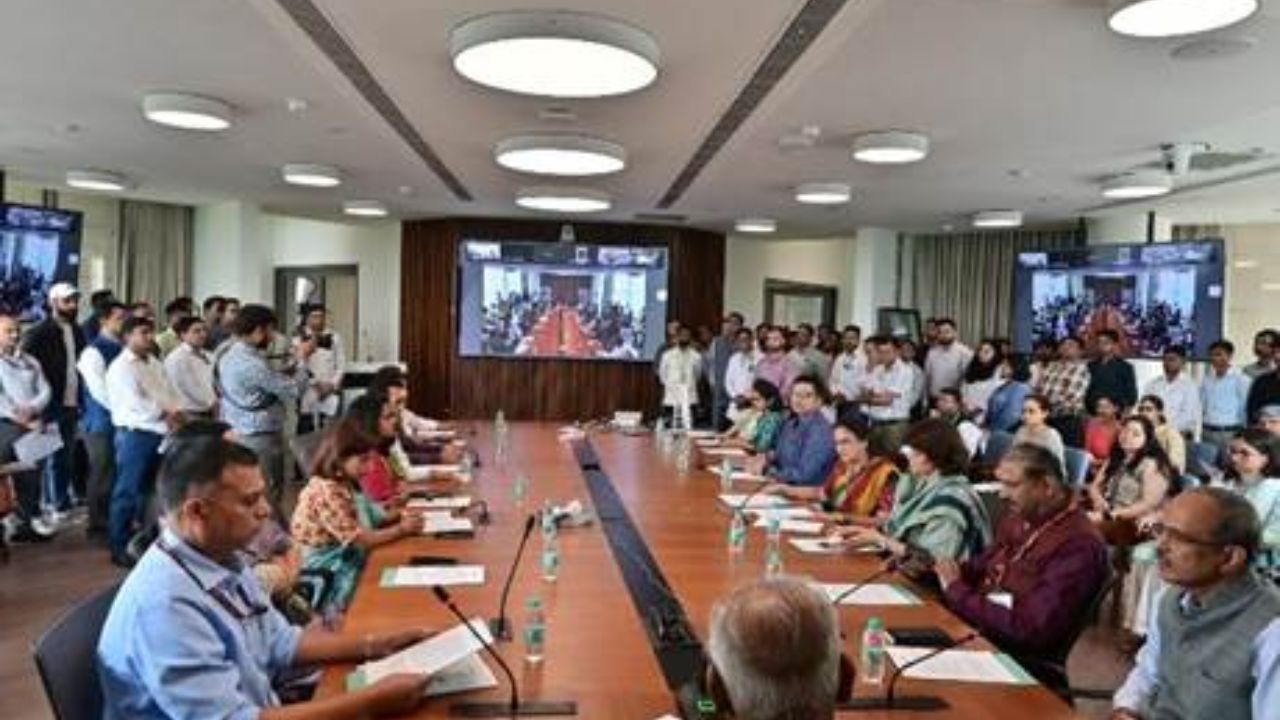
The flag-off ceremony was organised at the CSIR–CRRI Main Building and witnessed the participation of Dr. Ch. Ravi Sekhar, Director, CSIR–CRRI; Dr. Thallada Bhaskar, Director, CSIR–Advanced Materials and Processes Research Institute (CSIR-AMPRI), Bhopal; along with heads of departments, senior scientists, engineers, officials and staff members of the institute.
The newly deployed Network Survey Vehicle will conduct detailed assessments of road conditions across Delhi NCR. The vehicle is designed to generate accurate, scientific and data-based information that will assist authorities in effective road asset management, maintenance planning and the development of sustainable urban transport infrastructure.
Advancing Smart and Sustainable Road Infrastructure
Speaking during the event, Dr. Ch. Ravi Sekhar highlighted that the deployment of the indigenous NSV reflects CSIR–CRRI’s continued efforts towards developing innovative technologies for smarter and environmentally sustainable road systems.
He underlined the importance of scientific evaluation of existing road networks for designing durable pavements, enhancing mobility, reducing maintenance expenses and supporting responsible urban growth. According to him, technology-driven assessment tools can play a crucial role in transforming the way road infrastructure is planned and managed.
The field survey is a key part of the project being executed by CSIR–CRRI in partnership with the Public Works Department (PWD), Government of NCT of Delhi, under a Memorandum of Agreement (MoA). The initiative follows the framework established by the Commission for Air Quality Management (CAQM) to improve road infrastructure and control dust pollution in the National Capital Region.
Four Key Areas Under the Urban Road Improvement Project
The project is part of a broader initiative aimed at implementing the CAQM framework across NCR states. CSIR–CRRI, along with the School of Planning and Architecture (SPA), New Delhi, will undertake activities under four major work packages.
These include developing improved space standards and road cross-sections, reducing road dust through greening measures within road corridors, establishing Road Asset Management Systems (RAMS) for better maintenance practices, and encouraging the adoption of innovative construction technologies.
The initiative seeks to create a scientific foundation for improving road quality while addressing environmental challenges associated with urban transportation.
Advanced Technology for Accurate Road Assessment
The Indigenous Network Survey Vehicle is equipped with several modern technologies that enable fast and precise road condition monitoring. Its advanced features include high-speed laser profiling, ultra-high-definition imaging systems, GPS/GNSS-based positioning, automated pavement distress identification and artificial intelligence-enabled data analysis.
With these capabilities, the vehicle can carry out non-contact surveys of road surfaces while recording crucial parameters such as pavement roughness, surface damage, drainage conditions, shoulders and roadside assets. The automated system allows large stretches of roads to be assessed efficiently without causing major disruptions to traffic movement.
The collected data will help agencies identify priority areas for repair and maintenance, improve pavement design practices, strengthen drainage planning and enhance road safety measures.
Supporting Cleaner and Greener Urban Mobility
The project is expected to make a significant contribution towards reducing fugitive dust emissions and improving the overall quality of urban roads in Delhi NCR. By combining scientific assessment, digital technologies and sustainable planning approaches, the initiative aims to promote cleaner and more efficient mobility systems.
The launch of the Network Survey Vehicle reinforces CSIR–CRRI’s role in providing technology-based solutions for national infrastructure development. The commencement of field surveys marks an important milestone in the institute’s ongoing efforts to support sustainable, resilient and future-ready urban transportation networks.