
News Desk
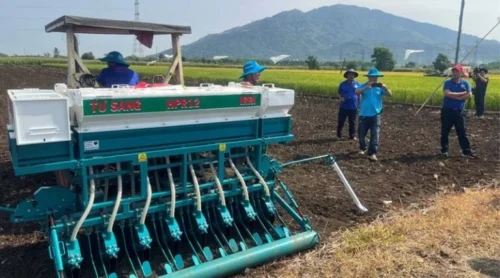
Vietnam, In a significant step toward sustainable agriculture, the International Rice Research Institute (IRRI), in collaboration with national stakeholders, has demonstrated promising results from a new rice sowing technology aimed at low-emission farming.
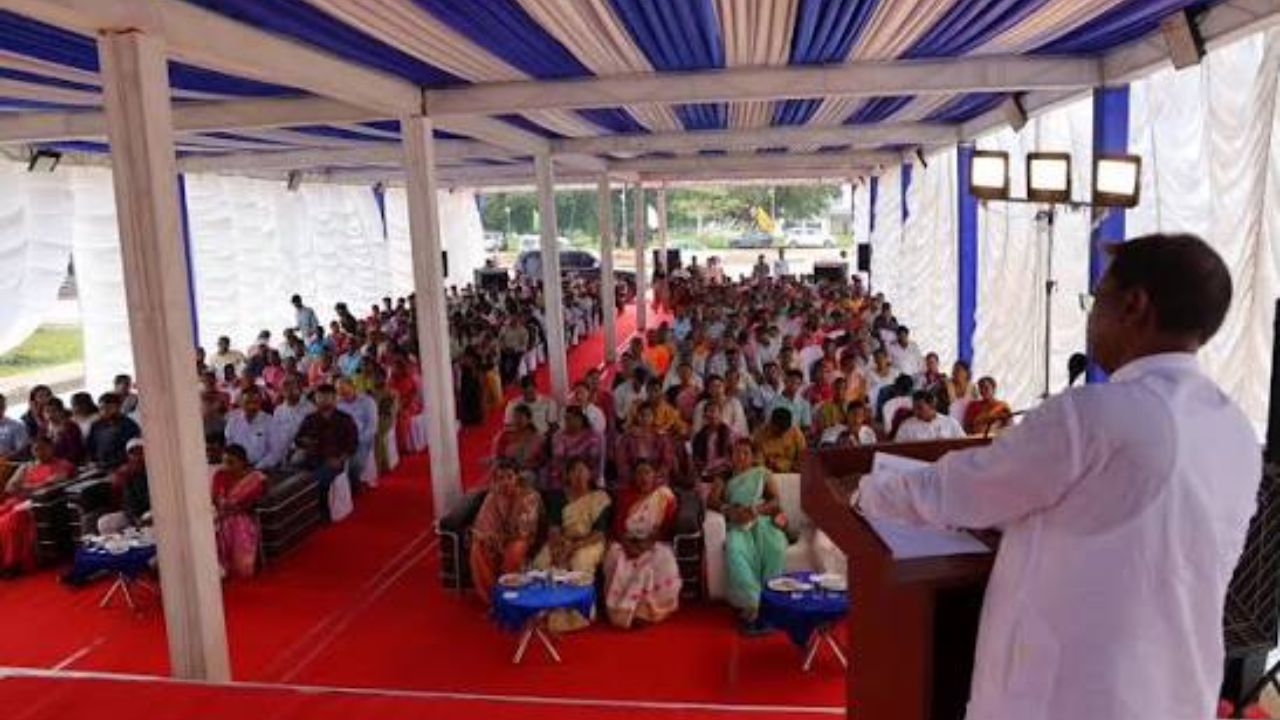
The innovation—mechanized dry direct seeding combined with fertilizer deep placement—was evaluated during a high-level workshop involving the National Agricultural Extension Center (NAEC), the Vietnam Rice Industry Association, and provincial agricultural authorities, along with farmers from the Xuan Tien Agricultural Cooperative.
Launched in December 2025 for the Winter–Spring cropping season, the pilot project addresses the growing need for sustainable and climate-resilient rice production systems. Early results indicate substantial technical, economic, and environmental benefits.
The technology has reduced seed usage by approximately 25% (around 20 kg per hectare) compared to conventional broadcasting methods. More importantly, improved seed placement and optimized row spacing have enhanced crop aeration and uniform plant growth, leading to better photosynthetic efficiency and reduced pest and disease incidence.
Speaking at the event, IRRI scientist Nguyen Van Hung highlighted that mechanized dry direct seeding is particularly effective in water-scarce regions. The method eliminates the need for field flooding during sowing, resulting in over 20% water savings. Additionally, it has the potential to reduce greenhouse gas emissions by up to 30% while increasing yields by up to 20%.
Farm-level results have also been encouraging. According to Tran Quang, the integration of this technology with high-quality ST25 rice varieties has significantly improved productivity. The cooperative reported yield increases of 15–20% along with reduced production costs, prompting more farmers to adopt the model in upcoming seasons.
Closing the workshop, Huynh Kim Dinh from NAEC emphasized that the results align with Vietnam’s national vision of green and low-emission agriculture. The center is now considering scaling up the model through its official programs in coordination with local authorities.
This development marks a major milestone in advancing low-emission rice farming in Vietnam and could serve as a replicable model for other rice-growing regions facing climate and resource challenges.