
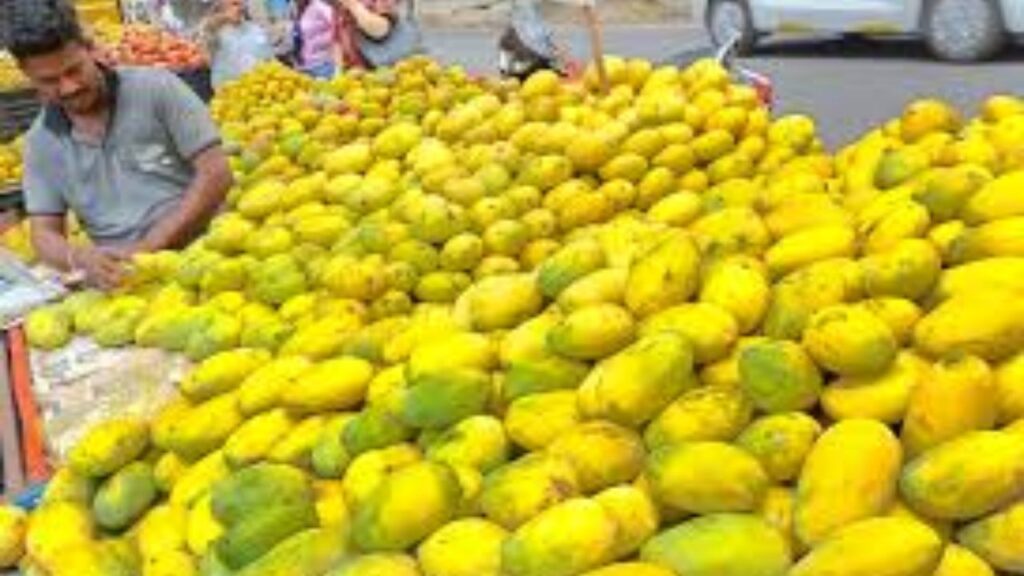

The Government of Nepal has officially clarified that it has not imposed any ban or suspension on the import of mangoes from India, putting an end to recent media reports that suggested otherwise. The clarification comes amid concerns among exporters, traders, and stakeholders regarding the status of Indian mango shipments to the neighboring country.
According to the Ministry of Agriculture and Farmers Welfare, reports claiming that Nepal had halted mango imports from India are factually incorrect and misleading. The ministry stated that the Government of Nepal, through its Plant Quarantine and Pesticide Management Center, which serves as the National Plant Protection Organization (NPPO) of Nepal, issued a clarification on June 10, 2026, confirming that imports of Indian mangoes remain fully permitted.
Nepal has emphasized that mango consignments from India can continue to enter the country provided they meet the prescribed phytosanitary requirements. Import permits and release orders are being issued regularly upon compliance with these regulations and submission of valid phytosanitary certificates issued by the Government of India.
The clarification is significant for India’s mango exporters, as Nepal remains an important market for the fruit. The Ministry of Agriculture and Farmers Welfare highlighted that exports have continued without disruption throughout the year. Since January 2026, India has exported a total of 149 mango consignments to Nepal, amounting to approximately 2,005 metric tonnes. In June alone, 18 consignments totaling 266 metric tonnes have already been shipped, demonstrating the uninterrupted flow of trade between the two countries.
Recent developments regarding import regulations had contributed to confusion in some sections of the media and trade community. Nepal has revised certain import conditions for mango shipments, including the introduction of a mandatory Hot Water Treatment (HWT) requirement. Such measures are generally aimed at preventing the introduction and spread of pests and diseases through agricultural imports and are commonly adopted as part of phytosanitary safeguards.
India has responded by continuing to facilitate exports in accordance with Nepal’s revised requirements. Exporters and relevant authorities have been working to ensure compliance with the updated standards so that trade can proceed smoothly.
At the same time, the Government of India has expressed concerns regarding the implementation of the new phytosanitary measures without prior consultation. Indian authorities have pointed out that changes affecting agricultural trade are ideally discussed in advance between trading partners to minimize disruptions and ensure transparency.
The issue is currently being pursued through appropriate bilateral channels. India is also engaging with Nepal in accordance with international frameworks, including the World Trade Organization’s Agreement on the Application of Sanitary and Phytosanitary Measures (WTO SPS Agreement) and the International Plant Protection Convention (IPPC). These mechanisms provide guidance for countries on implementing plant health measures while facilitating fair and predictable international trade.
The ministry reiterated that there has been no interruption in the export of Indian mangoes to Nepal and urged stakeholders to rely on official sources for accurate information. Traders, exporters, and members of the public have been advised to disregard unverified reports and rumors regarding alleged trade restrictions.
The clarification is expected to provide relief to mango growers and exporters, particularly during the peak marketing season. India is one of the world’s largest producers of mangoes, and neighboring countries such as Nepal represent valuable markets for Indian horticultural products.
With exports continuing steadily and both governments maintaining communication on regulatory issues, officials remain confident that mango trade between India and Nepal will continue without significant disruption. The episode also highlights the importance of accurate reporting and timely official communication in preventing unnecessary uncertainty in agricultural trade and cross-border commerce.
Also Read: Kerala Launches ‘Kathiru’ Farming Clubs in Schools to Nurture Future Agri Innovators