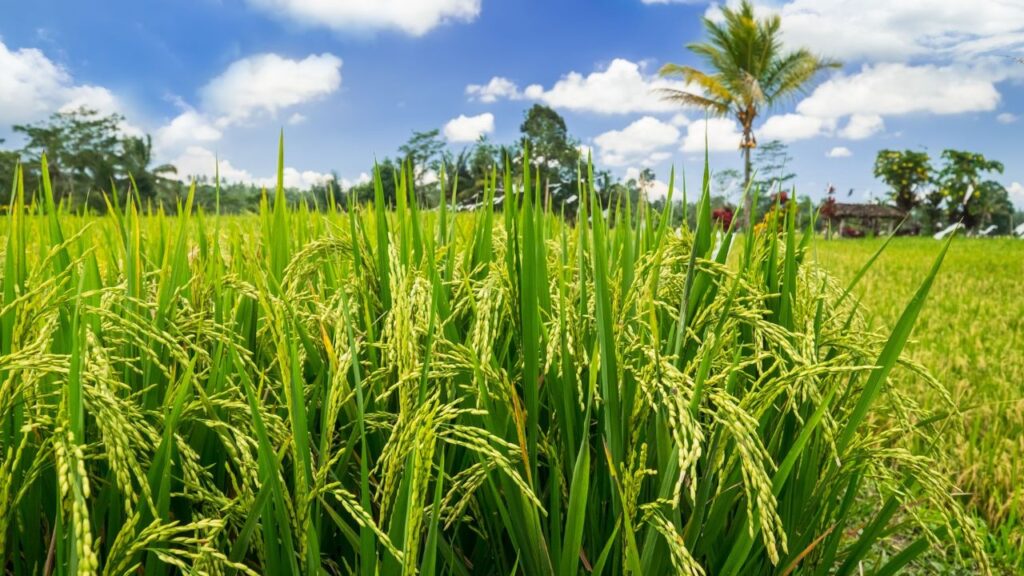

India has taken a significant step towards safeguarding its valuable agricultural biodiversity with the successful conservation of wild rice genetic resources in Assam. The National Rainfed Area Authority (NRAA), functioning under the Ministry of Agriculture & Farmers Welfare, has announced a major achievement through its project aimed at protecting Oryza rufipogon, one of the country’s most important wild rice species.
The initiative, titled “In-situ Conservation and Management of Wild Rice (Oryza rufipogon) in Sonitpur District of Assam,” has been under implementation since 2022. The project is being carried out by the ICAR–National Bureau of Plant Genetic Resources (ICAR-NBPGR), New Delhi, in collaboration with the Assam State Biodiversity Board. It seeks to conserve wild rice in its natural habitat while documenting its unique genetic traits for future agricultural use.
Biodiversity Heritage Site Recognition
One of the project’s most significant achievements is the official recognition of the Borjuli site in Assam’s Sonitpur district as a Biodiversity Heritage Site by the National Biodiversity Authority. This designation highlights the ecological and genetic importance of the area, which serves as a natural habitat for Oryza rufipogon, a wild ancestor of cultivated rice.
The recognition is expected to strengthen long-term conservation efforts and ensure that these valuable genetic resources remain protected for future generations. It also reinforces India’s commitment to preserving biodiversity while promoting sustainable agricultural practices.
Scientists Present Project Achievements
A team of scientists from ICAR-NBPGR recently met Dr. Chandra Shekhar Kumar, IAS, Chief Executive Officer of the National Rainfed Area Authority, to brief him on the progress made under the project.
During the meeting, the researchers highlighted the extensive work carried out in the exploration, conservation and scientific characterization of wild rice germplasm. Their efforts have focused on identifying naturally occurring populations of wild rice, documenting their genetic diversity and establishing effective conservation measures to protect these valuable plant resources.
The scientists also explained how preserving wild rice in its natural ecosystem helps maintain evolutionary processes, allowing these species to continue adapting to changing environmental conditions.
Importance for Climate-Resilient Agriculture
Speaking during the meeting, Dr. Chandra Shekhar Kumar praised the research team for achieving a milestone in conserving India’s agricultural biodiversity.
He noted that wild rice species represent an invaluable reservoir of genes that can be used to develop improved rice varieties capable of withstanding climate-related challenges. According to him, these genetic resources hold immense potential for breeding crops that are more resilient to drought, floods, pests and diseases while also delivering higher productivity and enhanced nutritional value.
As climate change continues to affect agricultural production, scientists increasingly rely on wild crop relatives to introduce beneficial traits into cultivated varieties. Wild rice species possess naturally evolved characteristics that can help improve stress tolerance and strengthen food production systems.
Model for Future Conservation
Dr. Kumar also emphasized the need to replicate similar conservation initiatives for other crop wild relatives across the country. He said protecting these natural genetic resources is essential for building resilient farming systems, ensuring sustainable agriculture and strengthening India’s long-term food security.
Experts believe that conserving crop wild relatives is becoming increasingly important as agriculture faces rising environmental pressures, including erratic rainfall, temperature fluctuations and emerging pests. Preserving these species provides breeders with a wider genetic pool for developing future crop varieties suited to changing climatic conditions.
The project demonstrates how coordinated efforts between scientific institutions, government agencies and state biodiversity bodies can deliver meaningful conservation outcomes while supporting national agricultural priorities.
Collaborative Effort
The meeting between the NRAA leadership and the ICAR-NBPGR scientists was facilitated by Dr. Pankaj Kumar Shah, Director (Agriculture & Horticulture), NRAA, and Dr. Anil Kumar Mishra, Technical Expert (Watershed Management), NRAA.
Their discussions underscored the importance of integrating biodiversity conservation with agricultural development to create resilient farming systems. The successful recognition of the Borjuli site as a Biodiversity Heritage Site serves as a model for future conservation programmes focused on safeguarding India’s rich genetic wealth.
With growing emphasis on climate-smart agriculture, the conservation of wild rice is expected to play an increasingly vital role in supporting crop improvement programmes, protecting biodiversity and ensuring food and nutritional security for future generations.