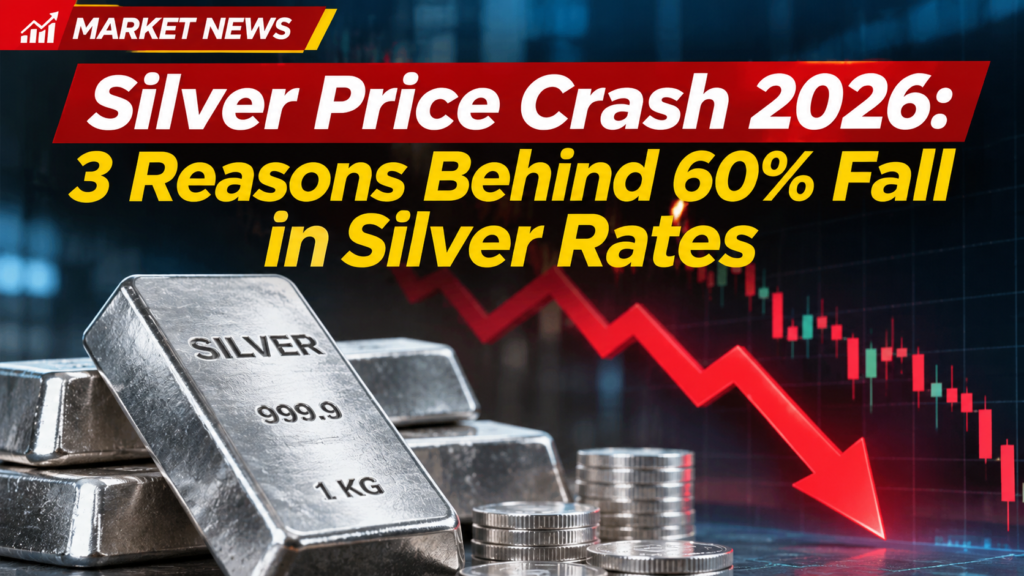

After touching a historic high of nearly ₹4.20 lakh per kg in January 2026, silver prices have fallen below ₹1.75 lakh on the MCX. A stronger US dollar, concerns over industrial consumption and aggressive profit-booking have triggered the sharp correction, while investors remain cautious about the metal’s near-term outlook.
Silver, one of the best-performing commodities during the previous rally, has witnessed a dramatic reversal in 2026. After surging past ₹4 lakh per kg on the Multi Commodity Exchange (MCX) in January, the precious metal has lost nearly 60% of its value, with prices slipping below ₹1.75 lakh per kg.
On Tuesday, November 17, MCX silver December futures were trading at approximately ₹1,70,065 per kg, gaining around 1.3% from the previous close of ₹1,68,183. However, the marginal recovery has done little to offset the steep losses recorded over recent months.
The correction reflects a combination of changing global economic expectations, concerns about industrial consumption and a significant unwinding of speculative positions. According to commodity market analysts, three major factors have contributed to silver’s sharp decline.
Three Major Reasons Behind the Fall in Silver Prices
1. Strong US Dollar and Higher Interest Rate Expectations
The strengthening US dollar and expectations of tighter monetary policy in the United States have emerged as significant factors weighing on silver prices.
Since silver is internationally traded in dollars, a stronger US currency makes the metal more expensive for buyers using other currencies, potentially reducing demand. At the same time, rising US Treasury yields and expectations of higher interest rates make interest-bearing investments more attractive compared with precious metals, which do not generate regular income.
Market experts believe that uncertainty surrounding the US Federal Reserve’s monetary policy has weakened investor appetite for silver.
Kaveri More, Commodity Technical Analyst at Choice Broking, noted that the combination of a stronger dollar, rising bond yields and expectations of further interest rate hikes has reduced the attractiveness of non-yielding precious metals. Currency movements, including changes in the rupee-dollar exchange rate, have also influenced domestic silver prices.
2. Weakening Industrial Demand and China’s Manufacturing Slowdown
Unlike gold, silver has a substantial industrial demand component. It is widely used in solar panels, electric vehicles, electronics and several other manufacturing applications. Consequently, any slowdown in these sectors can have a direct impact on its price.
Concerns over China’s solar manufacturing and electric vehicle industries have added to the negative sentiment. China remains an important player in global industrial silver consumption, and slower activity in key manufacturing segments has raised questions about future demand.
Another emerging concern is the growing effort among manufacturers to reduce silver consumption through technological improvements and material substitution, particularly in solar cells.
Vandana Bharti, Head of Commodity Research at SMC Global Securities, highlighted that global silver demand is expected to decline by around 5% in 2026, with industrial demand projected to fall by approximately 3%, based on estimates cited from Metals Focus.
In India, elevated prices have also affected jewellery affordability and weighed on consumer demand, particularly in price-sensitive rural markets.
Higher margin requirements on futures contracts have further increased the cost of maintaining leveraged positions, forcing some traders to reduce their exposure and adding to market volatility.
3. Heavy Profit-Booking and Unwinding of Speculative Positions
Silver’s extraordinary rally earlier in the year attracted substantial investor interest and speculative participation. However, the rapid increase in prices also left the market vulnerable to a correction.
As prices reached record levels, investors began booking profits, while traders holding leveraged positions faced increasing pressure amid rising volatility and higher margin requirements.
The subsequent liquidation of speculative positions accelerated the downward movement. This selling pressure, combined with unfavourable global economic conditions and concerns over industrial demand, turned the earlier rally into a steep correction.
Jigar Trivedi, Senior Research Analyst at IndusInd Securities, said aggressive profit-booking and the unwinding of speculative positions have played an important role in the recent decline, as investors moved to secure gains following the metal’s exceptional rally.
Market participants believe that the correction is not the result of one isolated development but reflects a broader reassessment of silver’s valuation and demand outlook.
Read More-Indian Agriculture Grows Over 4% Annually for First Time Since Independence: PM Modi
Silver Price Outlook: What Should Investors Watch?
Despite the sharp decline, analysts believe silver continues to have long-term relevance because of its applications in renewable energy, electronics and other industrial sectors. Structural supply concerns could also provide support to prices over the longer term.
However, a sustained recovery will depend on the return of investment demand, improvement in industrial consumption and greater clarity on the US Federal Reserve’s interest rate trajectory.
Jigar Trivedi identified international support levels for COMEX silver around $45 and $40 per ounce. On the domestic front, he sees an important support zone near ₹1,55,000 per kg on the MCX.
Gaurav Arora, Head of Research at SAHI, highlighted ₹1,66,650 per kg as an important technical level for MCX silver. According to his assessment, a decisive break below this level could trigger further weakness, while the current price movement indicates a pause in the prevailing trend.
Experts caution that although a technical recovery cannot be ruled out, silver may continue to experience considerable price fluctuations in the near term.
For investors, the immediate focus should remain on the movement of the US dollar, global bond yields, industrial demand indicators and developments in China’s manufacturing sector.
The Bottom Line
Silver’s sharp correction highlights how quickly commodity markets can change direction after an extraordinary rally. While its industrial importance and long-term demand potential remain relevant, near-term price recovery will depend on global economic conditions and investor sentiment. Rather than reacting to short-term price movements, investors should carefully assess market fundamentals and their risk exposure before making fresh investment decisions.
Disclaimer: This article is intended for informational and educational purposes only. It does not constitute investment advice. Investors should consult registered financial advisers before making investment decisions.
Source-Mint news
Read More-Economy: The Paradox of a Strong Economy and a Weak Stock Market