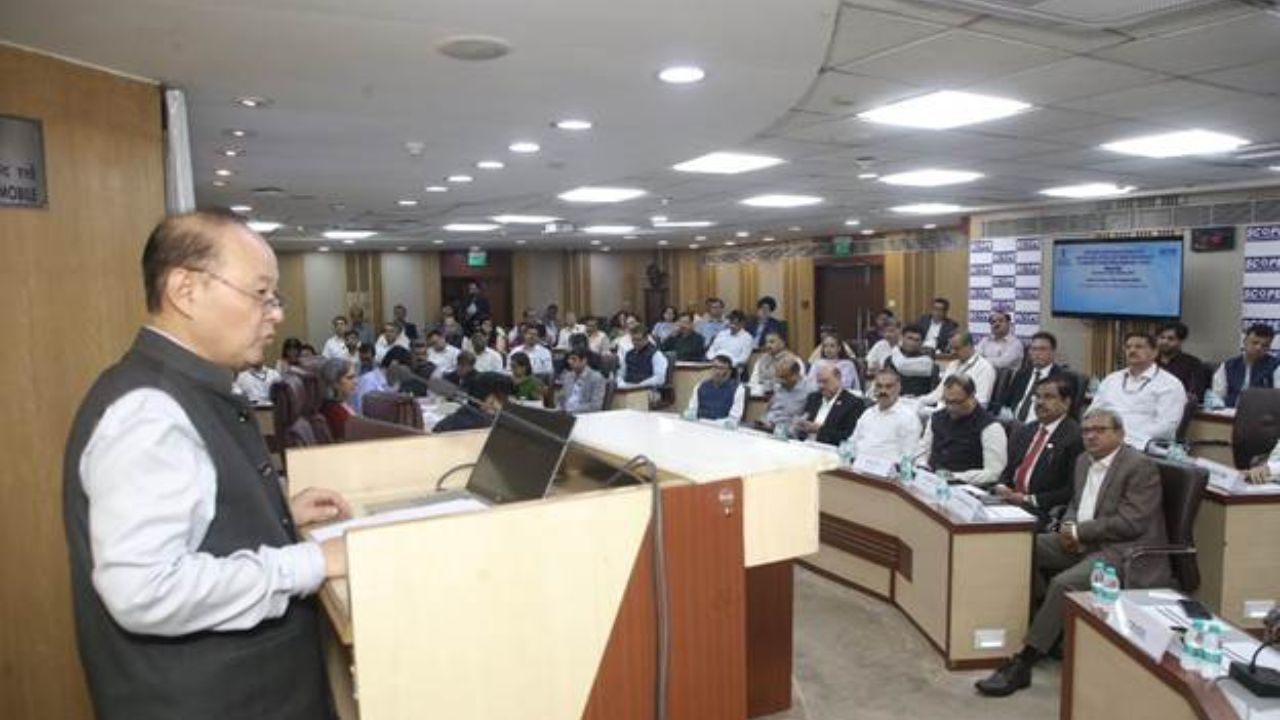
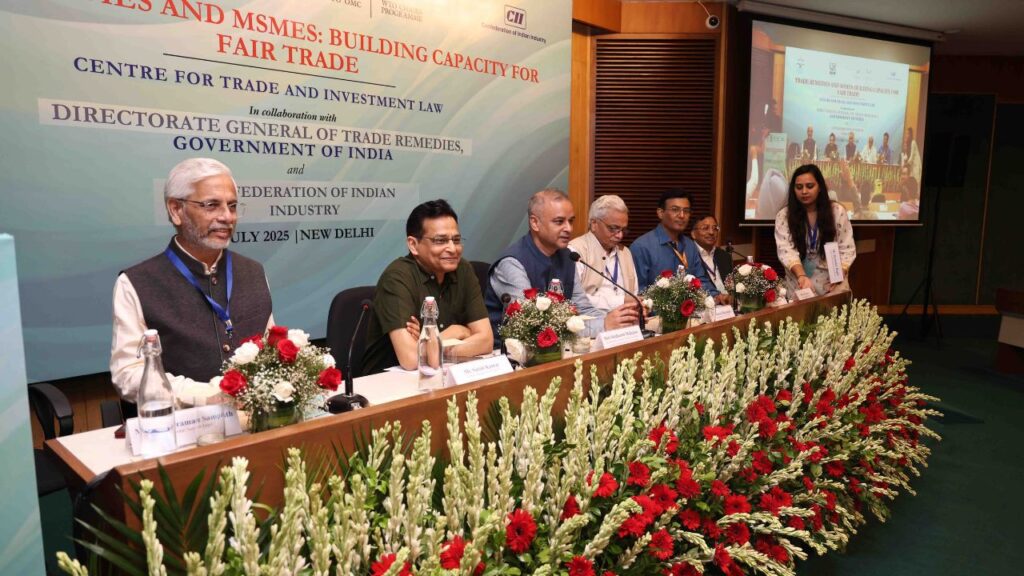

The Directorate General of Trade Remedies (DGTR), under the Department of Commerce, reaffirmed its commitment to ensuring fair trade practices and protecting domestic industry during a media briefing held at its headquarters in New Delhi. The event, organised as part of the Department of Commerce’s media outreach initiative, showcased the institution’s achievements, ongoing reforms and policy initiatives aimed at creating a level playing field for Indian businesses.
Addressing media representatives, Additional Secretary and Director General of Trade Remedies, Amitabh Kumar, outlined DGTR’s role as India’s integrated trade remedy authority operating under the Ministry of Commerce and Industry. He explained that the organisation is responsible for conducting investigations related to anti-dumping, anti-subsidy and safeguard measures, while ensuring compliance with domestic laws and India’s commitments under the World Trade Organization (WTO) framework.
Kumar emphasized that trade remedy measures should not be viewed as barriers to imports but rather as mechanisms to promote fair competition. These measures are designed to counter unfair trade practices such as dumping, subsidised imports and sudden import surges that may cause injury to domestic manufacturers. According to him, the primary objective of DGTR is to restore competitive balance in the marketplace while allowing legitimate imports to continue at fair and competitive prices.
The DGTR chief highlighted the institution’s transparent and evidence-driven investigation process. He noted that every investigation involves a detailed examination of applications, collection and verification of data, analysis of responses from stakeholders, conduct of hearings and disclosure of key findings before recommendations are finalised. The process ensures that all interested parties—including domestic producers, exporters, importers, user industries and foreign stakeholders—have adequate opportunities to present evidence and participate in proceedings.
A significant aspect of DGTR’s functioning, Kumar noted, is its balanced approach toward trade remedy actions. While protecting domestic industries from unfair trade practices, the authority also considers the interests of downstream industries, consumers and other stakeholders. Economic impact assessments and consultations form an important part of the decision-making process. DGTR follows the internationally recognised “Lesser Duty Rule,” under which duties are recommended only to the extent required to remove injury suffered by domestic producers, avoiding excessive trade restrictions.
During the briefing, Kumar also highlighted the achievements of DGTR’s Trade Defence Wing, established in 2016. The wing plays a crucial role in supporting Indian exporters facing trade remedy investigations in foreign markets. Acting as a coordination platform, it brings together central ministries, state governments, Indian missions abroad, export promotion councils, commodity boards and industry representatives to safeguard India’s trade interests. The initiative has strengthened India’s ability to respond effectively to anti-dumping, countervailing duty and safeguard investigations initiated by other countries.
One of the major reforms discussed was the launch of the System for Ensuring Fair Trade through Unified Digital Platform (SETU) in October 2025. The digital platform has transformed the handling of trade remedy cases by enabling end-to-end online processing. Through SETU, stakeholders can file applications, submit documents, receive communications and manage case-related information through a single digital interface. The platform has significantly improved efficiency, transparency and accessibility for domestic producers, exporters, importers and foreign governments participating in investigations.
The DGTR leadership also highlighted several complementary initiatives aimed at improving stakeholder engagement and ease of access. These include the Economic Interest Questionnaire, the Helpdesk and Facilitation Centre, the Trade Remedies Advisory Cell (TRAC), industry outreach programmes and simplified application procedures for fragmented sectors. In particular, the simplified application format introduced through Trade Notice No. 09/2021 has reduced procedural complexities for small enterprises, MSMEs and fragmented domestic industries seeking trade remedy protection.
Concluding the briefing, Kumar reiterated that trade remedy measures remain vital instruments for addressing unfair trade practices and strengthening India’s manufacturing ecosystem. He stressed that DGTR would continue to focus on transparency, stakeholder participation, digital transformation and robust trade defence mechanisms to support Indian industry and exporters while promoting a fair and rules-based global trading environment.

Author: Shivam
Shivam Dwivedi is a senior journalist with extensive experience in research-driven journalism, policy communication, and multi-platform storytelling. His areas of interest include international relations, defence, science & technology, education, urban development, agriculture, spirituality, and environmental sustainability. His work focuses on in-depth analysis, public discourse, and impactful narratives across governance and development sectors, with a strong commitment to the Sustainable Development Goals (SDGs). Contact: [email protected]