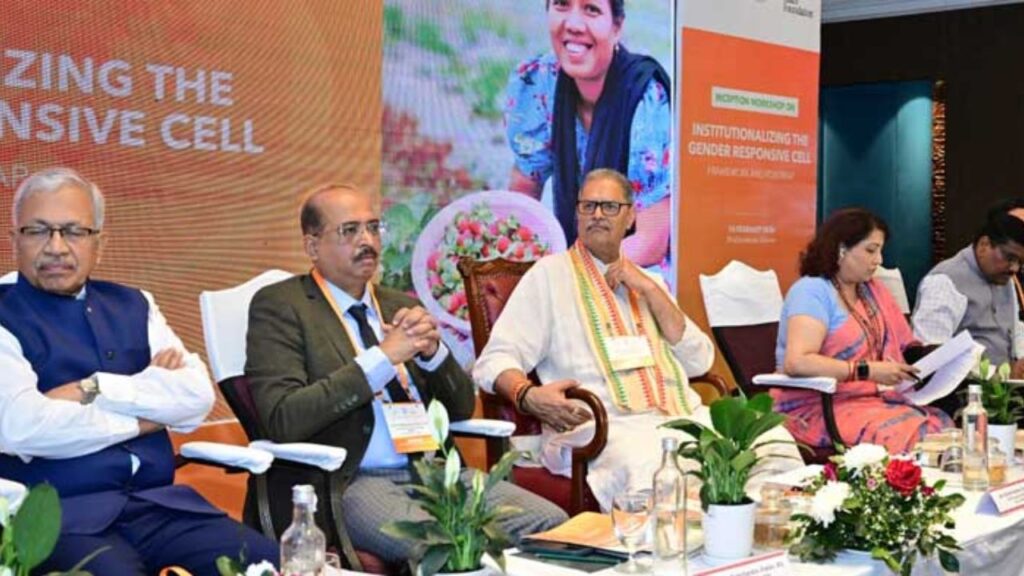

In a significant move towards promoting inclusive and equitable agricultural development, the Agriculture & Farmers’ Empowerment Department of Odisha, in partnership with the International Food Policy Research Institute (IFPRI), organised a two-day Capacity Partnership Workshop under the Gender Responsive Cell (GRC). The initiative aimed to strengthen gender-responsive policymaking and enhance institutional capacity to address gender disparities in the agricultural sector.
The workshop brought together policymakers, government officials, researchers, and development experts to deliberate on strategies for integrating gender perspectives into agricultural planning, budgeting, and implementation. Participants included senior representatives from the Agriculture & Farmers’ Empowerment Department, Women & Child Development Department, Mission Shakti, Fisheries & Animal Resources Development Department, ICAR-Central Institute for Women in Agriculture (ICAR-CIWA), and other key stakeholder institutions.
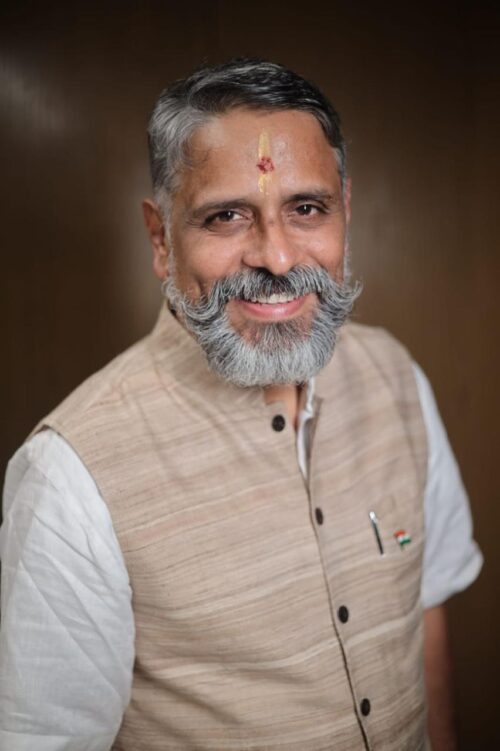
Inaugurating the workshop, Agriculture & Farmers’ Empowerment Secretary Sachin Ramchandra Jadhav highlighted the importance of recognizing women’s contributions to agriculture through effective policy interventions. He stressed that gender inequality in agriculture is not merely a cultural issue but a structural challenge that requires a transformative approach in governance and administration.
“The challenge is not merely cultural; it calls for a paradigm shift in policymaking and administrative systems. Robust data mechanisms and gender-responsive governance frameworks are essential to ensure that women’s contributions to agriculture are adequately acknowledged and reflected in policy decisions,” Jadhav said.
The workshop featured a series of technical sessions focusing on critical themes such as gender analysis of agricultural schemes, gender budgeting, digital and financial inclusion, and the use of gender-disaggregated data for informed decision-making. Special emphasis was placed on strengthening evidence-based policy formulation through better data collection and analysis.
A key component of the programme was hands-on training using the Annual Survey of Unincorporated Sector Enterprises (ASUSE) 2023–24 dataset. Participants were trained in analysing gender-disaggregated data to identify gaps, assess programme outcomes, and develop targeted interventions aimed at improving women’s participation and productivity in agriculture.
Addressing the gathering, Additional Secretary of the Agriculture & Farmers’ Empowerment Department, Shubhranshu Mishra, underlined the need for data-driven policymaking. He emphasized that inclusive growth in agriculture can only be achieved when policies are designed with a clear understanding of the unique challenges faced by women farmers and agricultural workers.
Experts from leading national and international institutions, including the International Rice Research Institute (IRRI), National Institute of Public Finance and Policy (NIPFP), National Council of Applied Economic Research (NCAER), and IFPRI, conducted technical sessions during the workshop. These sessions explored gender gaps in agricultural value chains, best practices in gender budgeting, and innovative approaches to integrating gender considerations into development programmes.
Participants also discussed ways to improve women’s access to resources such as credit, technology, markets, and extension services. Deliberations highlighted the importance of digital and financial inclusion in empowering women farmers and enabling them to participate more effectively in agricultural and rural economies.
The workshop marks an important step in operationalising Odisha’s Gender Responsive Cell as a dedicated platform for institutional learning, policy innovation, and cross-sector collaboration. The GRC is expected to play a pivotal role in supporting the state’s efforts to mainstream gender considerations across agricultural programmes and policies.
Officials noted that the initiative aligns with Odisha’s broader vision of fostering sustainable and inclusive agricultural growth while ensuring that women, who form a significant part of the agricultural workforce, receive greater recognition, opportunities, and support.
By strengthening institutional capacities and promoting evidence-based decision-making, the workshop has laid the foundation for more gender-responsive governance in agriculture. With this initiative, Odisha is positioning itself as a frontrunner in advancing equitable agricultural transformation and creating a more inclusive future for rural communities across the state.