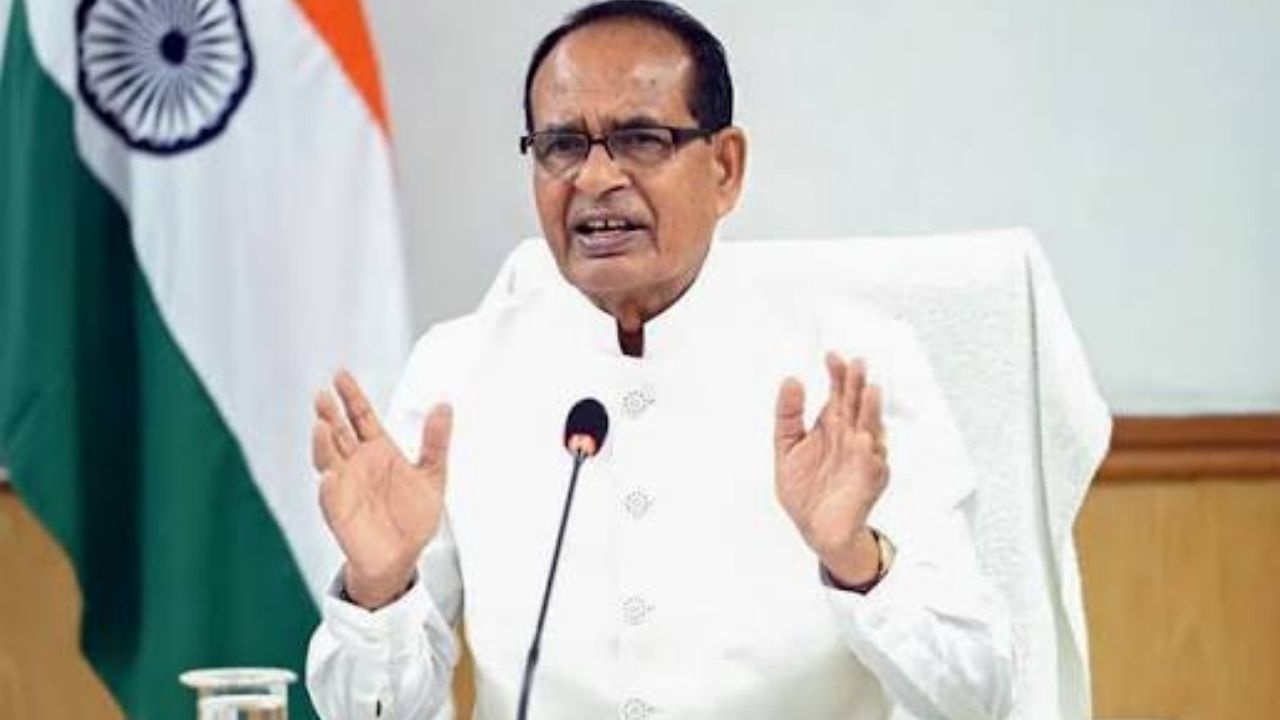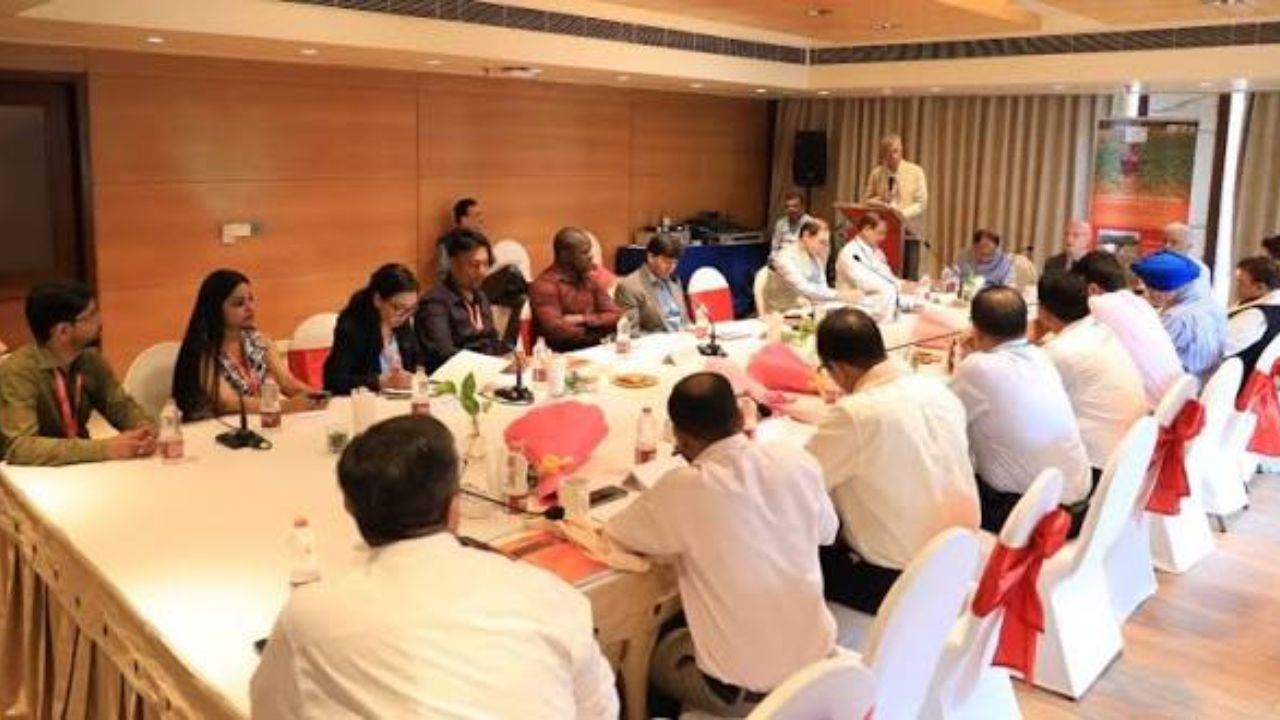
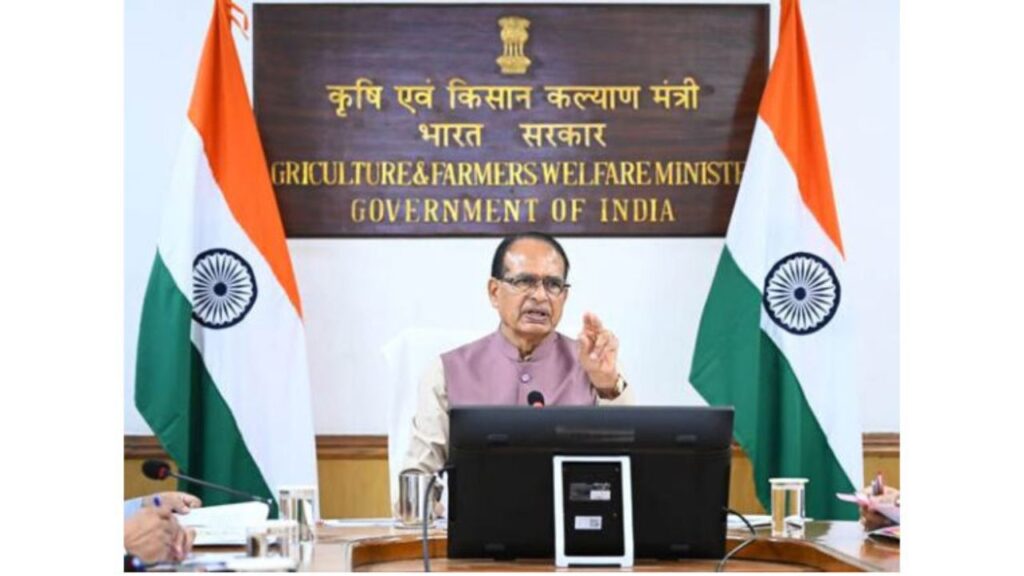

Union Minister for Agriculture & Farmers’ Welfare and Rural Development Shivraj Singh Chouhan on Tuesday chaired a high-level review meeting in Kolkata, announcing a series of development initiatives aimed at accelerating infrastructure, rural development and agricultural growth in West Bengal. The meeting was attended by Chief Minister Suvendu Adhikari, members of the state cabinet and senior officials from both the Centre and the state government.
Addressing a joint press conference after the meeting, Chouhan said that the vision of a Viksit Bharat cannot be achieved without the comprehensive development of West Bengal. He noted that close coordination between the Centre and the state would play a crucial role in ensuring that development projects are implemented efficiently and their benefits reach citizens without delay.
Infrastructure Projects Worth ₹82,000 Crore Reviewed
One of the major highlights of the meeting was the review of 19 large infrastructure projects with a combined investment exceeding ₹82,000 crore. These projects span critical sectors such as highways, railways, metro connectivity, petroleum and natural gas, coal and labour.
The discussions focused on resolving long-pending issues related to land acquisition, rehabilitation and resettlement, utility shifting, forest clearances and inter-departmental coordination. Chouhan directed all concerned ministries, state departments and implementing agencies to work in a time-bound manner to remove bottlenecks that have delayed project execution.
He also proposed the creation of a State-level Project Monitoring Group (PMG) in West Bengal to strengthen coordination among departments and ensure regular monitoring of both Central and state-funded projects. According to the Union Minister, robust infrastructure is essential for economic expansion, employment generation and improved quality of life.
₹12,064 Crore for Rural Development
The Centre also announced significant financial support for rural development. Chouhan stated that the Central Government has approved more than ₹8,508 crore for West Bengal, which, along with the state’s contribution, will create a development fund of over ₹12,064 crore to be utilised through Panchayati Raj institutions until March 31.
The allocation is expected to strengthen rural infrastructure while generating employment opportunities. Chouhan said the government’s objective is to expand employment opportunities beyond the traditional 100-day guarantee to 125 days, providing additional livelihood support during natural disasters and local emergencies.
He also highlighted the implementation of the VB-G RAM G framework, which came into force on July 1, saying it would focus on creating durable rural assets such as village roads, ponds, irrigation facilities, schools and Anganwadi centres.
Housing, Women Empowerment Receive Major Boost
In another significant announcement, the Union Minister approved one lakh rural houses under the Pradhan Mantri Awas Yojana-Gramin (PMAY-G) for West Bengal.
Recognising that heavy rainfall had delayed beneficiary surveys, the Centre extended the survey deadline until August 15. Officials have been instructed to complete physical verification alongside surveys so that eligible families can receive housing assistance without unnecessary delays.
The government also strengthened support for Women’s Self-Help Groups (SHGs) under the Deendayal Antyodaya Yojana. A financial package of ₹295 crore was announced, including ₹245 crore in bank credit and ₹50 crore through the Community Investment Fund. The initiative aims to help rural women expand micro-enterprises, value-added activities and market access, thereby enhancing household incomes.
Agriculture Gets Research and Value-Chain Focus
Agriculture featured prominently in the discussions, with Chouhan outlining several initiatives to modernise farming and improve farmer incomes.
He announced that Malda would be integrated into the national Clean Plant Network through the establishment of a Clean Plant Facility focused on producing disease-free planting material for mango, litchi and other fruit crops. The programme will also support nursery development with financial assistance for large and medium-sized nurseries.
The Centre further approved projects to strengthen rice value chains, maize seed production, storage and processing infrastructure across the state. West Bengal is also set to emerge as the Seed Hub of Eastern India, supported by agreements for potato seed, hybrid maize seed and other crop seed production.
Projects promoting orchid cultivation and horticulture have also been cleared to encourage diversification into high-value crops suited to the state’s agro-climatic conditions.
Scientific Roadmap and Farmer Support
Chouhan informed that the Indian Council of Agricultural Research (ICAR), state agricultural universities and scientists are jointly preparing a scientific agriculture roadmap tailored to West Bengal. The plan will recommend region-specific cropping patterns, advanced technologies and value-chain strategies based on local soil, climate and water resources.
He also announced efforts to expand the coverage of the Pradhan Mantri Fasal Bima Yojana (PMFBY) and Kisan Credit Card (KCC). Village-level camps will be organised in partnership with NABARD and banks to improve farmers’ access to affordable institutional credit while reducing dependence on informal lending.
The Union Minister concluded by reaffirming the Centre’s commitment to working closely with the West Bengal government to accelerate development across sectors. He expressed confidence that coordinated efforts in infrastructure, rural development and agriculture would help position West Bengal as a major contributor to India’s journey towards becoming a developed nation.

Author: Shivam
Shivam Dwivedi is a senior journalist with extensive experience in research-driven journalism, policy communication, and multi-platform storytelling. His areas of interest include international relations, defence, science & technology, education, urban development, agriculture, spirituality, and environmental sustainability. His work focuses on in-depth analysis, public discourse, and impactful narratives across governance and development sectors, with a strong commitment to the Sustainable Development Goals (SDGs). Contact: [email protected]