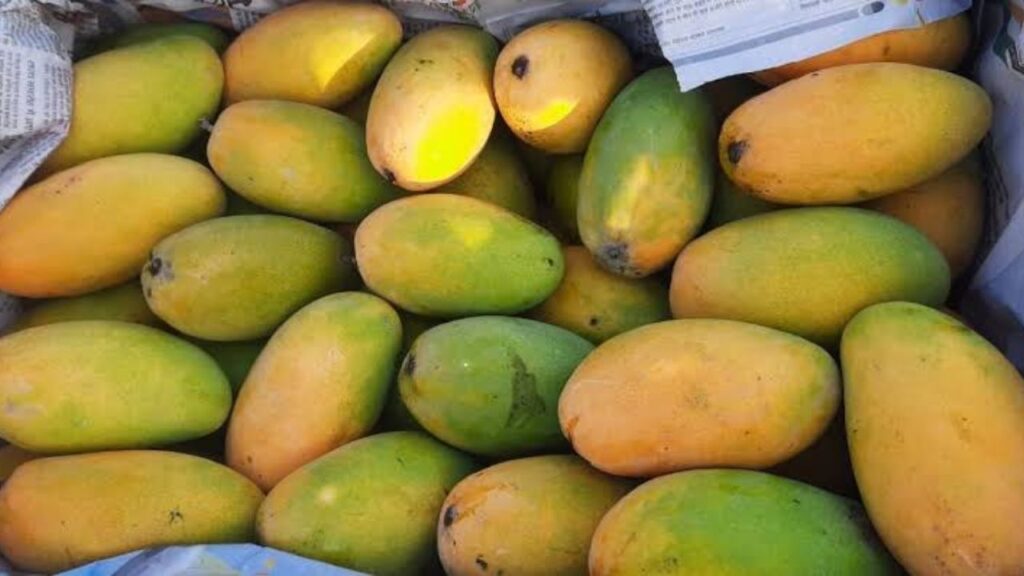

India’s fresh mango export sector has achieved a significant milestone with the successful shipment of premium Dashehari and Langra mango varieties from Amroha, Uttar Pradesh, to Dubai, United Arab Emirates, through a scientifically developed sea-route export protocol. The successful export of 12.5 tonnes of mangoes marks a major step towards reducing logistics costs, expanding global market access, and improving the income of mango farmers.
The consignment was transported in a 40-foot reefer container by sea under a continuous cold-chain system, following the export protocol developed jointly by the ICAR–Central Institute for Subtropical Horticulture (ICAR-CISH), Lucknow, and the Agricultural and Processed Food Products Export Development Authority (APEDA).
The shipment was exported by Shehnaz Export, Amroha, in collaboration with Attashi Global, and supplied to Lulu Group, UAE, a prominent retail chain operating across the Gulf region. ICAR-CISH provided technical support, while APEDA facilitated the export process and promoted international market linkages for Indian mangoes.
Scientific Post-Harvest Management Ensures Quality Preservation
The mangoes were harvested on June 22, 2026, and underwent a series of scientifically recommended post-harvest management procedures to maintain quality during the long sea journey. The fruits were treated with METWASH, a shelf-life extension technology developed by ICAR-CISH, which helped preserve freshness and reduce post-harvest losses.
After treatment, the mangoes were scientifically graded and packed at the Amroha Pack House before being loaded into a refrigerated container. The shipment was then transported under controlled temperature conditions to ensure that the fruits retained their taste, texture, and market value throughout the journey.
Despite delays caused by Western Disturbance-related weather conditions, the consignment successfully reached Dubai on July 17, 2026. The mangoes completed a 25-day harvest-to-market transit period, demonstrating the effectiveness of the sea-route protocol for long-distance export of fresh mangoes.
Around 90 percent of the mangoes were found to be in good marketable condition upon arrival, highlighting the success of the technology and the potential of sea-based exports for highly perishable agricultural commodities.
Sea Export Opens New Opportunities for Mango Growers
The successful validation of the sea-route export model is expected to transform India’s mango export landscape by offering a more affordable alternative to air transportation. Sea freight is significantly cheaper than air cargo, enabling exporters to reduce operational expenses and provide better returns to farmers.
Through this shipment, mango growers received an additional income of approximately ₹15–20 per kilogram compared to conventional export channels. The improved returns are expected to encourage more farmers in Uttar Pradesh and other mango-producing states to participate in export-oriented production.
The achievement also strengthens India’s position in the global mango market by ensuring that premium varieties can reach international consumers while maintaining quality standards.
Boost to India’s Global Mango Trade
This shipment represents the first successful commercial sea export of Dashehari and Langra mangoes from Uttar Pradesh to Dubai involving an extended 25-day harvest-to-market transit period. It proves that Indian mangoes can be transported through economical sea routes without significant deterioration in quality.
The success is likely to encourage exporters to adopt sea freight solutions more widely, helping India expand its fresh mango exports to Gulf countries and other international destinations. Lower transportation costs, improved supply-chain efficiency, and longer shelf life can make Indian mangoes more competitive in overseas markets.
Technology-Driven Growth for Horticulture Sector
The development and successful implementation of the sea-route protocol underline the importance of scientific interventions in strengthening India’s horticulture exports. Technologies such as shelf-life enhancement treatments, improved packaging methods, and efficient cold-chain management can play a crucial role in reducing wastage and increasing farmer earnings.
The initiative is expected to accelerate the commercialization of sea-based mango exports from Uttar Pradesh and other mango-growing regions. It will not only enhance export revenue but also create new economic opportunities for farmers, exporters, and stakeholders across the mango value chain.
With this breakthrough, India moves closer to establishing a sustainable and cost-effective export ecosystem for its globally renowned mango varieties.

Author: Shivam
Proficient Writer Contact: [email protected]