
The Government’s Zero Defect Zero Effect (ZED) Certification Scheme is steadily transforming India’s micro, small and medium enterprises (MSMEs) by encouraging quality manufacturing, environmental responsibility and operational excellence. Backed by financial incentives and a structured certification framework, the initiative is helping businesses improve productivity, reduce waste and become more competitive in domestic as well as global markets.
Recent success stories from Maharashtra and Punjab highlight how the scheme is enabling enterprises to achieve measurable improvements in quality, efficiency and sustainability while strengthening their long-term growth prospects.
MSMEs Report Tangible Benefits
Finex Industries Pvt. Ltd., a manufacturer of metal and wooden furniture based in Dindori, Nashik, received ZED Silver Certification on July 14, 2025. Following the certification, the company recorded notable operational improvements. It reduced its Cost of Poor Quality (COPQ) by 11 per cent, lowered rework by 10 per cent and reduced product defects by 1 per cent.
The company also reported savings through better energy efficiency, improved utilisation of workspace and lower consumption of production materials. According to the enterprise, the adoption of ZED principles has enhanced productivity, improved product quality and strengthened overall operational efficiency.
Another example is Concept Clothing Pvt. Ltd. of Jalandhar, Punjab, which earned ZED Silver Certification on June 14, 2025. After implementing ZED practices, the garment manufacturer witnessed an 80 per cent decline in workplace incidents, a 50 per cent reduction in Mean Time to Repair (MTTR), a 7.4 per cent reduction in rework and a 4 per cent decline in product rejection.
The company also achieved cost savings through improvements in quality management, workplace safety and environmental practices. It believes that the certification has strengthened operational discipline, enhanced process efficiency and increased its competitiveness.
Focus on Sustainable Manufacturing
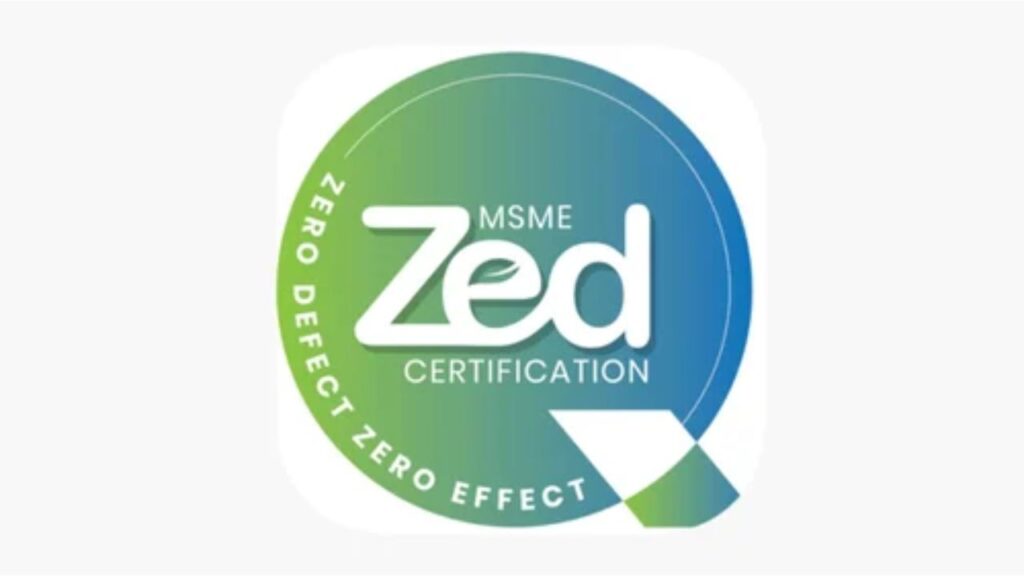
The Ministry of Micro, Small and Medium Enterprises is implementing the MSME Sustainable (ZED) Certification Scheme to promote manufacturing that combines superior product quality with reduced environmental impact.
The initiative encourages enterprises to improve production systems, adopt internationally recognised quality practices and minimise resource consumption. It also supports businesses in upgrading technology, improving manufacturing processes and enhancing workplace safety, making them more resilient and competitive.
Unlike a conventional certification programme, ZED provides MSMEs with a comprehensive roadmap that includes assessment, continuous improvement, financial support and technology adoption.
The certification framework consists of three progressive levels—Bronze, Silver and Gold—allowing enterprises to continuously improve their quality and sustainability standards.
Special Support for Women Entrepreneurs
A major feature of the scheme is its emphasis on encouraging women-led enterprises to adopt quality manufacturing practices.
Since November 11, 2023, women-owned MSMEs have been eligible for a 100 per cent subsidy on the cost of ZED Certification, effectively eliminating the certification expense. The initiative aims to remove financial barriers and encourage greater participation of women entrepreneurs in manufacturing.
The support enables women-owned businesses to assess their operations against recognised standards of productivity, safety, quality and environmental sustainability. This not only strengthens manufacturing systems but also enhances market credibility and prepares enterprises for larger business opportunities.
Financial Assistance Encourages Adoption
Apart from certification support, the scheme offers multiple financial incentives to eligible MSMEs.
Enterprises can receive financial assistance of up to 75 per cent of the cost of testing, system or product certification, subject to a maximum of ₹50,000. They are also eligible for consultancy and handholding assistance of up to ₹2 lakh. In addition, support of up to ₹3 lakh is available for implementing Zero Effect solutions, pollution-control measures and cleaner production technologies.
These incentives are designed to help MSMEs modernise operations while maintaining high quality standards and reducing environmental impact.
Scheme Gains Nationwide Momentum
The MSME Sustainable (ZED) Certification Scheme has witnessed significant growth across the country. As of July 7, 2026, nearly 9.49 lakh MSMEs had registered under the programme.
Among them, more than 6.67 lakh enterprises received Bronze certification, while over 6,700 secured Silver certification and around 4,800 achieved the Gold level. The government has provided financial assistance exceeding ₹913 crore to support enterprises in adopting quality-focused and sustainable manufacturing practices.
The scheme’s influence is also expanding through policy integration. Twenty-two States and Union Territories have incorporated ZED into their industrial policies and are offering additional incentives to certified enterprises. Furthermore, 19 financial institutions have introduced benefits such as lower processing charges and concessional interest rates, improving access to finance for ZED-certified MSMEs.
With growing industry participation, government support and increasing recognition from financial institutions, the ZED initiative is emerging as an important catalyst for improving manufacturing quality, resource efficiency and environmental sustainability. The programme is expected to play a significant role in helping Indian MSMEs strengthen their competitiveness and integrate more effectively into domestic and global value chains.
Also Read: MSME Ministry Intensifies Swachhata Pakhwada 2026 with Nationwide Cleanliness and Green Initiatives

Author: Shivam
Shivam Dwivedi is a senior journalist with extensive experience in research-driven journalism, policy communication, and multi-platform storytelling. His areas of interest include international relations, defence, science & technology, education, urban development, agriculture, spirituality, and environmental sustainability. His work focuses on in-depth analysis, public discourse, and impactful narratives across governance and development sectors, with a strong commitment to the Sustainable Development Goals (SDGs). Contact: [email protected]