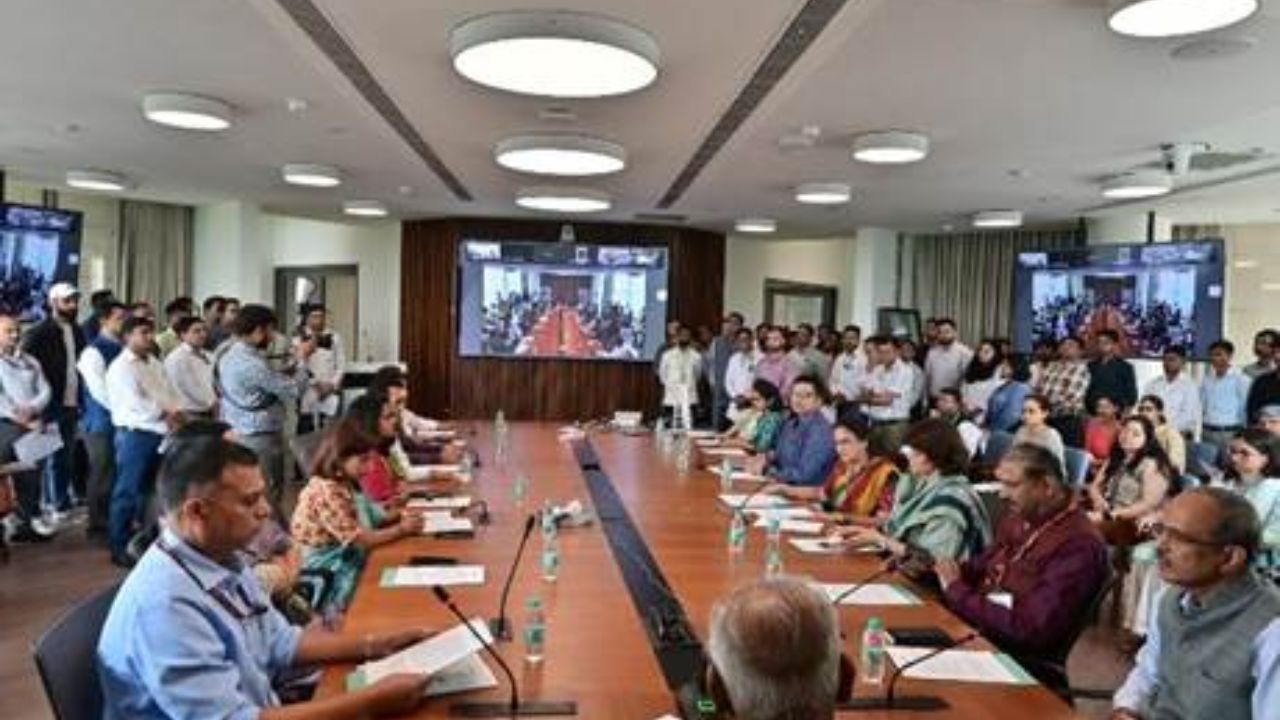
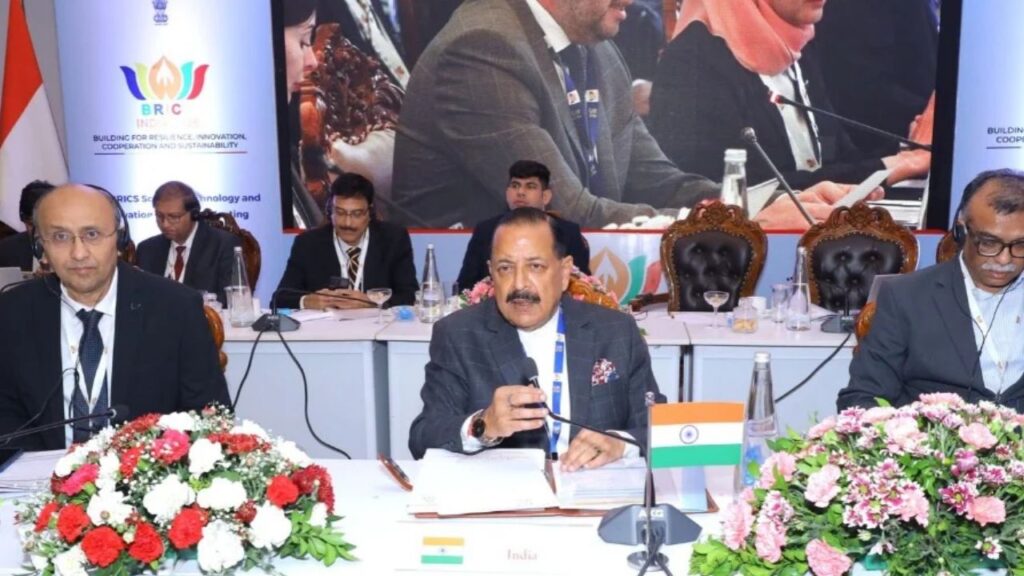

The 14th BRICS Science, Technology and Innovation (STI) Ministerial Meeting commenced in Chennai with India calling for deeper international collaboration to harness emerging technologies for inclusive, sustainable and resilient development. Union Minister of State (Independent Charge) for Science and Technology and Earth Sciences and MoS PMO, Personnel, Public Grievances, Pensions, Atomic Energy and Space, Dr. Jitendra Singh, delivered the inaugural address and highlighted India’s expanding role in global science and technology cooperation.
Welcoming representatives from BRICS member countries, Dr. Jitendra Singh said India has adopted the theme “Building for Resilience, Innovation, Cooperation and Sustainability” for its BRICS Presidency in 2026. He said the theme reflects a common understanding that science, technology and innovation should address humanity’s challenges while supporting inclusive economic growth, sustainable development and equitable international partnerships.
Emerging Technologies Driving Global Transformation
The Union Minister noted that the global technological landscape is changing rapidly, with Artificial Intelligence (AI), quantum technologies, advanced materials, biotechnology, photonics, geospatial technologies and high-performance computing opening new avenues for development.
At the same time, he stressed that the pace of technological advancement makes international cooperation increasingly important. Emerging innovations, he said, need to remain accessible, affordable, trustworthy and environmentally sustainable so that their benefits can reach societies across the world.
Dr. Jitendra Singh said BRICS is particularly well positioned to contribute to this effort because of its large population base, expanding scientific capabilities and growing pool of research talent. The grouping can play a significant role in developing a collaborative and responsible innovation ecosystem focused on addressing shared global challenges.
Strengthening BRICS STI Cooperation
The Minister acknowledged the work of the BRICS STI Steering Committee, senior officials and specialised STI Working Groups in maintaining dialogue among member countries and converting discussions into practical initiatives.
He said cooperation under the BRICS STI framework has expanded considerably and now covers research partnerships, innovation collaboration, young scientist exchanges, research infrastructure and thematic working groups. During India’s 2026 Presidency, a comprehensive assessment of STI priorities is also being undertaken to ensure that cooperation reflects new scientific frontiers as well as the developmental requirements of participating societies.
India Highlights Key Science and Technology Initiatives
Dr. Jitendra Singh reiterated India’s commitment to an open, inclusive and human-centric model of scientific and technological progress. He highlighted major national initiatives, including the National Quantum Mission, National Supercomputing Mission, BioE3 Policy, National Geospatial Policy and the country’s expanding Digital Public Infrastructure ecosystem.
According to the Minister, these initiatives demonstrate India’s approach of linking technological progress with real-world social and economic benefits. Innovation, he said, should contribute to improving quality of life, enhancing resilience and enabling sustainable economic transformation.
Call for Greater Collaboration Among BRICS Nations
India also urged BRICS partners to develop ambitious but achievable areas of cooperation in frontier research, innovation financing, talent mobility and shared research infrastructure. Greater collaboration between startups and scientific institutions was also identified as an important area, along with capacity building and knowledge exchange.
Dr. Jitendra Singh said such initiatives could help shape a future-ready BRICS STI framework capable of responding effectively to emerging global challenges while addressing the aspirations and priorities of the Global South.
Expressing confidence in the Chennai deliberations, the Minister said the meeting would further strengthen the BRICS partnership in science, technology and innovation. He underlined the importance of collective action in building a more innovative, resilient and sustainable future through science-led cooperation among nations.
Also Read: TDB Backs One2X Tech to Commercialise Indigenous Agentic AI Platform