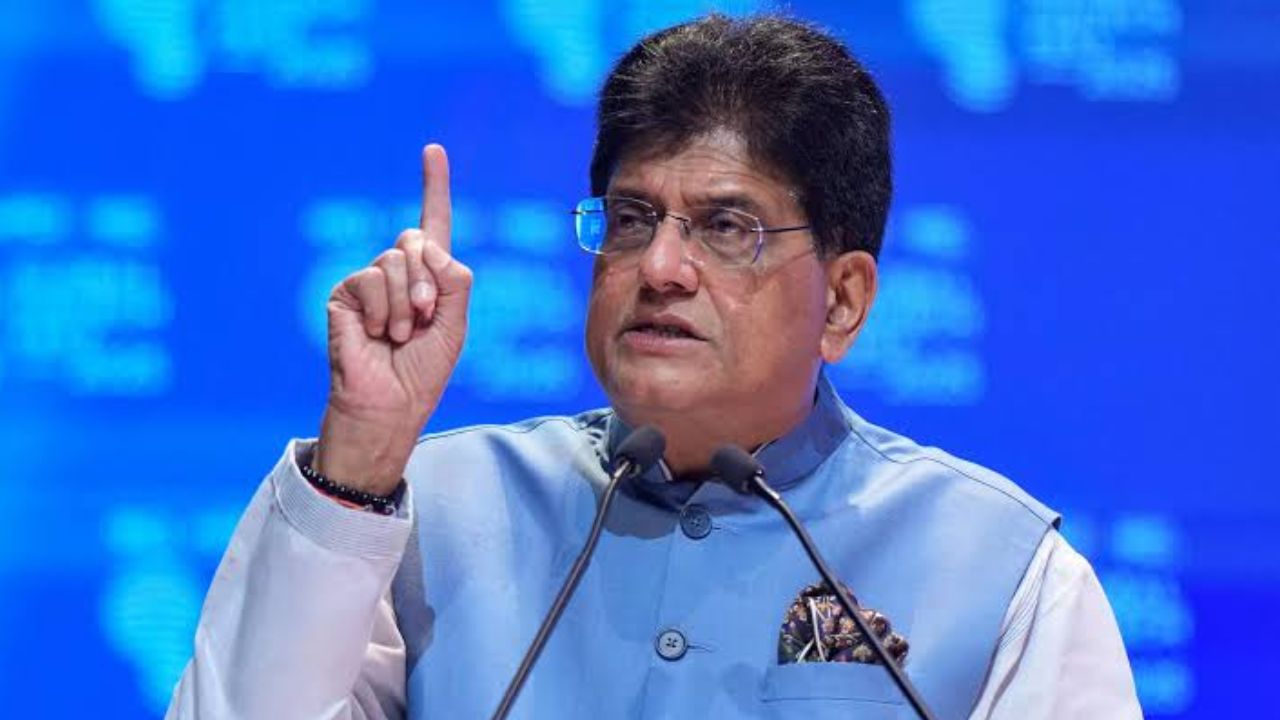

Union Minister for Commerce and Industry Shri Piyush Goyal has called upon India’s healthcare and pharmaceutical industry to build resilient, globally integrated supply chains and strengthen the country’s position as a trusted healthcare partner to the world. Addressing the Bharat Health Global Expo 2026 in New Delhi, he urged the sector to move beyond its established strength in generics and focus more strongly on research, development and innovation.
Shri Goyal attended the event along with Minister of State for Commerce and Industry and Electronics and Information Technology Shri Jitin Prasada and Commerce Secretary Shri Rajesh Agarwal.
Strengthening Pharmaceutical Supply Chains
Describing India as the “pharmacy of the world”, Goyal said the country has an opportunity to showcase its healthcare capabilities globally. He stressed that resilience should not be confused with complete self-reliance or an inward-looking approach.
According to the Minister, India should continue importing products where necessary but avoid excessive dependence on a limited number of countries or companies. He pointed to the earlier loss of domestic capabilities in Active Pharmaceutical Ingredients (APIs) and Key Starting Materials (KSMs), saying that the time has come to restore resilience across the pharmaceutical supply chain.
He suggested pooling domestic demand to identify products that are currently imported but could potentially be manufactured in India. Such efforts, he said, could encourage investment, strengthen supply chains and create employment.
Greater Focus on R&D and Innovation
Goyal said India’s pharmaceutical success over the past four decades has been driven significantly by its strength in generic medicines. However, he cautioned that this achievement alone would not be sufficient for India’s ambition of becoming a developed nation by 2047.
He called for greater investment in research and development, development of indigenous products and patent creation. Indian pharmaceutical companies, engineers and researchers, he said, should increasingly focus on new molecules, biosimilars and biotechnology.
The Minister also highlighted the importance of initiatives such as the Research and Development Innovation Fund (RDIF) in encouraging innovation. He called for a regulatory environment that makes India attractive for clinical trials, R&D, patenting and the introduction of new healthcare products.
He advocated greater regulatory convergence with developed economies and urged Indian regulators to learn from global best practices.
India as a Global Healthcare Destination
Highlighting the potential of medical value travel, Goyal said India already possesses modern hospitals, advanced equipment and highly skilled doctors, nurses and technicians. He called for medical value travel to be pursued on a mission mode to increase India’s share of the global market.
He said government initiatives through the EPM and India Brand Equity Fund could support efforts to promote India as a destination for high-quality medical care. He also urged industry organisations to come forward with concrete proposals.
Boosting Medical Device Manufacturing
The Minister also underlined the need to accelerate domestic production of medical devices. India, he said, needs to move beyond assembling imported equipment and develop indigenous components and complete manufacturing ecosystems.
He suggested that MSMEs could play an important role in producing components, while larger companies could provide the scale required to make the industry globally competitive. A stronger domestic market, he added, would also help Indian manufacturers achieve economies of scale and expand exports.
Bulk Drug Parks and Industrial Infrastructure
Goyal highlighted government efforts to develop bulk drug parks in Andhra Pradesh, Gujarat and Himachal Pradesh. He also noted that 100 new industrial parks are being developed, where dedicated spaces could be created for pharmaceutical and healthcare industries based on sectoral requirements.
He invited industry players to communicate their infrastructure needs so that suitable plug-and-play facilities could be developed.
Promoting Ayush and Global Collaboration
On Ayush, Goyal called for greater scientific validation of traditional medicines and products. He noted that India continues to export raw herbs and emphasised the need to move towards higher-value, scientifically validated products capable of gaining wider international acceptance.
He also stressed the importance of collaboration within the healthcare sector. The Bharat Health platform, he said, could bring different segments of the industry together and attract international participation.
Expanding Global Market Access
Goyal highlighted the growing opportunities created by India’s free trade agreements. He said nearly two-thirds of the global market is already open to Indian industry through preferential market access, while ongoing negotiations could expand this coverage further.
He urged the healthcare industry to combine competition with collaboration, focus on quality and timely delivery, build scale and adopt a global outlook.
Calling upon the industry to “aim for the skies”, Goyal said India should work towards becoming the “health stack for the globe.” He emphasised that the healthcare sector would be central to the vision of Viksit Bharat 2047 by ensuring quality medicines, healthcare facilities, preventive wellness and curative services for the country’s 1.4 billion people.

Author: Shivam
Shivam Dwivedi is a senior journalist with extensive experience in research-driven journalism, policy communication, and multi-platform storytelling. His areas of interest include international relations, defence, science & technology, education, urban development, agriculture, spirituality, and environmental sustainability. His work focuses on in-depth analysis, public discourse, and impactful narratives across governance and development sectors, with a strong commitment to the Sustainable Development Goals (SDGs). Contact: [email protected]