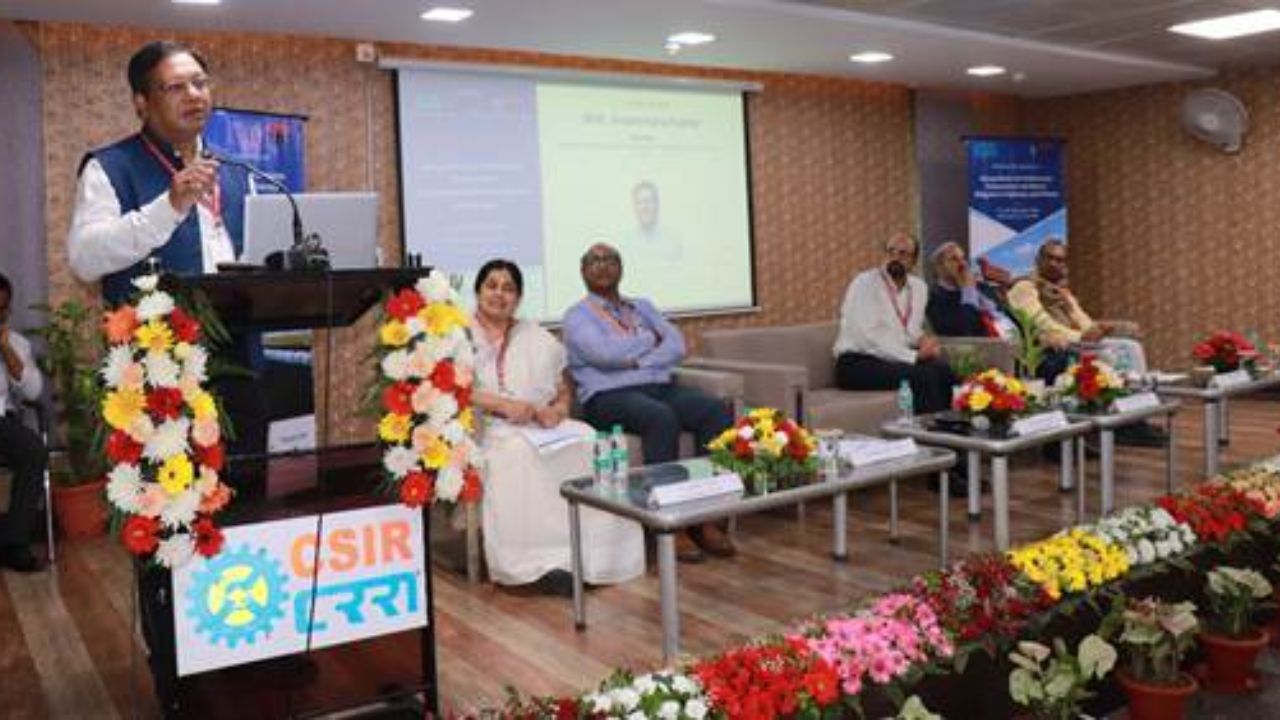
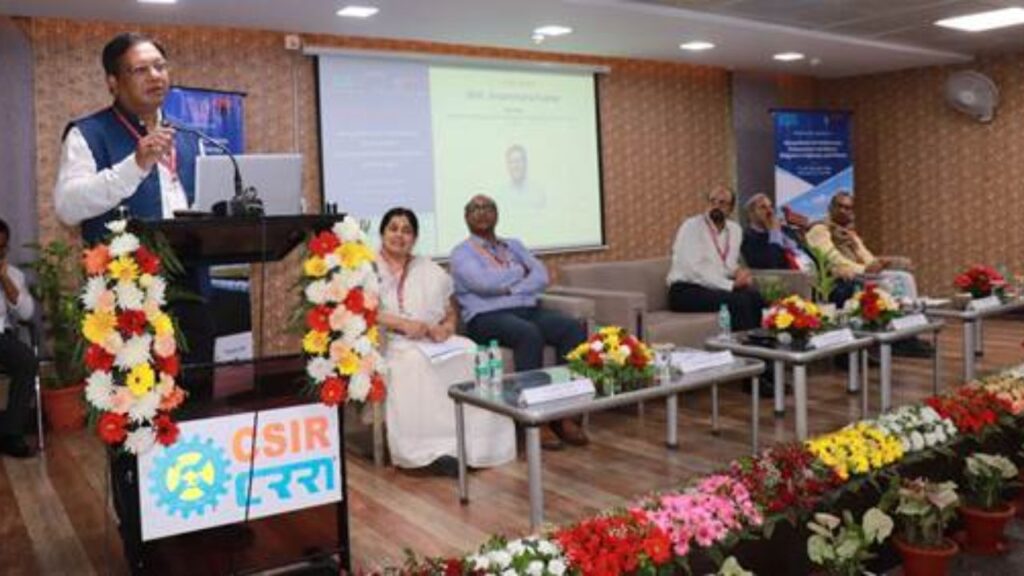

A two-day national symposium on “Geosynthetics for Performance Enhancement and Distress Mitigation in Highways and Railways” began on September 7, 2026, at the CSIR-Central Road Research Institute (CSIR-CRRI) Auditorium in New Delhi. The event, jointly organised by CSIR-CRRI and the Geosynthetics Society (GS), Pune, brings together policymakers, infrastructure agencies, researchers, geotechnical professionals and industry representatives to discuss innovative approaches for strengthening India’s transportation infrastructure.
The symposium focuses on the growing role of geosynthetics in addressing engineering challenges associated with national highways, high-speed rail networks and strategically important mountain corridors.
Focus on Advanced and Sustainable Infrastructure Solutions
The inaugural session began with the ceremonial lighting of the lamp and the national song. Minimol Korulla, Vice President of the Geosynthetics Society, Pune, outlined the objectives of the symposium and stressed the importance of uniform field practices and greater adoption of advanced polymer-based materials.
Welcoming participants, Dr. Chalumuri Ravi Sekhar, Director, CSIR-CRRI, highlighted the institute’s contribution to transportation research and innovation. He noted that geosynthetics have evolved from being optional construction materials to becoming important components of modern infrastructure design, particularly as India expands its multimodal transportation network.
Prof. G.L. Sivakumar Babu, President of the Indian Geotechnical Society and Chairman of the CSIR-CRRI Research Council, underlined the need to combine geosynthetic technologies with engineering approaches that are both resilient and environmentally efficient.
Railways and Mountain Corridors Among Key Priorities
Shri Vivek Bhushan Sood, Executive Director, Railway Board, who attended as Guest of Honour, spoke about the relevance of geosynthetic solutions to Indian Railways’ modernization programme. His remarks covered areas such as track-bed stabilization, increasing heavy-haul capacity and reducing vibrations through suitable geosynthetic systems.
Chief Guest Shri Amarendra Kumar, Director, National Highways & Infrastructure Development Corporation Limited (NHIDCL), discussed the importance of geosynthetic ground engineering in difficult geographical conditions. He highlighted their potential applications in steep slopes, high-altitude roads and other challenging projects across the North-Eastern and Himalayan regions.
The inaugural programme concluded with felicitations and a vote of thanks delivered by Dr. K. Ravinder, Head, International Liaison and Training, CSIR-CRRI.
Day One Examines Reinforced Soil Wall Challenges
The first day of technical deliberations concentrated on practical issues affecting highway and railway infrastructure. A major session examined distress remediation in reinforced soil (RS) walls. Moderated by Prof. Ashish Juneja of IIT Bombay, the panel included experts from the National Highways Authority of India, Ministry of Road Transport and Highways, IIT Tirupati, CSIR-CRRI and the consulting sector.
Discussions covered diagnostic assessment, forensic investigations and repair techniques for distressed reinforced soil retaining structures.
Another series of expert presentations examined successful RS wall projects and field experiences. Prof. B.V.S. Viswanadham, Dr. P.S. Prasad, Dr. Alok Bhowmick and Ms. Atasi Das presented case studies and practical recommendations relating to geogrid-reinforced walls, including key construction practices and common challenges.
Geosynthetics for Future Rail Infrastructure
Railway infrastructure formed another important part of the first-day programme. Sessions chaired by Mr. Vivek Kapadia of IIT Gandhinagar explored geosynthetic design considerations for high-speed railway systems and technologies for vibration isolation.
Prof. Amit Prashant discussed applications in high-speed rail, while Dr. Nasim Aktar of CSIR-CRRI addressed vibration isolation using closed-cell polymeric foams. Industry representatives from Maccaferri Environmental Solutions, TechFab India, Strata Geosystems and Geoquest India also contributed technical perspectives.
Day Two to Focus on Green Pavements and Rockfall Protection
The second day, scheduled for September 8, will expand discussions to sustainable pavement stabilization, including reinforcement of granular and bituminous layers, geogrid-reinforced asphalt overlays, plastic geocells and subsurface drainage systems.
A key lecture by the President of the Geosynthetics Institute will examine the complete lifecycle of geosynthetics, from production to end-of-life, in the context of resilient transportation infrastructure.
Sessions will also address ground improvement and rockfall protection, featuring case studies involving sloped embankments, protective structures and rock-shed cushioning systems. The symposium will conclude with an industry forum on implementation challenges and future standards, followed by discussions on a national roadmap for wider adoption of geosynthetic technologies in India’s transport sector.

Author: Shivam
Shivam Dwivedi is a senior journalist with extensive experience in research-driven journalism, policy communication, and multi-platform storytelling. His areas of interest include international relations, defence, science & technology, education, urban development, agriculture, spirituality, and environmental sustainability. His work focuses on in-depth analysis, public discourse, and impactful narratives across governance and development sectors, with a strong commitment to the Sustainable Development Goals (SDGs). Contact: [email protected]