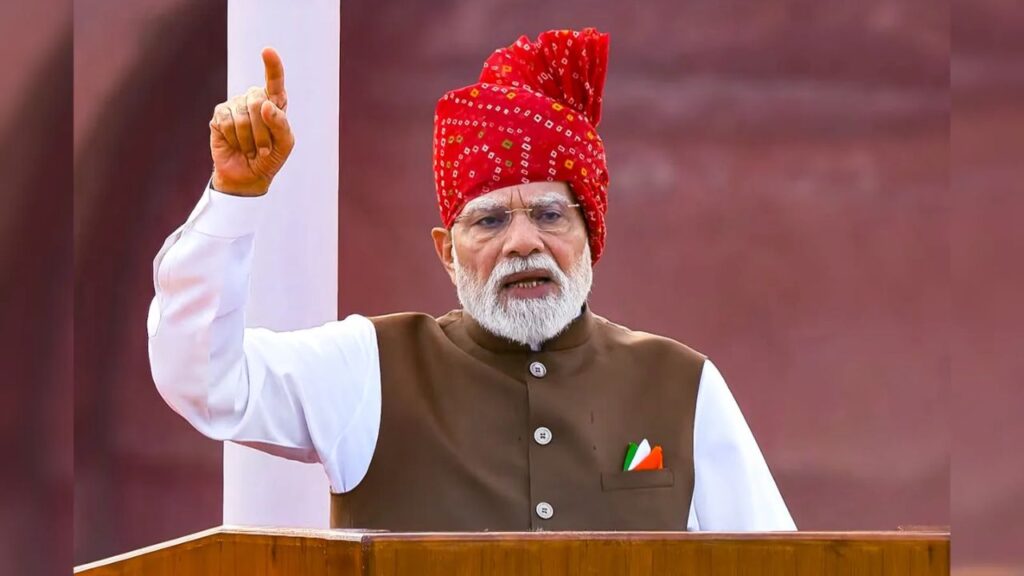

Prime Minister Narendra Modi has identified agriculture and food production as the “second strength” among the seven streams, or Sapta Dhara, that can propel India towards new heights over the next five to seven years. He stressed the need to transform Indian agriculture by promoting chemical-free farming, strengthening food processing and building integrated supply chains connecting farms directly with global markets.
Addressing the broader vision of a developed India, the Prime Minister said the country must focus on areas where it possesses significant potential and convert them into globally competitive strengths. Agriculture, he noted, has the capacity not only to improve farmers’ incomes but also to expand India’s presence in international food markets.
From Farm to Global Markets
PM Modi called for a stronger “farm-to-export” approach covering traditional Indian foods, millets, spices, fruits and flowers. He said these products have the potential to emerge as global brands if India can ensure consistent quality, efficient logistics and compliance with international standards.
The Prime Minister also encouraged farmers to adopt chemical-free farming, pointing to the growing international demand for naturally produced and sustainable agricultural products. According to him, Indian farm produce that meets global quality and safety parameters can gain easier access to markets around the world.
The emphasis on export-oriented agriculture comes at a time when India is seeking to diversify its cropping patterns and make farming more resilient to climate-related challenges.
Supply Chains Key to Crop Diversification
A major challenge in encouraging farmers to diversify beyond conventional crops is the lack of reliable supply chains and assured markets. Crops such as millets, despite their nutritional and climate-resilient characteristics, often struggle to compete with crops such as paddy and sugarcane because farmers have greater confidence in the established procurement and marketing systems associated with them.
Developing integrated supply chains could help address this gap. Better storage, transportation, processing, branding and export facilities can provide farmers with access to markets and reduce wastage between production and consumption.
An export-focused agricultural ecosystem could also encourage farmers to consider crops with higher demand in international markets, potentially supporting both income growth and more sustainable resource use.
Greater Focus on Food Processing
The Prime Minister further underlined the importance of expanding food processing capabilities. Processing agricultural produce can increase its value, extend shelf life and create opportunities for branding and exports.
He also pointed to the opportunities created by India’s free trade agreements (FTAs), which are opening access to larger international markets. The challenge, he said, is to ensure that Indian producers and businesses are equipped to meet the requirements of these markets and take full advantage of the opportunities available.
Strengthening food processing alongside agricultural exports could create a wider rural value chain, generating employment and increasing the share of value that reaches farmers.
Sapta Dhara for a Developed India
While agriculture and food production were described as the second major strength, PM Modi identified manufacturing as the first and technology and innovation as the third among the seven streams of power. The broader Sapta Dhara framework is aimed at identifying key areas that can contribute to India’s development journey towards 2047.
The focus on agriculture reflects the sector’s importance to rural livelihoods as well as its growing potential as an export and value-added industry. By combining sustainable farming practices, modern processing facilities, robust supply chains and international market access, India can seek to build a more competitive agricultural economy.
The proposed shift from farm production to an integrated farm-to-export ecosystem could therefore play a significant role in achieving the twin objectives of raising farmers’ incomes and promoting environmentally sustainable agriculture.