
Union Agriculture and Farmers’ Welfare and Rural Development Minister Shivraj Singh Chouhan will administer a pledge to officials of the two ministries at the Pusa campus in New Delhi on August 18, as the government seeks to translate Prime Minister Narendra Modi’s vision of “Sapt Dhara of Shakti” into concrete action for farmers and rural communities.
The meeting will focus on departmental roadmaps, implementation of key programmes, expansion of the Lakhpati Didi initiative and measures aimed at improving the welfare and economic prospects of farmers and rural populations. Progressive farmers, Lakhpati Didis, agricultural exporters and food-processing stakeholders are also expected to participate.
Turning Vision into Action
Chouhan said the seven streams of strength outlined by the Prime Minister in his Independence Day address provide a significant strategic direction for agriculture and rural development. He stressed the need for people-centric programmes, transparent monitoring and effective implementation to ensure that government initiatives deliver tangible benefits.
The minister said departmental plans would be reviewed with the objective of speeding up implementation and ensuring that the benefits of government programmes reach farmers and rural women directly. These efforts are intended to contribute to the larger goal of building a developed India, or Viksit Bharat, by 2047.
Agriculture and food production form a major component of the Prime Minister’s vision. Along with strengthening domestic agricultural production, the government is focusing on food processing and expanding opportunities for Indian farm products in international markets.
Focus on Agriculture and Global Markets
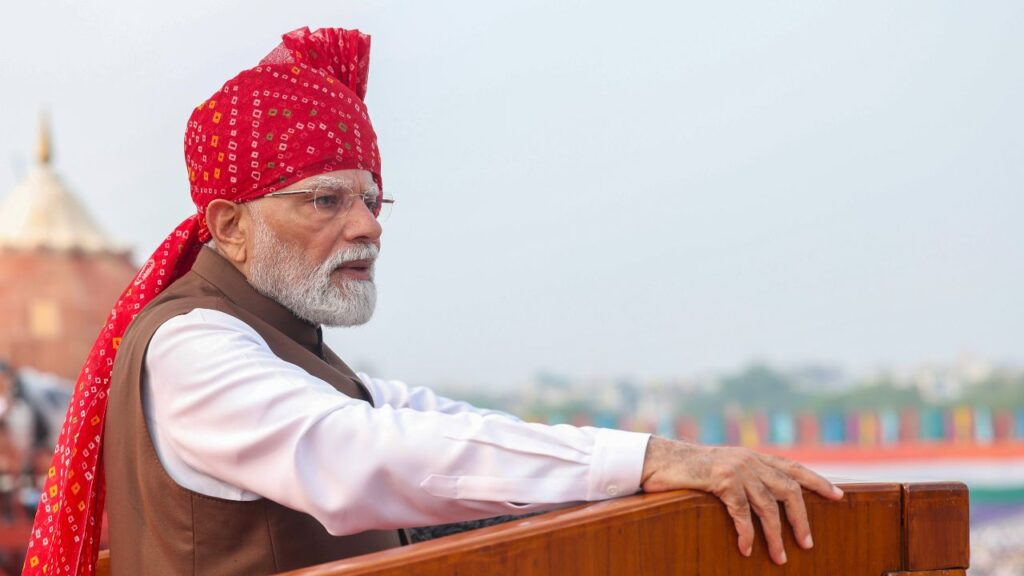
During his Independence Day address from the Red Fort, Modi highlighted the importance of strengthening agriculture, expanding food processing capacity and opening new global markets for Indian producers.
The government is also maintaining its focus on fertiliser security and affordable supplies for farmers amid international uncertainties. Long-term efforts towards self-reliance in critical sectors such as fertilisers and fuel were highlighted as important elements of India’s strategy to withstand global disruptions.
The government is also looking to create additional opportunities for farmers through exports, particularly in agriculture and marine products. Greater integration of production, processing and international marketing is expected to help farmers gain access to higher-value markets.
Lakhpati Didi Target Doubled
A key agenda item at the August 18 meeting will be the expansion of the Lakhpati Didi programme under the Ministry of Rural Development.
Around three crore rural women have already achieved Lakhpati Didi status, and the government has set an ambitious target of increasing the number to six crore. The meeting will examine the roadmap required to achieve this objective and strengthen livelihood opportunities for women associated with Self-Help Groups.
The programme supports rural women through skill development, financial assistance and livelihood initiatives designed to raise household incomes. The government views women’s economic empowerment as a crucial pillar of rural transformation.
Expanding Markets for Rural Women
Improving market access for women-led rural enterprises will also receive attention. Initiatives such as She-Marts, announced in the Union Budget, are intended to provide rural women with better avenues to market and sell their products.
Under such initiatives, products connected with traditional crafts, yoga, Ayurveda and other rural enterprises can receive greater visibility and branding support. The objective is to help women-led enterprises move beyond local markets and explore opportunities across India and overseas.
The August 18 deliberations are therefore expected to bring together agriculture, rural livelihoods, food processing and market-access priorities under a common implementation framework. By combining policy direction with stronger monitoring and grassroots participation, the government aims to accelerate progress towards a more productive, self-reliant and inclusive rural economy in line with the Viksit Bharat 2047 vision.