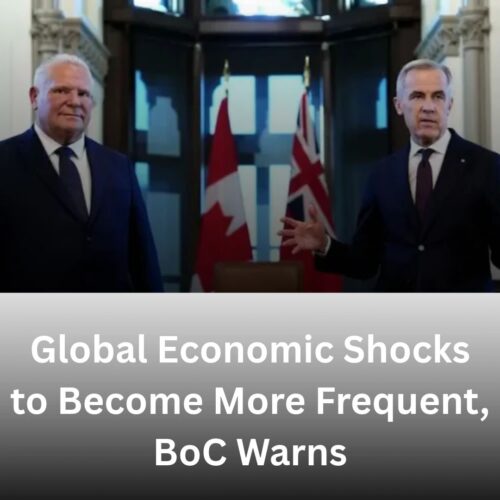
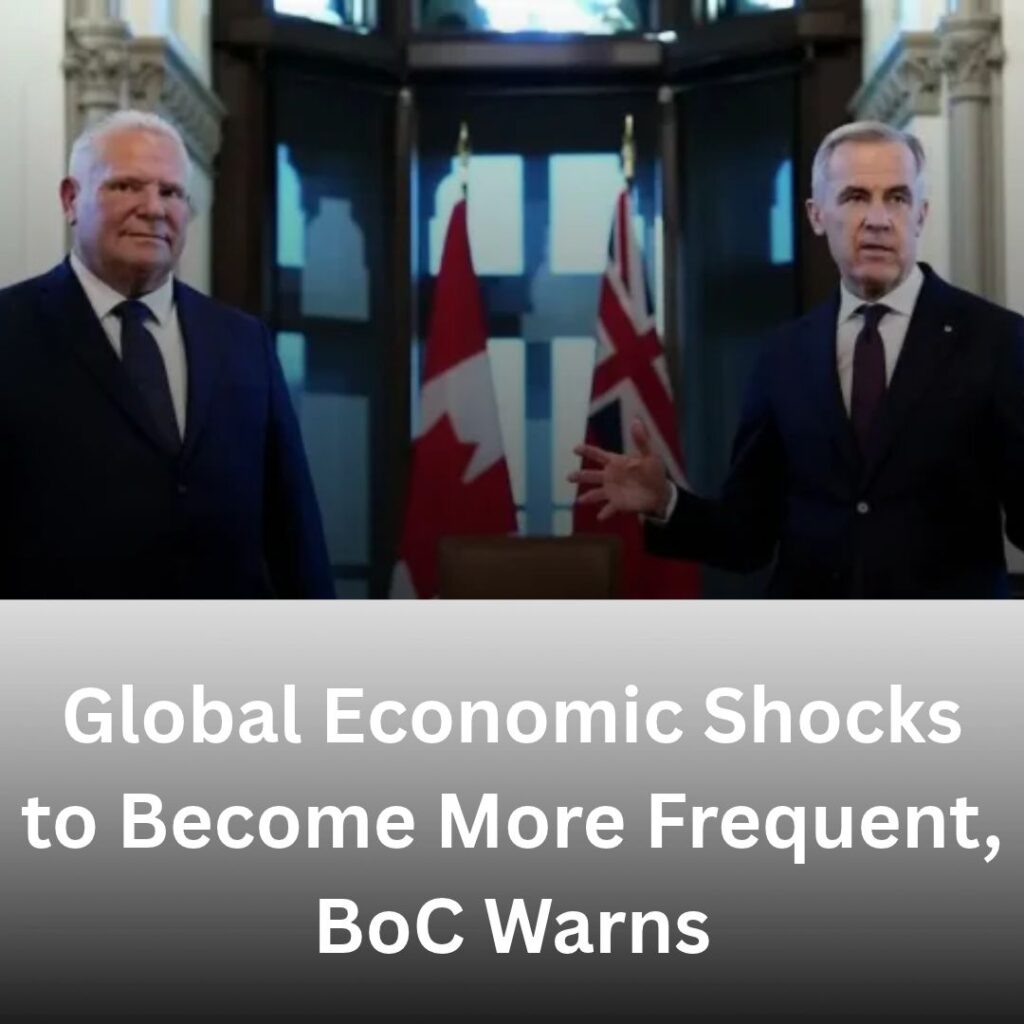

Global economic shocks are expected to become larger, more frequent and harder to manage as countries face growing trade tensions, geopolitical conflicts and other economic disruptions, Bank of Canada Governor Tiff Macklem has warned.
Speaking at the Economic Club of Canada on Tuesday, Macklem said the global economic environment is becoming increasingly uncertain. He highlighted trade disputes, wars, rising energy costs, extreme weather events and the rapid growth of artificial intelligence (AI) as major factors creating new challenges for policymakers.
He stressed that the Bank of Canada remains committed to maintaining its 2% inflation target, saying stable prices are essential to protecting households and supporting long-term economic growth.
Global Economic Shocks:- Bank of Canada Maintains Its 2% Inflation Target
Macklem said the central bank cannot prevent global economic shocks or completely avoid their effects. However, monetary policy can help ensure these disruptions do not create long-term inflation problems.
“We can’t prevent those shocks or their ripple effects, but monetary policy can keep them from undermining price stability,” Macklem said.
He also pointed to the bank’s decision to renew its monetary policy framework, keeping the 2% inflation target for another five years.
According to Macklem, this target has helped Canadians manage periods of economic uncertainty, particularly during the COVID-19 pandemic and the economic disruption caused by the Russia-Ukraine war.
Canada’s inflation rate reached around 8% in 2022, its highest level in nearly four decades. The central bank responded with several interest rate increases between 2022 and 2024, helping bring inflation down closer to its target.
However, inflation has remained a concern, with the rate recently hovering around 3%.
Global Economic Shocks:- Trade Conflicts and Wars Create Inflation Risks
Macklem identified ongoing geopolitical tensions, particularly the conflict involving Iran and trade disputes between the United States and other countries, as important sources of economic uncertainty.
He explained that disruptions in global energy supplies can increase oil prices and production costs while slowing economic growth.
Such developments create a difficult situation for central banks. Higher prices can put pressure on household budgets, while weaker economic activity can affect businesses, employment and investment.
The governor explained that supply-side disruptions are particularly challenging because they can push inflation higher while weakening economic conditions at the same time.
Extreme weather events and the growing use of artificial intelligence are also creating additional uncertainties for the global economy.
Global Economic Shocks:- Interest Rate Decisions Could Become More Challenging
Macklem said central banks must carefully balance inflation risks against the possibility of slowing economic growth when responding to supply-related disruptions.
If policymakers increase interest rates to control rising prices, borrowing becomes more expensive for households and businesses. However, keeping rates too low could allow inflation to remain elevated for longer.
The Bank of Canada’s priority, he said, is to maintain inflation at a low, stable and predictable level.
The central bank’s recent policy framework also places greater attention on overall inflation rather than relying heavily on selected underlying inflation measures.
Global Economic Shocks:- Oil Prices and Inflation Outlook Remain Uncertain
Macklem also discussed the changing outlook for inflation following movements in international oil prices.
He noted that oil prices and refinery margins had declined since October, suggesting that inflation could be somewhat lower than previously expected.
However, he warned that the effects of higher energy costs can continue to influence prices even after the initial increase in oil prices has eased.
At the same time, Canada’s economy has shown greater resilience than the central bank had initially anticipated.
These developments could influence the Bank of Canada’s future interest rate decisions and its assessment of inflation risks.
Global Economic Shocks:- Bank of Canada to Announce Its Next Rate Decision in December
The Bank of Canada is expected to announce its final interest rate decision of 2026 in December.
Macklem did not provide a clear indication of whether the central bank would increase interest rates again or maintain the existing level.
Economists are closely monitoring the bank’s comments on inflation, energy prices and economic growth to understand its next policy move.
KPMG Canada economist Vincent Chartray said the renewed monetary policy framework could change how the central bank assesses inflation and communicates its decisions.
The Bank of Canada has also introduced an inflation dashboard on its website, bringing together major price indicators to help track inflation trends.
Macklem concluded that economic conditions may continue to change as geopolitical developments, trade relations and technological advances reshape the global economy. However, he made it clear that the central bank’s commitment to price stability will remain unchanged. Also read :- COP31 Deadlock: Why Climate Justice Is Key to Global Climate Action