
India Inflation and Interest Rate Hike:- New Delhi: India is facing a growing inflation challenge as rising food prices, higher energy costs, currency pressure and global economic uncertainty continue to affect the economy. As the Reserve Bank of India (RBI) prepares for its December 2–4 monetary policy review, expectations of another interest rate increase have raised questions about its impact on businesses, households and economic growth.
Market expectations point towards a possible 25-basis-point increase in the repo rate to 5.75 per cent, following October’s increase to 5.50 per cent. While higher interest rates can help control inflation, experts and market participants are also concerned about the additional financial pressure on consumers and businesses.
India Inflation and Interest Rate Hike:- Rising Food and Wholesale Inflation
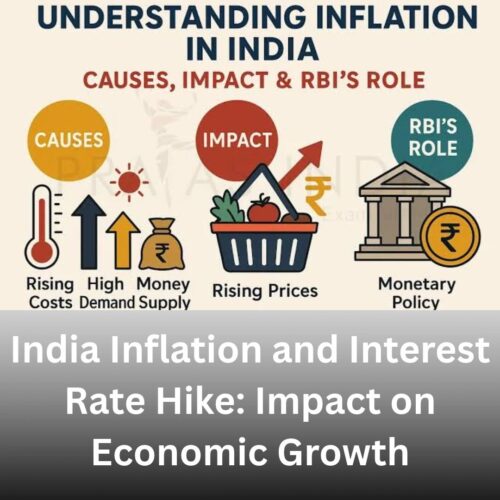
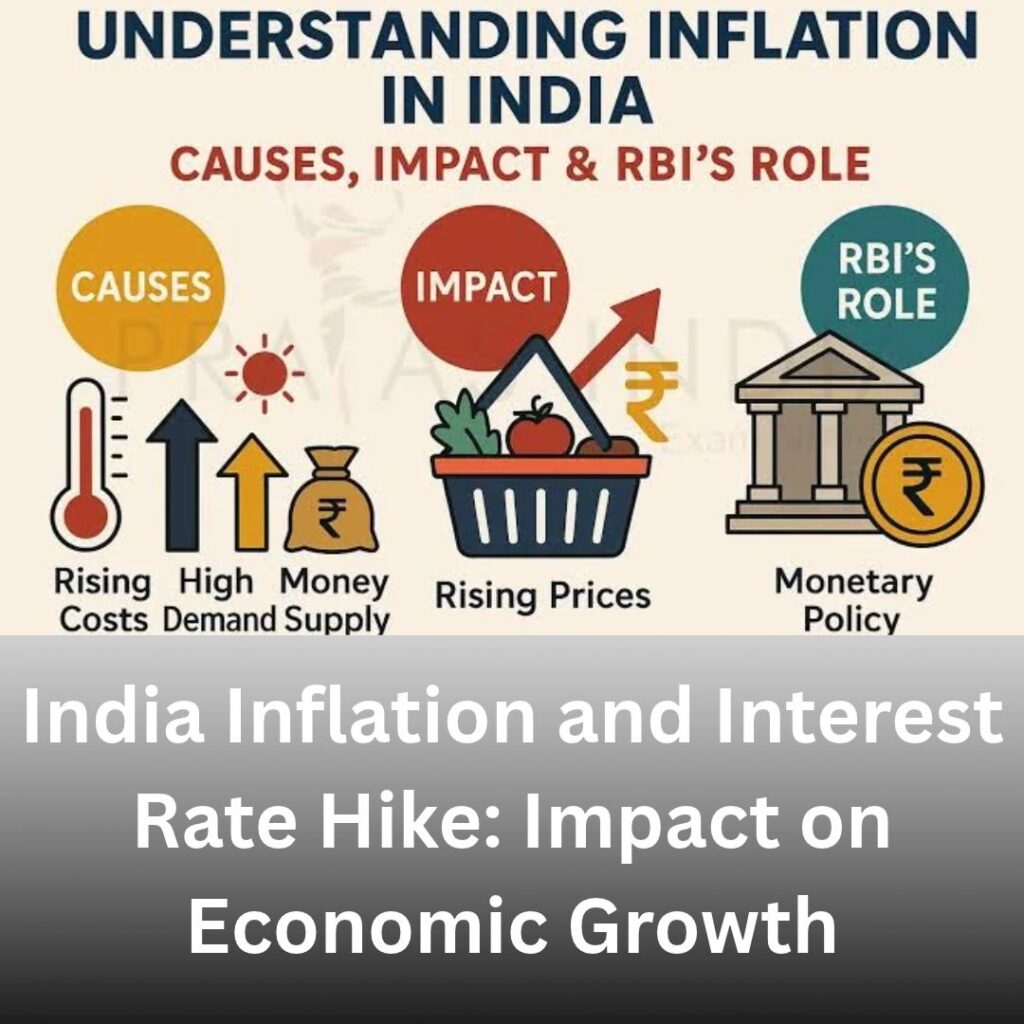
India’s inflation figures indicate increasing pressure on household budgets. Retail inflation, measured by the Consumer Price Index (CPI), reached 6.09 per cent in October, crossing the RBI’s upper tolerance limit of 6 per cent for the first time in two years.
Wholesale Price Index (WPI) inflation also increased to 12.29 per cent from 11.39 per cent in September. Food inflation approached 8.9 per cent, while wholesale inflation in fuel and power reached 32.8 per cent.
Higher food and fuel prices are affecting both consumers and businesses. Rising energy costs increase transportation and manufacturing expenses, while expensive food products leave households with less money for other purchases.
Currency depreciation and international supply disruptions are adding to these challenges, making imported commodities more expensive.
India Inflation and Interest Rate Hike:- Higher Interest Rates Could Affect Businesses and Consumers
The RBI uses interest rate increases to control inflation by making loans more expensive. Higher borrowing costs can reduce spending and investment, helping slow demand and limit price increases.
However, this approach may be less effective when inflation is mainly caused by supply shortages and rising production costs.
Households already spending more on food, fuel and transportation may face additional pressure if home loan EMIs increase. This could reduce spending on automobiles, consumer goods, travel and other services.
Small businesses may also struggle with higher working-capital costs. Manufacturers dealing with expensive electricity, raw materials and transportation could postpone expansion plans, reduce production or delay recruitment.
Large companies generally have better access to financing, while smaller enterprises depend more heavily on bank loans. As a result, higher interest rates may affect small businesses more severely.
India Inflation and Interest Rate Hike:- GDP Growth and Global Financial Pressure
India’s economy continues to record strong growth, with real GDP expanding 7.8 per cent in the first quarter of FY27. The RBI has projected annual economic growth of approximately 7.1 per cent.
However, strong GDP figures do not reflect the financial position of every household and business. Higher borrowing costs could gradually affect housing demand, automobile sales, private investment and employment.
Global financial conditions are another concern. Changes in US Federal Reserve interest rates can influence foreign investment flows and put pressure on the Indian rupee.
India’s foreign exchange reserves declined from $785.7 billion on September 4 to $719.7 billion on October 23, according to the figures cited in the report. A weaker rupee can increase the cost of imported crude oil and natural gas, adding further inflationary pressure.
India Inflation and Interest Rate Hike:- Wedding Season and Gold Demand
India’s wedding season is also contributing to economic activity. According to the Confederation of All India Traders (CAIT), around 5.2 million weddings are expected between November 21 and December 15, generating estimated business worth Rs 7.5 trillion.
Delhi-NCR alone is expected to account for approximately 500,000 weddings and business activity worth Rs 2.5 trillion.
Gold and jewellery remain important parts of wedding spending. However, higher borrowing costs could increase financing expenses for jewellery manufacturers, wholesalers and retailers.
India Inflation and Interest Rate Hike:- Supply-Side Reforms Needed to Control Inflation
Higher interest rates alone cannot address food shortages, expensive energy and supply-chain disruptions. India also needs better agricultural infrastructure, storage facilities, transportation networks and energy diversification.
Improving food distribution and reducing agricultural wastage can help control seasonal price increases. Stronger domestic production and efficient supply chains can also reduce dependence on international markets.
The RBI’s December policy decision will therefore be important for balancing inflation control with economic growth.
India needs an approach that controls rising prices without discouraging business investment, employment and consumer spending. Sustainable economic growth will depend not only on interest rate decisions but also on stronger infrastructure, affordable essential goods and improved domestic supply chains. Also read:- India Economic Growth Forecast: GDP to Grow 7% in FY27 & FY28