
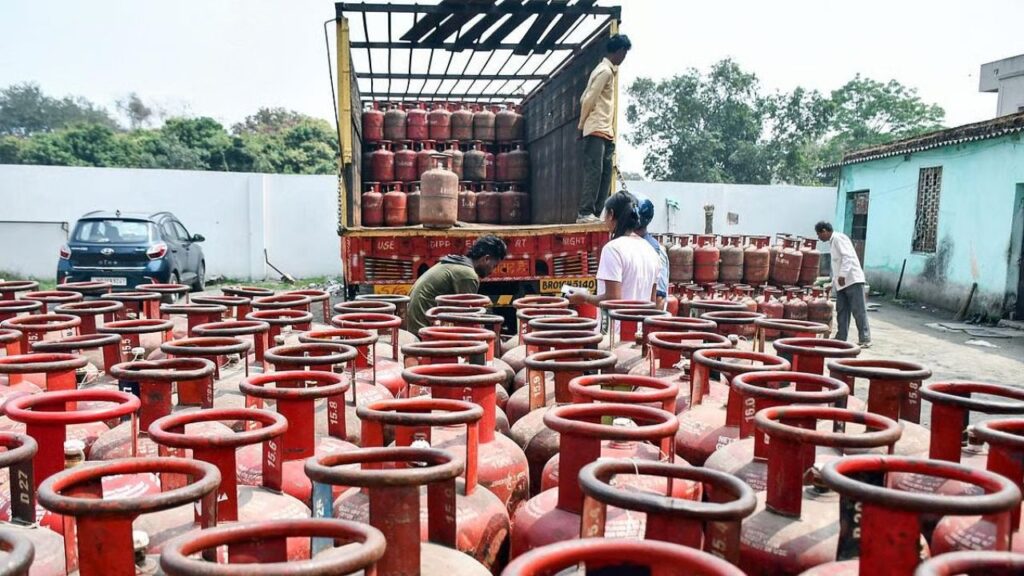

In a move aimed at strengthening the country’s energy security, the Central Government has directed state-owned fuel retailers to develop sufficient liquefied petroleum gas (LPG) storage facilities capable of meeting at least 30 days of national demand. The decision comes in the wake of recent supply disruptions triggered by the prolonged conflict in West Asia, a region that plays a crucial role in India’s energy imports.
Speaking to reporters on Friday, Petroleum Ministry Joint Secretary Sujata Sharma said the government has instructed major oil marketing companies (OMCs) to prepare plans for expanding LPG storage infrastructure beyond their existing commercial inventories.
“We are working on strategic reserves. Oil marketing companies have been asked to formulate plans to maintain LPG reserves for a minimum of 30 days,” Sharma said.
The responsibility for creating these additional reserves has been assigned to state-run fuel retailers, including Indian Oil Corporation (IOC), Bharat Petroleum Corporation Limited (BPCL), and Hindustan Petroleum Corporation Limited (HPCL). These companies dominate India’s fuel distribution network and are expected to play a central role in implementing the government’s energy security strategy.
The move follows disruptions in global energy supply chains caused by the three-month conflict in West Asia. India relies heavily on Gulf nations for its energy requirements, importing a significant portion of its crude oil, natural gas, and LPG from the region. According to government officials, the conflict affected approximately 40 percent of India’s crude oil imports, 65 percent of natural gas supplies, and nearly 90 percent of LPG imports sourced from Gulf countries.
Despite these challenges, authorities have managed to secure alternative supplies of crude oil and natural gas to ensure uninterrupted availability of essential fuels. However, LPG supplies have faced greater pressure, leading to tighter regulation of deliveries, particularly for commercial consumers.
Apart from LPG storage, the government is also exploring options to enhance the country’s crude oil reserve capacity. While officials did not provide specific details regarding the expansion plans, the initiative reflects a broader effort to improve preparedness against future geopolitical disruptions.
The Petroleum Ministry reassured consumers that India currently has adequate stocks of petrol, diesel, LPG, crude oil, and natural gas. Officials stated that domestic refineries are operating at optimal levels, while LPG production has reached a record high of approximately 52,000 tonnes per day.
Sharma emphasized that no LPG distributorship across the country has reported a complete depletion of stocks. However, authorities have observed unusual increases in fuel purchases at several retail outlets.
According to ministry data, more than 150 districts have recorded petrol sales growth exceeding 30 percent, while 14 districts witnessed sales more than doubling. Diesel demand has shown a similar trend, with over 156 districts reporting growth above 30 percent and six districts registering increases of more than 100 percent.
Officials attributed the surge in retail fuel sales to a combination of factors, including increased agricultural activity and a shift in purchasing patterns. Bulk consumers and customers of private fuel retailers have increasingly turned to state-run outlets due to lower prices offered by public sector companies.
Private fuel retailers have reportedly experienced a sharp decline in sales, with diesel volumes falling by nearly 38 percent. Bulk diesel sales through public sector companies have also declined by around 29 percent as pricing dynamics continue to evolve.
Since mid-May, IOC, BPCL, and HPCL have increased petrol and diesel prices by approximately ₹7.50 per litre. Even so, prices at many state-owned fuel stations remain comparatively lower than those charged by private retailers, encouraging greater consumer demand.
To prevent shortages and market distortions, the government is closely monitoring the situation. States and Union Territories have been advised to establish special enforcement teams to curb hoarding, black marketing, and speculative fuel purchases.
Authorities have also appealed to consumers to avoid panic buying and purchase fuel only through authorized channels. Officials maintain that current fuel inventories remain adequate and that the government’s proactive measures are designed to ensure uninterrupted energy supplies in the months ahead.

Author: Shivam
Proficient Writer Contact: [email protected]