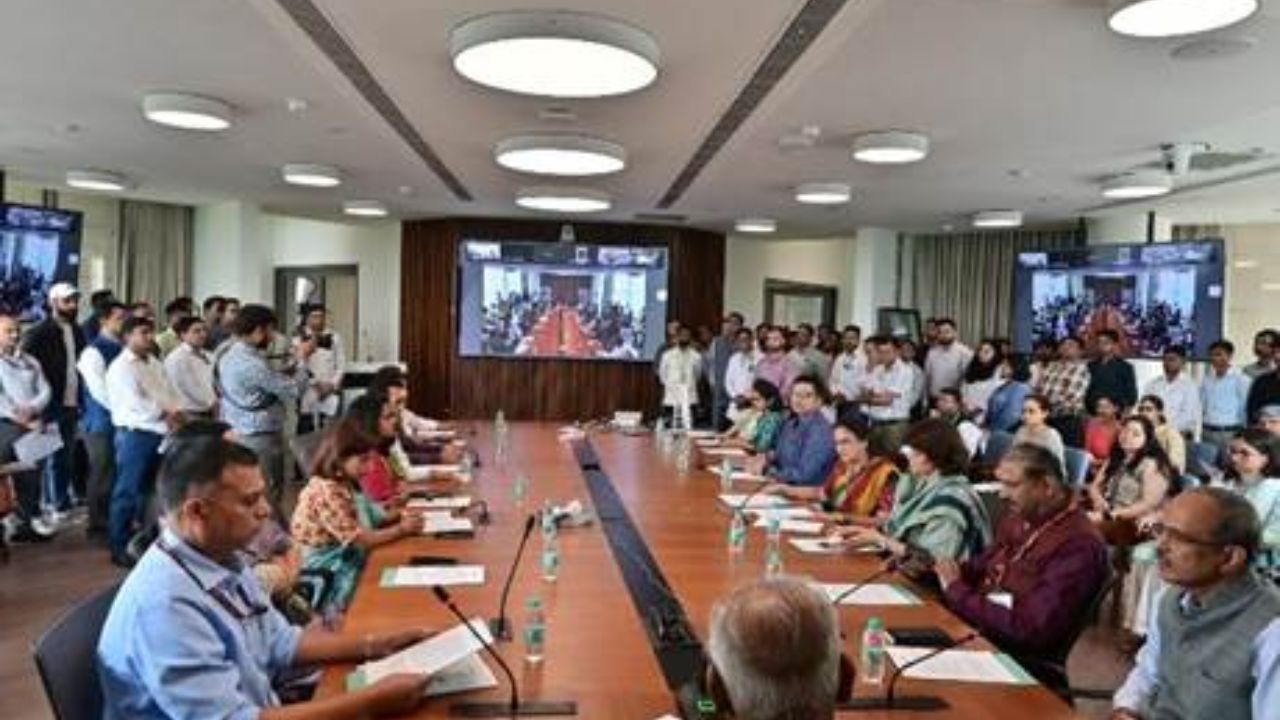
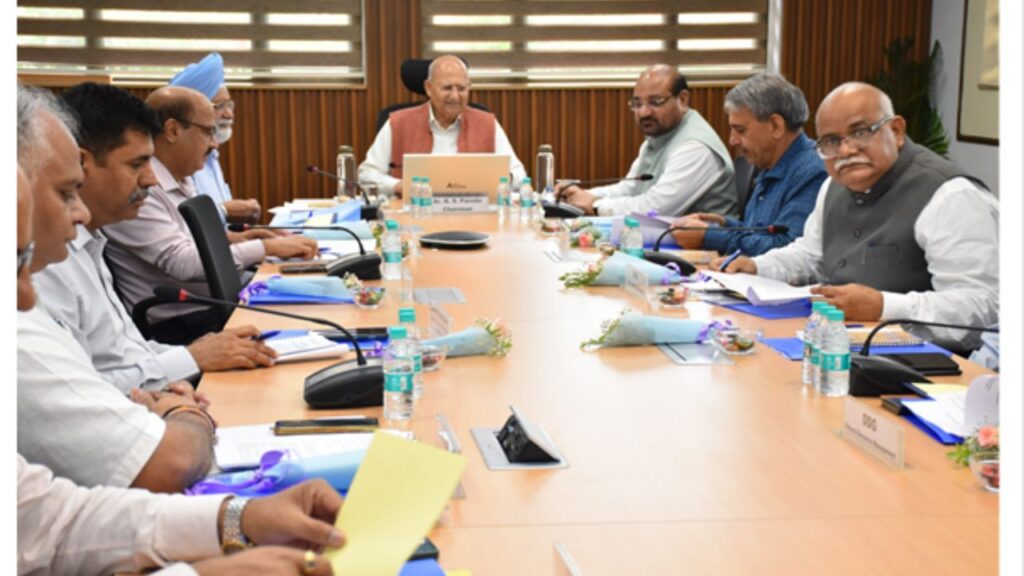

India has renewed its focus on safeguarding its vast agricultural genetic wealth with the first meeting of the newly reconstituted National Advisory Board on Management of Genetic Resources (NABMGR), held on July 29, 2026, at the ICAR–National Bureau of Plant Genetic Resources (ICAR-NBPGR) in New Delhi. The meeting marked an important step towards strengthening national policies for the conservation and sustainable use of plant, animal, fish, microbial and insect genetic resources that are vital for food security, climate resilience and sustainable agriculture.
Originally established by the Indian Council of Agricultural Research (ICAR) in 2011, the advisory board has been reconstituted under the chairmanship of Dr R.S. Paroda, former Secretary, Department of Agricultural Research and Education (DARE), and former Director General of ICAR. Dr M.L. Jat, Secretary, DARE, and Director General of ICAR, is serving as the co-chairman of the board.
The reconstituted board brings together representatives from key government departments, scientific institutions, biodiversity organisations, farmer groups and industry bodies. Participants included officials from the National Biodiversity Authority, Department of Biotechnology, Ministry of Environment, Forest and Climate Change, Department of Agriculture and Farmers Welfare, Department of Animal Husbandry and Dairying, Botanical Survey of India, National Medicinal Plants Board, National Seed Association of India, Bioversity International, along with ICAR scientists and farmer representatives.
Genetic Resources Described as National Strategic Assets
In his inaugural remarks, Dr Paroda highlighted that India’s diverse genetic resources represent a strategic national asset essential for ensuring long-term food and nutritional security, adapting agriculture to climate change and supporting sustainable development.
He stressed that the country’s National Bureaux managing genetic resources should align their conservation efforts with emerging national priorities. According to him, greater use of conserved germplasm, including wild relatives of crops and livestock, can significantly expand the genetic base available for developing climate-resilient, disease-resistant and high-yielding varieties and breeds.
Dr Paroda also recalled the first International Agrobiodiversity Congress held in 2016 and called for renewed efforts to implement the recommendations contained in the Delhi Declaration on Agrobiodiversity. He urged a review of progress made so far and preparation of a future roadmap to accelerate conservation initiatives.
Focus on Global Collaboration and Legal Frameworks
The chairman also advocated stronger international cooperation, particularly with countries in Central Asia and South-East Asia, to facilitate access to valuable genetic resources. He recommended expanding germplasm exchange through existing international partnerships for important crops such as cotton, rambutan, avocado and mangosteen, as well as livestock species like sheep.
Another significant proposal was the development of a dedicated legal framework for protecting the rights of breeders and farmers involved in animal and fish genetic resources, similar to the Protection of Plant Varieties and Farmers’ Rights Act. Such legislation, he noted, would encourage innovation while safeguarding the interests of livestock keepers and fish farmers.
Integrating Genetic Resources with Modern Agriculture
Addressing the meeting, Dr M.L. Jat emphasised that the management of genetic resources should be integrated with advances in soil science, digital agriculture and crop improvement programmes.
He said identifying crop accessions suited to specific soil conditions and agro-climatic zones would help develop location-specific and climate-resilient farming systems. Dr Jat also highlighted the strength of India’s National Agricultural Research, Education and Extension System (NAREES), led by ICAR, in conserving and utilising genetic resources for present and future generations.
He expressed confidence that the diverse composition of the reconstituted advisory board would improve coordination among ministries, research institutions and stakeholders while promoting equitable sharing of benefits arising from India’s biological resources.
Roadmap for 2026–2031
During the meeting, directors of the six ICAR National Bureaux presented their achievements between 2021 and 2026 and outlined future action plans for the 2026–2031 period. Their presentations focused on strengthening conservation systems, improving characterization of genetic resources and supporting national priorities aligned with the Sustainable Development Goals.
The board recommended expanding pre-breeding programmes to increase the use of conserved germplasm in crop improvement. Members also proposed systematic exploration of unexplored regions for germplasm collection over the next five years and stronger collaboration among ICAR institutions to establish an integrated national framework for genetic resource management.
The members further supported launching an inter-institutional programme to mainstream traditional and underutilised crop varieties, livestock breeds, fish species, microorganisms and beneficial insects. Progressive farmer and Padma Shri awardee Sunda Ram Verma endorsed the proposal during the discussions.
The board also reviewed the implementation of Access and Benefit Sharing provisions under the Biological Diversity Act, 2002, and discussed measures to strengthen coordination between the National Biodiversity Authority and DARE/ICAR. Progress on establishing the National Safety Genebank was assessed, with the chairman urging timely completion so that the facility can be dedicated to the nation during ICAR’s centenary celebrations in 2028–29.
The meeting concluded with a reaffirmation of NABMGR’s commitment to providing strategic policy guidance for conserving India’s invaluable genetic resources. The board’s recommendations are expected to reinforce agrobiodiversity governance, strengthen agricultural resilience and contribute to the vision of a developed India through sustainable and science-driven management of genetic resources.