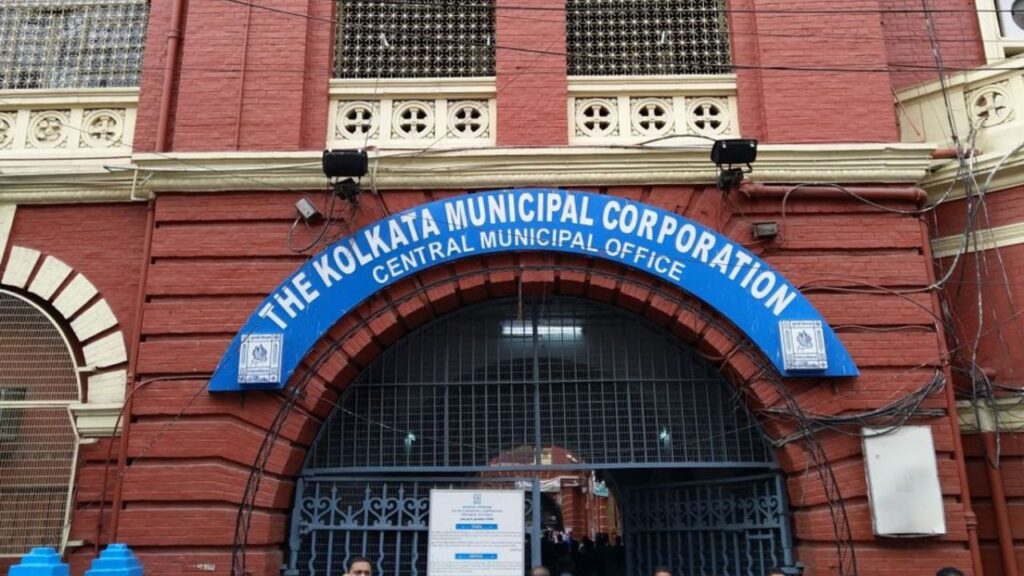

The Kolkata Municipal Corporation (KMC) on Tuesday conducted hearings for residents and flat owners living in several properties allegedly linked to Trinamool Congress leader and real estate developer Raju Naskar, after demolition notices were issued against the buildings over alleged illegal construction activities.
According to civic body sources, nearly 40 families from eight to nine residential buildings appeared before municipal officials to present their cases and seek relief. Most of the buildings under scrutiny were reportedly either directly developed by Naskar or connected to him through land and construction agreements.
The hearings exposed the anxiety and uncertainty faced by several middle-class families who claimed they had invested their lifetime savings into flats that may now face demolition due to lack of approved building plans and alleged violations of municipal rules.
One woman who attended the hearing narrated how her family entered into a development agreement with Naskar for their ancestral property in Beleghata. She stated that her father owned a small plot measuring around two cottahs and agreed to allow redevelopment in exchange for flats in the new building.
“We trusted him because he was influential and known in the area. He promised us flats on the ground and first floors, but never shared any sanctioned building plan from the KMC. At that time, it was difficult for ordinary people like us to question him,” she said during the proceedings.
Officials present at the hearings reportedly asked residents to submit property-related documents, including ownership papers, agreements with the developer, and approved construction plans. However, several residents admitted they did not possess sanctioned plans issued by the KMC, raising concerns over the legality of the structures.
Sources within the civic body revealed that many flat owners expressed fear about losing their homes if demolition orders were carried out. Several residents claimed they had paid substantial amounts for the apartments without being aware of possible legal irregularities associated with the buildings.
The issue has triggered a wider debate over illegal construction and alleged nexus between politically connected developers and local authorities in parts of Kolkata. Civic officials are now examining whether building norms, safety regulations, and land-use permissions were violated during construction.
Meanwhile, Kolkata Police have registered two separate cases against Raju Naskar in connection with alleged unauthorised construction activities in the eastern parts of the city. Police sources said the complaints were lodged following reports submitted by the KMC regarding violations of municipal laws.
One of the cases pertains to an alleged unauthorised five-storey structure built on East Kulia Road in Ward 34. Investigators are currently examining whether proper approvals were obtained before construction began and whether additional floors were added illegally.
Authorities are also probing the role of individuals involved in approving or overlooking the construction work. Officials indicated that records related to building permissions and inspections are being scrutinised as part of the investigation.
The controversy surrounding Naskar intensified after senior BJP leader Suvendu Adhikari publicly referred to the developer while speaking about illegal construction in Beleghata. Adhikari alleged that Naskar’s activities had come under the attention of law-enforcement agencies and demanded strict action against those responsible for violating civic regulations.
The matter has now become politically sensitive, with opposition parties accusing the ruling establishment of failing to curb illegal real estate activities despite repeated complaints from residents.
Urban planning experts say the incident highlights the urgent need for stricter enforcement of building regulations and greater awareness among homebuyers regarding legal documentation before purchasing property. They also stressed the importance of verifying sanctioned building plans and municipal approvals to avoid future disputes.
For many affected residents, however, the immediate concern remains uncertainty over the fate of their homes. As investigations continue and hearings proceed, families living in the disputed buildings are hoping authorities will find a solution that protects innocent buyers while holding those responsible for alleged illegal construction accountable.

Author: Shivam
Shivam Dwivedi is a senior journalist with extensive experience in research-driven journalism, policy communication, and multi-platform storytelling. His areas of interest include international relations, defence, science & technology, education, urban development, agriculture, spirituality, and environmental sustainability. His work focuses on in-depth analysis, public discourse, and impactful narratives across governance and development sectors, with a strong commitment to the Sustainable Development Goals (SDGs). Contact: [email protected]