

In a major step towards strengthening sustainable agriculture and enhancing farm productivity, the Kerala Agricultural University (KAU) has introduced five new crop varieties specifically developed for the State’s diverse agro-climatic conditions. The varieties received approval from the 29th Kerala State Seed Sub-Committee in June 2026 and are expected to improve yields, crop quality, disease resistance, and market value for farmers across Kerala.
The newly released varieties include KAU Thejaswini (chilli), KAU Medha (brahmi), KAU Sougandhika (vetiver), KAU Cochin Pride (ginger), and KAU Golden Finger (turmeric). These crops have been bred to meet the growing demand for climate-resilient, high-performing planting materials while supporting the State’s agricultural economy.
Focus on Region-Specific Crop Improvement
The varieties were approved by the Kerala State Seed Sub-Committee chaired by Agricultural Production Commissioner and Principal Secretary (Agriculture) Tinku Biswal. Developed by scientists at various KAU research stations, the new releases are tailored to Kerala’s climatic conditions and production systems.
According to the university, the improved varieties combine higher productivity with superior quality traits, making them suitable for commercial cultivation and value-added processing. Several of them also possess enhanced resistance to diseases, reducing production risks for farmers.
KAU Thejaswini: A High-Yielding Chilli Variety
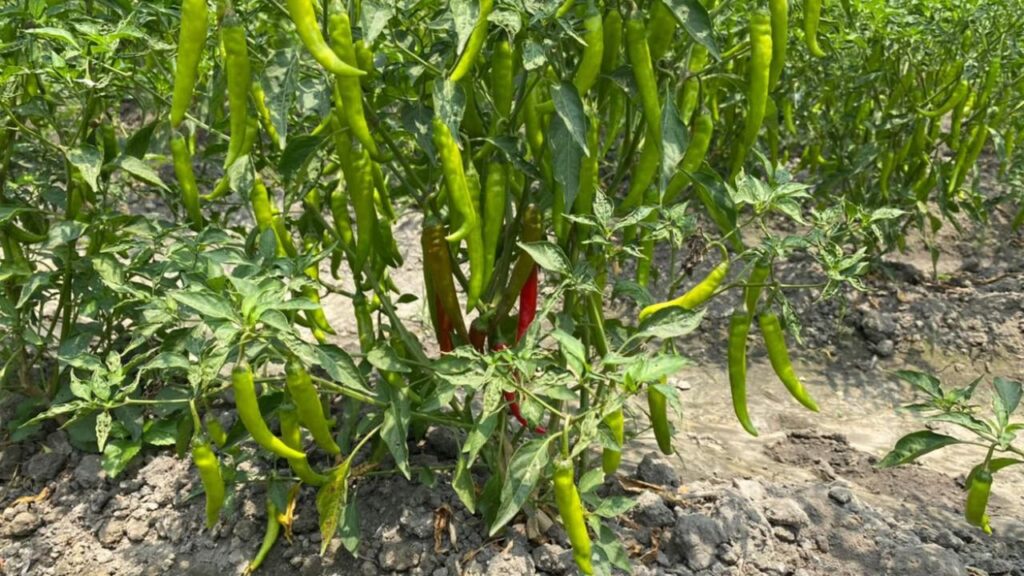
Among the new releases, KAU Thejaswini has been developed as a long-fruited chilli variety suitable for cultivation throughout Kerala. Developed by Sharada S., Associate Professor and Head of the Department of Vegetable Science at the College of Agriculture, Vellayani, the variety produces bushy plants with smooth, glossy fruits.
The fruits remain dark green during maturity before turning bright red upon ripening, making them attractive for both fresh and processed markets. The variety offers medium pungency, good consumer preference, and field tolerance against viral diseases and bacterial wilt.
With an average productivity of 32.5 tonnes per hectare, KAU Thejaswini is expected to provide higher returns while reducing crop losses due to disease.
Brahmi and Vetiver Receive Improved Varieties
KAU has also introduced KAU Medha, a new brahmi (Bacopa monnieri) variety developed by Ancy Joseph, Professor and Head of the Aromatic and Medicinal Plants Research Station at Odakkali.
The variety has been recommended particularly for central Kerala and combines high biomass production with increased levels of bacosides, the medicinal compounds responsible for brahmi’s therapeutic value. Under open and well-lit conditions, the crop produces 34–36 tonnes of fresh herbage and 5–6 tonnes of dried material per hectare, making it attractive for the medicinal plant industry.
Dr. Joseph has also developed KAU Sougandhika (ODV 27), an improved vetiver (ramacham) variety. Known for its aromatic roots and essential oil production, the new variety contains 1.4% essential oil, along with vigorous growth, profuse tillering, delayed flowering, and high root yield.
The variety produces 6.1–7.8 tonnes of dry roots per hectare and is recommended for cultivation in open areas of central Kerala, where it can support the expanding essential oil and fragrance industries.
Improved Ginger for Better Productivity
For spice growers, KAU has released KAU Cochin Pride, a new ginger variety developed by Nair Sunil Appukuttan, Assistant Professor in the Department of Plantation Crops and Spices at the College of Agriculture, Vellanikkara.
The variety retains the distinctive aroma and pungency associated with traditional Cochin ginger while offering improved levels of zingiberene and starch. It matures within 240–245 days and possesses resistance to rhizome rot, one of the major diseases affecting ginger cultivation.
Suitable for both sole cropping and intercropping in coconut plantations, the variety produces large rhizomes with excellent market appeal. It delivers an average yield of 36.3 tonnes per hectare and has been recommended particularly for dry ginger production in Kottayam and Idukki districts.
Export-Oriented Turmeric Variety
Another notable release is KAU Golden Finger (KAU AFT 31), an improved Alappy Finger turmeric variety also developed by Dr. Appukuttan with financial support from the Directorate of Arecanut and Spices Development, Kozhikode.
The variety is distinguished by its high curcumin content of 8.65%, deep orange flesh, and export-quality rhizomes. Maturing within 240–250 days, it produces 39–42 tonnes of fresh turmeric per hectare, making it one of the most productive turmeric varieties released by the university.
KAU has recommended its cultivation in Kottayam district, where it is expected to support both domestic processing industries and export markets.
Strengthening Kerala’s Agricultural Competitiveness
The release of these five improved crop varieties reflects Kerala Agricultural University’s continued commitment to developing region-specific technologies that address farmers’ needs. By combining higher yields, better quality, disease tolerance, and market-oriented traits, the new varieties are expected to enhance farm profitability while supporting the State’s horticulture, medicinal plant, and spice sectors.
As demand grows for premium-quality agricultural produce in domestic and international markets, these innovations could play an important role in improving Kerala’s agricultural competitiveness and creating new income opportunities for farmers.

Author: Shivam
Proficient Writer Contact: [email protected]