
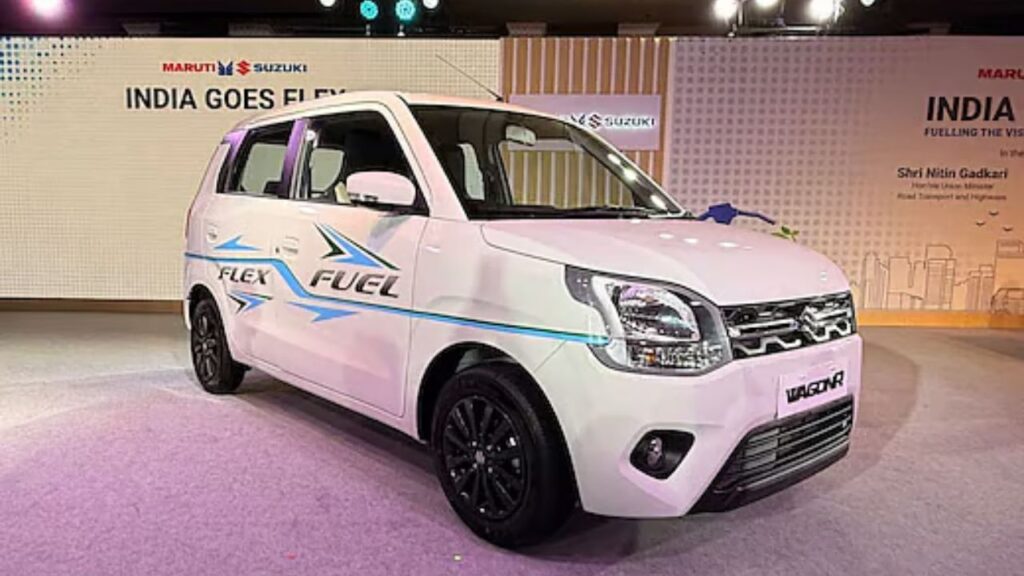

Maruti Suzuki India Limited has introduced the country’s first flex-fuel passenger vehicle, the WagonR Flex Fuel, marking a significant advancement in India’s efforts to promote cleaner transportation and reduce dependence on conventional fossil fuels. The launch represents a major step toward expanding the use of alternative fuels in the automotive sector and aligns with the government’s broader sustainability and energy security objectives.
The newly unveiled WagonR Flex Fuel is capable of operating on ethanol-petrol blends ranging from E20 to E100, making it the first mass-market passenger vehicle in India designed to run on 100 percent ethanol. The development comes at a time when India is accelerating its biofuel adoption strategy to reduce crude oil imports, cut carbon emissions, and support domestic agricultural production.
Maruti Suzuki stated that the vehicle has been developed in line with the government’s vision of increasing ethanol usage in the transport sector. Flex-fuel technology allows vehicles to operate on varying proportions of petrol and ethanol, offering consumers greater flexibility while contributing to environmental sustainability.
The launch event was attended by Union Minister for Road Transport and Highways Nitin Gadkari, who reiterated the government’s commitment to encouraging alternative fuel technologies. Speaking at the event, Gadkari emphasized the importance of diversifying fuel options to address environmental concerns and strengthen India’s energy independence.
The minister also disclosed that the government is exploring the possibility of introducing diesel blended with 15 percent isobutanol. According to him, such initiatives could play an important role in reducing emissions while expanding the range of cleaner fuel alternatives available to consumers and industries.
Gadkari urged automobile manufacturers to explore innovative solutions that would enable older vehicles to be converted into flex-fuel-compatible models. He suggested that such conversions, coupled with upgrades to stricter emission standards, could significantly contribute to reducing air pollution levels in urban areas. The move could also complement the government’s vehicle scrappage programme, which seeks to phase out older and more polluting vehicles from Indian roads.
Highlighting the growing importance of the automotive sector, Gadkari noted that India has emerged as the world’s third-largest automobile market. He stated that the industry continues to serve as a major contributor to manufacturing growth, employment generation, exports, and overall economic development. The minister added that cleaner fuel technologies and advanced mobility solutions would be critical to sustaining future growth in the sector.
Maruti Suzuki Managing Director and Chief Executive Officer Hisashi Takeuchi outlined the company’s long-term sustainability strategy during the launch. He said the automaker is actively investing in multiple clean-energy pathways to support India’s transition toward low-carbon mobility.
Apart from flex-fuel technology, the company is expanding its involvement in compressed biogas (CBG) initiatives and evaluating hydrogen-based transportation solutions. Takeuchi emphasized that a diversified approach to green mobility would help accelerate the adoption of environmentally friendly vehicles while addressing the country’s evolving energy requirements.
Partho Banerjee, Senior Executive Officer for Marketing and Sales at Maruti Suzuki, highlighted the company’s strong performance in the green mobility segment. He revealed that Maruti Suzuki accounted for nearly 50 percent of all green vehicles sold in India during the previous financial year, reflecting growing consumer acceptance of cleaner transportation options.
The company believes that expanding its portfolio of alternative fuel vehicles, including flex-fuel, CNG, biogas, and future hydrogen-powered models, will play a key role in supporting India’s clean mobility ambitions.
The launch of the WagonR Flex Fuel underscores the increasing collaboration between government and industry in promoting sustainable transportation. As India intensifies efforts to achieve energy security and lower emissions, flex-fuel vehicles are expected to emerge as an important component of the country’s evolving mobility landscape.

Author: Shivam
Proficient Writer Contact: [email protected]