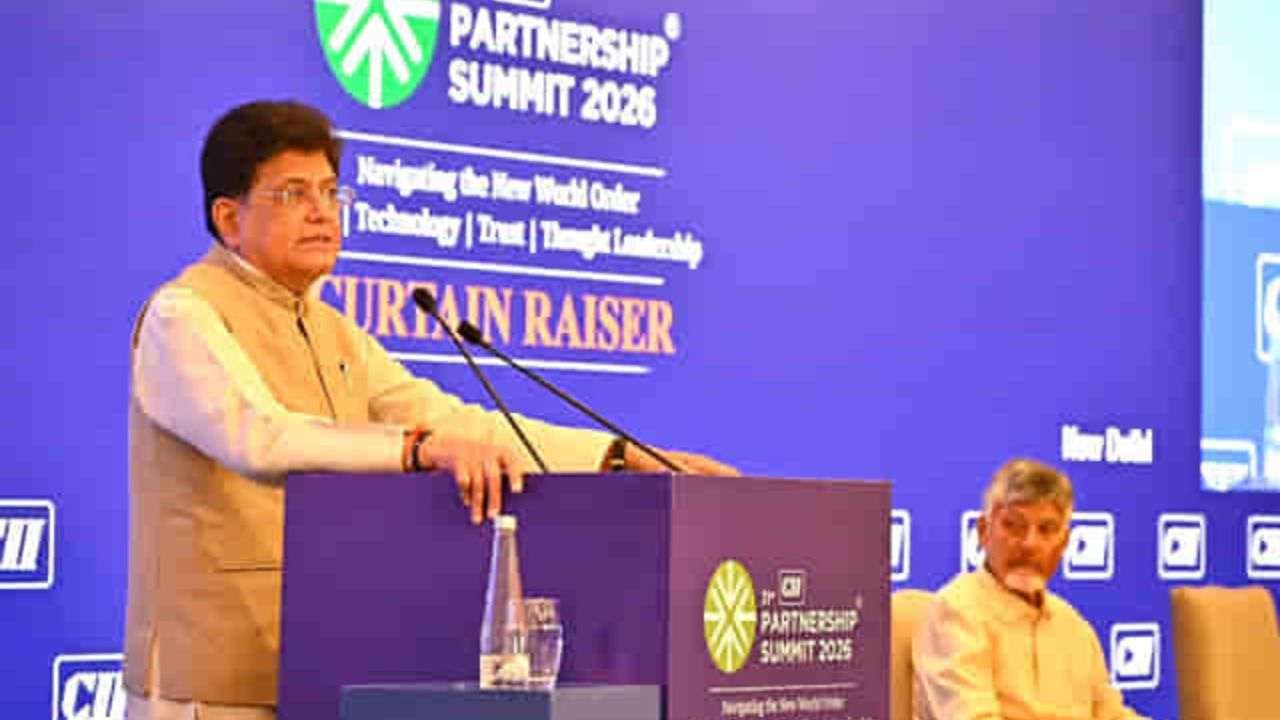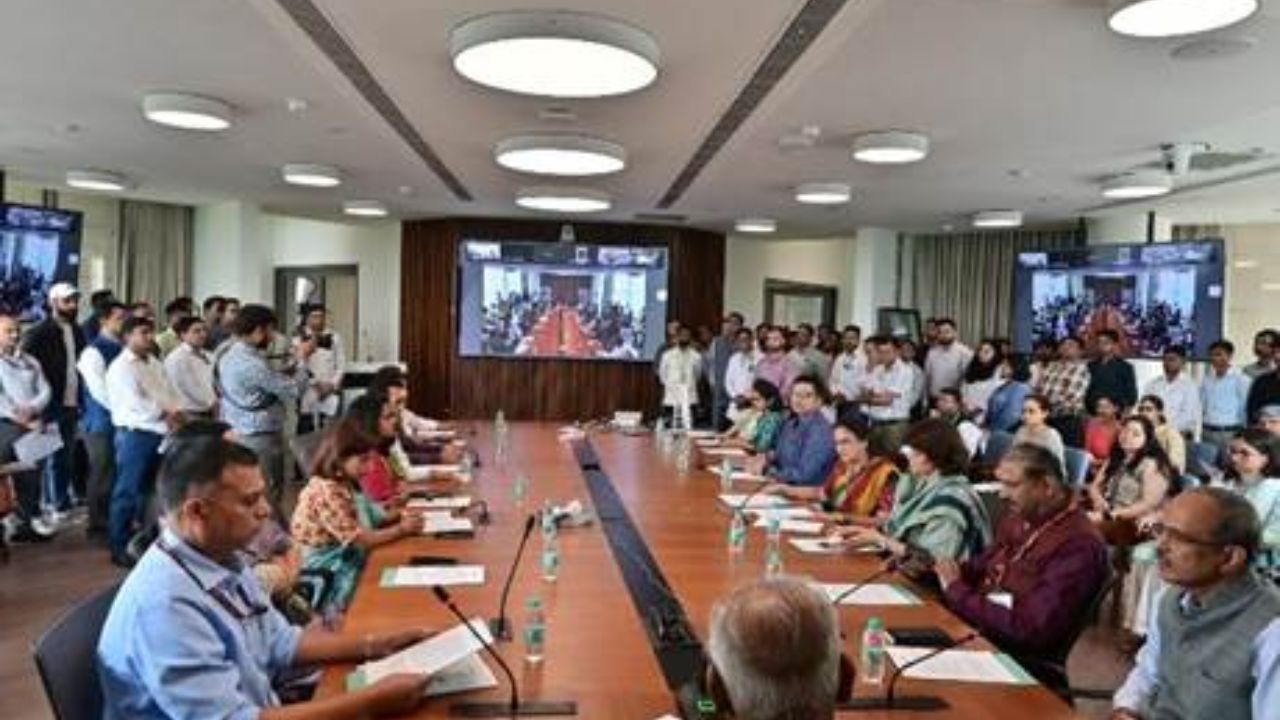
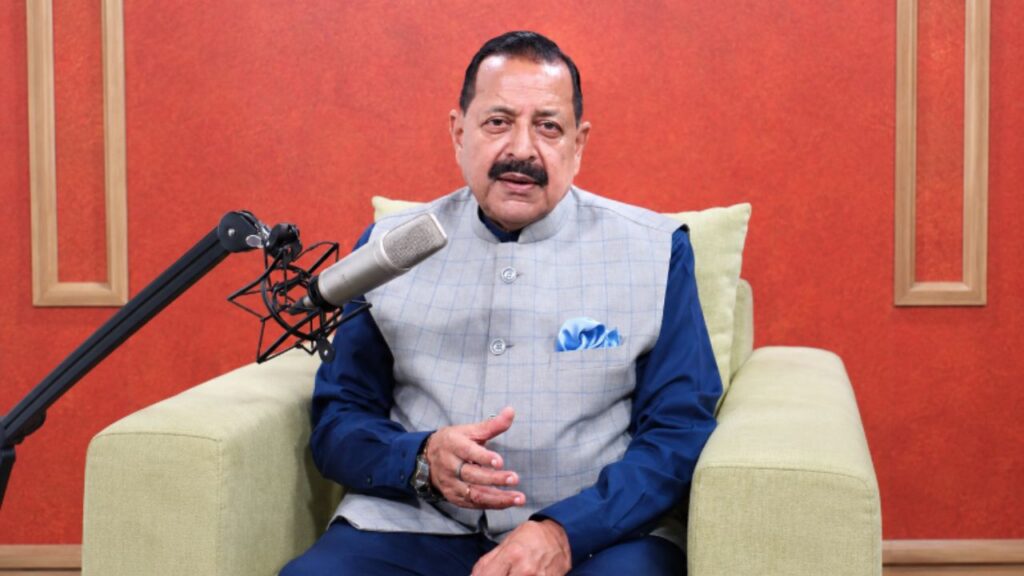

India’s science, technology and innovation ecosystem has witnessed a remarkable transformation over the past twelve years, emerging as a key driver of economic growth, national development and global competitiveness. Union Minister of State (Independent Charge) for Science & Technology, Earth Sciences, and Minister of State in the Prime Minister’s Office, Dr. Jitendra Singh, highlighted these achievements while addressing a press conference on “12 Years of Transformative Growth in Science, Technology and Innovation” at the CSIR Headquarters in New Delhi.
Speaking before senior scientists, government officials and media representatives, Dr. Singh emphasized that scientific advancements are no longer confined to laboratories but have become an integral part of everyday life. He noted that India’s development journey under the leadership of Prime Minister Narendra Modi has been significantly strengthened by the integration of science and technology into major government initiatives.
One of the most striking achievements highlighted by the Minister was the extraordinary growth of India’s bioeconomy. Valued at nearly USD 10 billion in 2014, the sector has expanded to more than USD 190 billion today and is projected to reach USD 300 billion by 2030. According to Dr. Singh, India has established itself as a global biotechnology hub through indigenous innovations in healthcare, diagnostics, genomics and biopharmaceuticals, supported by forward-looking policy frameworks such as the BioE3 initiative.
The Minister also pointed to significant advancements in healthcare technologies, including the development of affordable CAR-T cell therapy, next-generation antibiotics, precision medicine and genomic research. These innovations are strengthening India’s capacity to address both domestic and global health challenges.
Highlighting the evolving role of scientific institutions, Dr. Singh said organizations such as the Council of Scientific and Industrial Research (CSIR) have strengthened their engagement with industries, startups, farmers and local communities. Programmes like the Aroma Mission have enabled thousands of farmers, particularly in Himalayan regions, to diversify into high-value agricultural activities, generating new livelihood opportunities.
He also cited the success of steel slag road technology, which converts industrial waste into a valuable resource for infrastructure development. Roads constructed using this technology have demonstrated improved durability and lower maintenance costs, showcasing how scientific innovation can contribute to sustainable development while supporting economic growth.
Weather forecasting and climate services have also seen substantial progress. Dr. Singh described the modernization of the India Meteorological Department (IMD) as one of the major achievements of the past decade. The number of weather radars has increased from 17 in 2014 to nearly 50 today, with plans to add 50 more under Mission Mausam. Forecasting coverage has expanded from around 300 cities to nearly 1,700 locations, while advanced systems such as localized nowcasting are helping citizens, farmers and disaster management authorities make timely decisions.
India’s space sector has emerged as another success story. The Minister noted that policy reforms and increased private-sector participation have transformed the space ecosystem, leading to a rapid rise in the number of space startups. The landmark success of Chandrayaan-3, which made India the first country to achieve a soft landing near the Moon’s south pole, underscored the nation’s growing scientific capabilities and international standing.
Looking ahead, Dr. Singh outlined ambitious goals, including the establishment of the Bharatiya Antariksh Station by 2035 and an Indian crewed lunar mission by 2040. He said ongoing reforms and collaborations are creating new opportunities for innovation and entrepreneurship in the space sector.
The Minister also highlighted recent policy reforms in nuclear energy, including the opening of the sector to private participation. He said the move has attracted strong domestic and international interest and is expected to accelerate investment and technological development in strategic energy infrastructure.
Concluding the event, Dr. Jitendra Singh stated that India’s achievements over the last twelve years demonstrate how science, technology and innovation have become central to the nation’s growth story. He said these advancements are strengthening strategic capabilities, improving the quality of life for citizens and creating new opportunities as India moves towards its vision of becoming a developed nation under Viksit Bharat 2047.