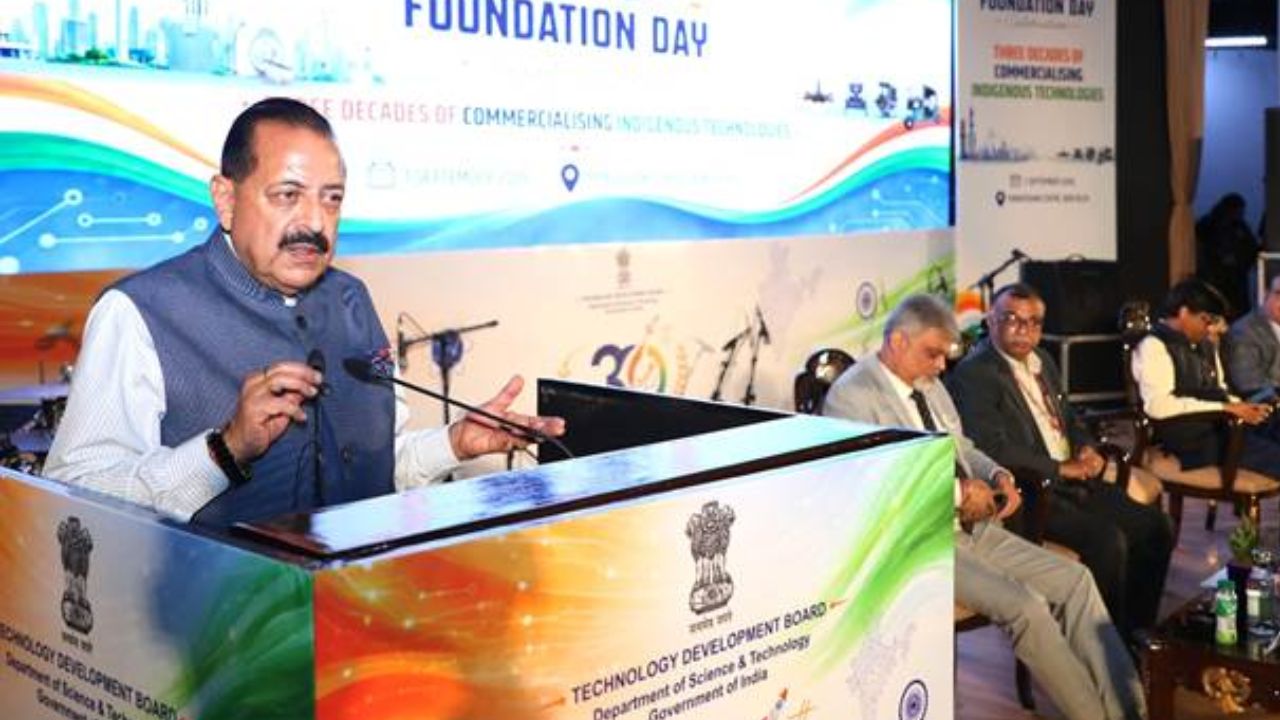

Union Minister for Science and Technology Dr. Jitendra Singh has called for stronger awareness and wider outreach regarding the government’s ₹1 lakh crore Research, Development and Innovation (RDI) Fund, stressing that potential beneficiaries must clearly understand its objectives, eligibility criteria and funding mechanism.
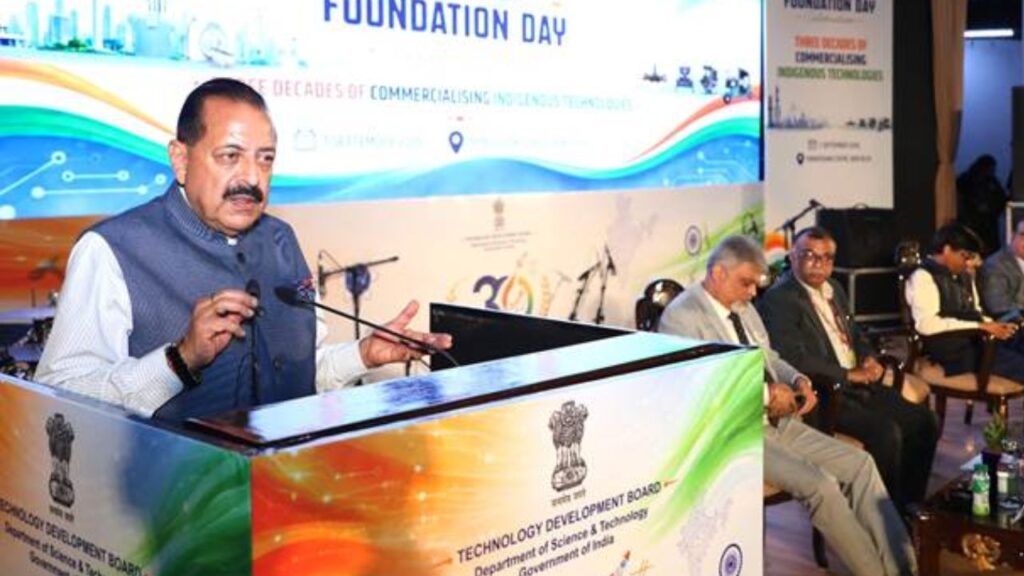
Addressing the 30th Foundation Day celebrations of the Technology Development Board (TDB), the Minister said the growing number of applications for support under the initiative makes it important to communicate its purpose more effectively among companies, researchers and other stakeholders.
Need to Clarify Purpose of RDI Fund
Dr. Jitendra Singh noted that thousands of applications are being received, including from applicants who may not fully understand the nature of the RDI Fund. He cautioned that the initiative should not be viewed as another conventional financing option or simply as a loan facility.
According to the Minister, the Fund is designed to encourage technology development and research that can strengthen India’s scientific capabilities while contributing to broader economic growth. He stressed that greater clarity would help ensure that assistance reaches applicants who are genuinely aligned with the objectives of the programme.
He also underlined that the funding mechanism already incorporates transparency and safeguards. While the government remains open to suggestions for strengthening these safeguards, he said that improved communication and outreach are equally important.
TDB’s Role in Building Awareness
The Minister said the Technology Development Board should go beyond providing financial support and also help educate potential beneficiaries about government initiatives designed for technology development and innovation.
He observed that technological and policy landscapes are evolving rapidly, requiring stakeholders to adapt their approach and mindset. Continuous learning, curiosity and the ability to make effective use of the opportunities created through government policy will be increasingly important.
Dr. Jitendra Singh recalled that TDB was established with the objective of taking technologies beyond laboratories and helping transform them into commercially viable products, solutions and enterprises. Such efforts, he said, can improve ease of living, generate employment and contribute to national economic development.
From Laboratory Innovation to Market Success
The Minister credited the government’s sustained emphasis on science, technology and innovation over the past 12 years with helping create what he described as a period of scientific renaissance in India. He pointed to the country’s ability to develop and deliver cost-effective technological solutions as an important part of this transformation.
He also highlighted the expanding start-up ecosystem, stressing that entrepreneurship is no longer limited to major technology hubs such as Bengaluru and Hyderabad. More than half of India’s start-ups, he noted, originate from smaller towns. He also emphasised that entrepreneurship is not restricted to younger people and pointed to the growing participation of women.
Dr. Jitendra Singh further stressed the importance of private-sector participation in strengthening India’s innovation ecosystem. He cited developments in areas such as space, biotechnology and the nuclear sector as examples of a broader approach towards opening opportunities for private players.
TDB to Help Build Global Technology Champions
The Minister appreciated TDB’s contribution to supporting the transition of technologies from laboratories to the marketplace. Referring to examples such as Skyroot and BotLab, he said the Board’s willingness to move beyond a narrowly bureaucratic approach had helped it become an important component of India’s emerging technology ecosystem.
Looking ahead, he said TDB should support technology development across different stages, including both early-stage innovation and later-stage commercialisation. He noted that the RDI Fund is providing support at a later stage, beginning at Technology Readiness Level 4 (TRL4), with TDB among the first institutions to roll out proposals under the initiative.
Dr. Jitendra Singh also called for greater resource pooling and institutional integration, saying that collaboration among government bodies, research institutions and industry would be essential for building a stronger innovation ecosystem.
Focus on Technology Self-Reliance
The Minister said TDB has developed a model of public-private transition and technology self-reliance that could become an important pillar of India’s economy. Such a model, he added, could benefit not only India but also countries across the Global South.
He also highlighted the importance of cultivating a culture of philanthropy in research, observing that supporting scientific work that ultimately benefits humanity should be encouraged as a meaningful social contribution.
Dr. Jitendra Singh said the first 30 years of TDB were focused on creating a bridge between the laboratory and the market. The next three decades, he said, should aim at building globally competitive technology champions from India.
The Minister expressed confidence that continued support for innovation, entrepreneurship, public-private collaboration and technology self-reliance would contribute significantly to India’s development journey towards Viksit Bharat@2047.

Author: Shivam
Shivam Dwivedi is a senior journalist with extensive experience in research-driven journalism, policy communication, and multi-platform storytelling. His areas of interest include international relations, defence, science & technology, education, urban development, agriculture, spirituality, and environmental sustainability. His work focuses on in-depth analysis, public discourse, and impactful narratives across governance and development sectors, with a strong commitment to the Sustainable Development Goals (SDGs). Contact: [email protected]