
Researchers at the International Advanced Research Centre for Powder Metallurgy and New Materials (ARCI), Hyderabad, have developed a crack-free bi-metallic structure using advanced laser-based additive manufacturing technology, marking a significant breakthrough in the production of high-performance industrial components. The innovation is expected to reduce the use of expensive nickel-based superalloys, lower import dependence, and improve the efficiency of components used in aerospace, nuclear, and power generation sectors.
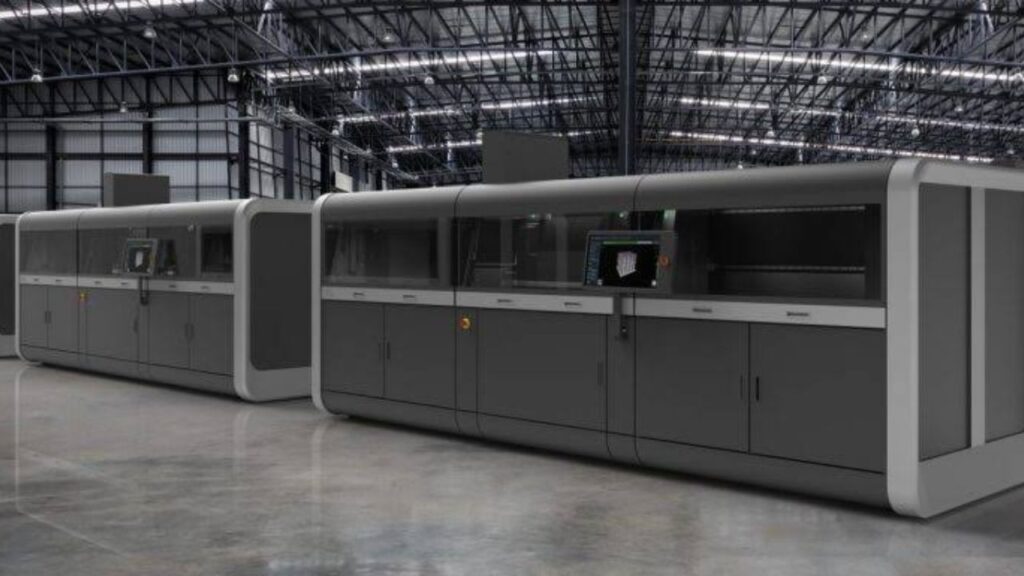
The research, carried out by ARCI, an autonomous institute under the Department of Science and Technology (DST), demonstrates the successful joining of stainless steel (SS316L) and the nickel-based superalloy Inconel 718 (IN718) using the laser-based powder bed fusion (PBF-LB/M) additive manufacturing process.
Addressing a Long-Standing Manufacturing Challenge
Joining stainless steel with nickel-based superalloys has traditionally posed significant challenges. The two materials differ in their chemical composition, melting temperatures, and thermal expansion characteristics. Conventional welding methods often result in defects such as cracking, porosity, segregation of alloying elements, and the formation of brittle intermetallic compounds, limiting their reliability in critical applications.
Although dissimilar metal joining is widely practiced, producing a crack-free interface with strong mechanical properties through additive manufacturing has remained difficult. The ARCI research overcomes this hurdle by creating a robust metallurgical bond between the two materials without visible defects.
Laser-Based Additive Manufacturing Delivers Strong Results
Using a laser-based powder bed fusion system, the researchers fabricated SS316L directly onto a surface-ground IN718 plate. The resulting interface showed no visible cracks or porosity, demonstrating excellent bonding between the two materials.
Mechanical testing further confirmed the quality of the interface. The bi-metallic structure exhibited a peak hardness of around 310 HV at the junction and achieved an ultimate tensile strength of 550 ± 30 MPa. During tensile testing, failure occurred on the softer stainless steel side rather than at the interface, highlighting the exceptional integrity of the bond.
The study was conducted by researchers S. Narayanaswamy, Gururaj Telasang, Nokeun Park, and Ravi Bathe. Their findings have been published in the journal Progress in Additive Manufacturing.
Reducing Superalloy Usage and Import Dependence
Nickel-based superalloys such as Inconel are widely used because of their ability to withstand extreme temperatures and mechanical stress. However, these materials are expensive and often imported, increasing manufacturing costs.
The newly developed technology enables engineers to use Inconel only in portions of a component exposed to high temperatures, while employing stainless steel in relatively cooler sections. This targeted material placement can significantly reduce the overall consumption of costly superalloys without compromising performance.
Such optimized material usage is expected to lower production costs and contribute to India’s efforts to strengthen self-reliance in advanced manufacturing technologies.
Wide Industrial Applications
The innovation has considerable potential across multiple high-performance industries.
In thermal power plants, especially ultra-supercritical coal-fired units, components such as boiler tubes and heat exchangers are exposed to varying temperatures and stresses. The new bi-metallic structures can enhance durability while reducing material costs.
The technology is also well suited for nuclear reactors, where equipment must simultaneously resist corrosion and maintain strength under prolonged exposure to high temperatures. Similarly, the oil and gas industry can benefit from components capable of operating reliably in harsh environments.
In aerospace applications, the design flexibility offered by additive manufacturing presents additional advantages. A component can be engineered with stainless steel serving as the primary load-bearing section, while Inconel is strategically incorporated in regions subjected to extreme thermal loads, such as near engines or exhaust systems.
Expanding the Scope of Additive Manufacturing
Beyond joining two metals, additive manufacturing allows designers to create complex internal geometries that are difficult or impossible to produce through conventional manufacturing methods. This capability enables precise placement of high-performance materials exactly where they are needed, improving efficiency while reducing weight and production costs.
The successful development of a crack-free SS316L-IN718 interface represents an important step in advancing multi-material additive manufacturing for critical engineering applications. As industries increasingly seek lighter, stronger, and more cost-effective components, the technology developed by ARCI could play a key role in supporting next-generation manufacturing across India’s strategic sectors while enhancing the country’s technological capabilities.