
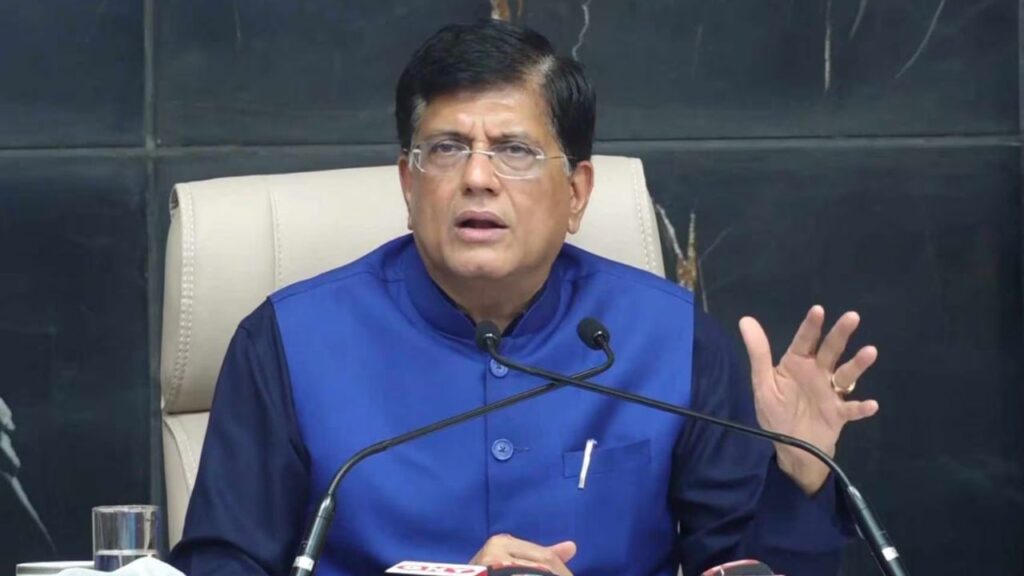

Union Minister for Commerce and Industry Piyush Goyal has outlined an ambitious roadmap to transform India into a leading global toy manufacturing hub, stressing quality, innovation, sustainability and export-led growth while assuring strong government support for the sector.
Addressing the 17th Toy Biz International B2B Exhibition 2026, organised by the Toy Association of India (TAI) in New Delhi, the Minister highlighted the significant transformation of the Indian toy industry over the past few years, attributing its progress to policy interventions under the Make in India initiative and the National Toy Action Plan launched in 2020.
To strengthen product quality, Goyal announced that the Government will establish modern testing facilities in toy manufacturing clusters through the Bureau of Indian Standards (BIS), National Test House and other government laboratories. He urged industry stakeholders to identify the testing equipment required to ensure Indian-made toys comply with the highest domestic and international safety standards.
The Minister encouraged micro, small and medium enterprises (MSMEs) to scale up their operations, saying every micro enterprise should aspire to become small, every small enterprise should grow into a medium enterprise and every medium enterprise should aim to become a large business. He noted that export turnover is excluded while determining MSME status, enabling exporters to expand without immediately losing MSME benefits.
Highlighting the need for a skilled workforce, Goyal called upon industry leaders to establish skill development centres in partnership with Industrial Training Institutes (ITIs). He proposed creating Centres of Excellence under a public-private partnership model to support testing, product development, design innovation and advanced manufacturing practices.
He also stressed the importance of adopting modern manufacturing technologies such as Computer-Aided Design (CAD), Computer-Aided Manufacturing (CAM) and CNC machining. According to the Minister, integrating these technologies into production will improve precision, efficiency and product quality, enabling Indian manufacturers to compete more effectively in international markets.
Emphasising quality as the foundation of global competitiveness, Goyal said manufacturers must focus on superior finishing, safe materials, quality stitching, durable construction and high-grade paints. He suggested introducing batch-wise testing for durability, paint quality, finishing and electronic components to strengthen consumer confidence and help build globally recognised Indian brands.
The Minister said India should capitalise on the estimated US$120 billion global toy market by leveraging recent Free Trade Agreements (FTAs). Referring to the nine FTAs concluded under the leadership of Prime Minister Narendra Modi, he said these agreements provide Indian exporters with access to several developed and high-income markets.
He informed industry representatives that the India-UK Free Trade Agreement will become operational from 15 July, while zero-duty access is already available across Europe. He urged manufacturers to immediately explore opportunities in the United Kingdom and other European countries, including Germany, France, Italy, Spain and Portugal, where premium-quality products can command higher prices.
Goyal also encouraged toy manufacturers to send business delegations to countries covered under India’s FTAs, participate in international trade exhibitions and directly engage with overseas retailers, supermarkets and e-commerce platforms. He assured support through the Export Promotion Mission and suggested establishing overseas warehousing facilities to facilitate faster deliveries and improve global market access.
Calling for greater self-reliance, the Minister urged the industry to strengthen domestic production of motors, electronics, dies and moulds used in toy manufacturing. He said building a robust domestic supply chain would reduce costs, improve competitiveness and enhance India’s manufacturing capabilities.
On quality regulation, Goyal reaffirmed the Government’s commitment to maintaining Quality Control Orders (QCOs) while protecting domestic manufacturers against unfair imports and dumping. He advised businesses facing such challenges to approach the Directorate General of Trade Remedies (DGTR), DPIIT and other relevant authorities for timely support.
Highlighting the industry’s impressive growth, the Minister said toy exports have increased by 239 per cent over the last four years, while imports have declined by 32 per cent. He noted that imports now account for only about ₹2,500–3,000 crore of India’s approximately ₹18,000 crore toy market, with domestic manufacturers meeting the majority of demand.
The Minister said over 50 toy clusters have been established across the country and nearly 21,000 MSME units are engaged in toy manufacturing, including contract production for both Indian and international brands. However, he cautioned against complacency and urged manufacturers to continuously improve quality, branding and innovation.
The exhibition showcased more than 400 Made-in-India toy brands, attracted over 15,000 business visitors and witnessed participation from representatives of more than 50 countries, reflecting the growing global interest in India’s expanding toy manufacturing sector.

Author: Shivam
Proficient Writer Contact: [email protected]