
The CSIR-National Institute of Science Communication and Policy Research (CSIR-NIScPR) successfully conducted a three-day Skill Training Programme on “Basics of Koha Software” from June 10 to 12, 2026, at its Satsang Vihar campus in New Delhi. The initiative was aimed at enhancing professional expertise in open-source library automation and equipping participants with practical knowledge of Integrated Library Management Systems (ILMS).
The programme focused on Koha, one of the world’s most widely adopted open-source library management platforms. A total of 33 participants representing academic institutions, research organizations, and libraries from across India attended the training, reflecting the growing demand for digital library management solutions and automation skills in the information sector.
The training programme was coordinated by Ms. Meetali Bharti, Nodal Principal Investigator (PI), Mr. Salim Ansari, Co-Principal Investigator (Co-PI), and Mr. Mukesh A. Pund, Chief Scientist and Head of the Training Division at CSIR-NIScPR.
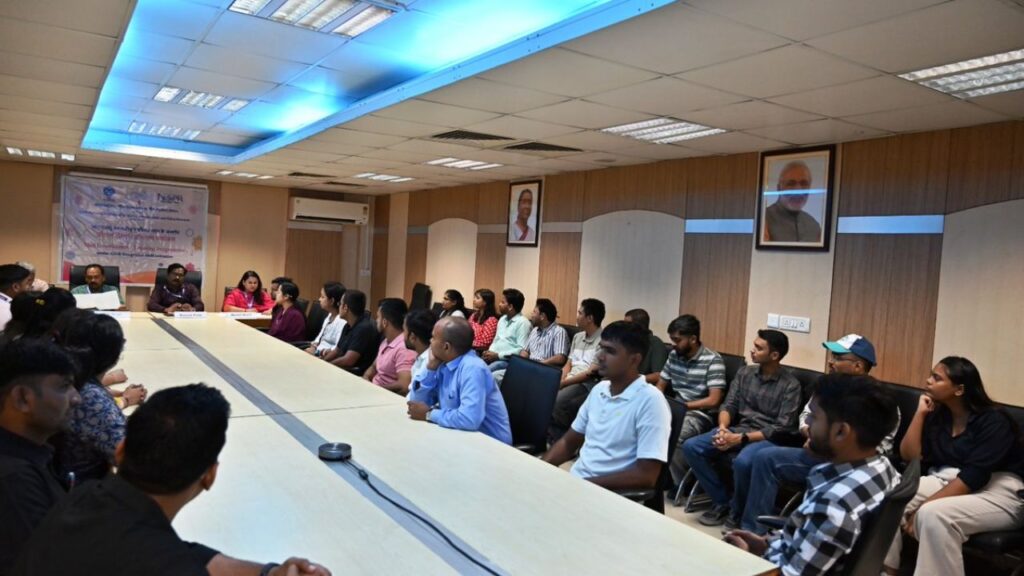
The inaugural session was held on June 10, where Ms. Meetali Bharti welcomed the participants and provided an overview of the programme. She emphasized the importance of continuous skill development in the rapidly evolving field of digital library technologies and highlighted the role of open-source software in modernizing library operations.
Addressing the gathering, Mr. Mukesh A. Pund outlined the objectives of the training programme and stressed the increasing need for library professionals to acquire competencies in automation technologies. He noted that platforms such as Koha have become essential tools for improving operational efficiency, resource management, and user accessibility in libraries.
Mr. C.B. Singh, Chief Scientist at CSIR-NIScPR, also addressed the participants and shared insights into the transformative role of open-source technologies in knowledge management. He highlighted how Koha has emerged as a reliable and cost-effective solution for libraries seeking to automate their services and enhance information accessibility.
Over the course of three days, participants underwent intensive theoretical and practical training sessions designed to provide a comprehensive understanding of Koha software and related technologies. The curriculum covered a broad range of topics, including the fundamentals of open-source software, Koha architecture and functionalities, Linux installation, software deployment, system administration, catalogue management, patron management, circulation processes, and report generation.
Hands-on exercises formed a key component of the programme, enabling participants to gain practical experience in configuring Koha systems, managing bibliographic records, handling user services, and generating customized reports. Interactive sessions encouraged participants to engage directly with the software and explore real-world applications of library automation technologies.
The technical sessions were led by Mr. Mukesh A. Pund and Mr. Salim Ansari, both of whom shared their extensive expertise in the implementation and effective utilization of Koha in academic and research libraries. Their practical demonstrations and guidance helped participants understand the operational aspects of deploying and managing the software in diverse institutional settings.
The programme concluded with a valedictory session on June 12. Dr. Naresh Kumar, Chief Scientist at CSIR-NIScPR, addressed the participants and interacted with them regarding their learning experiences. He underscored the growing significance of digital library systems and open-source solutions in strengthening knowledge management frameworks and supporting the evolving needs of educational and research institutions.
Participants appreciated the comprehensive structure of the training and the opportunity to gain hands-on exposure to a globally recognized library management platform. The programme equipped them with practical skills that can be directly applied in library automation projects and digital transformation initiatives.
Through such capacity-building programmes, CSIR-NIScPR continues to play a vital role in promoting professional excellence in library and information services. The institute’s efforts support the wider adoption of open-source technologies and contribute to the modernization of libraries and knowledge institutions across the country, reinforcing their role in the digital era.