
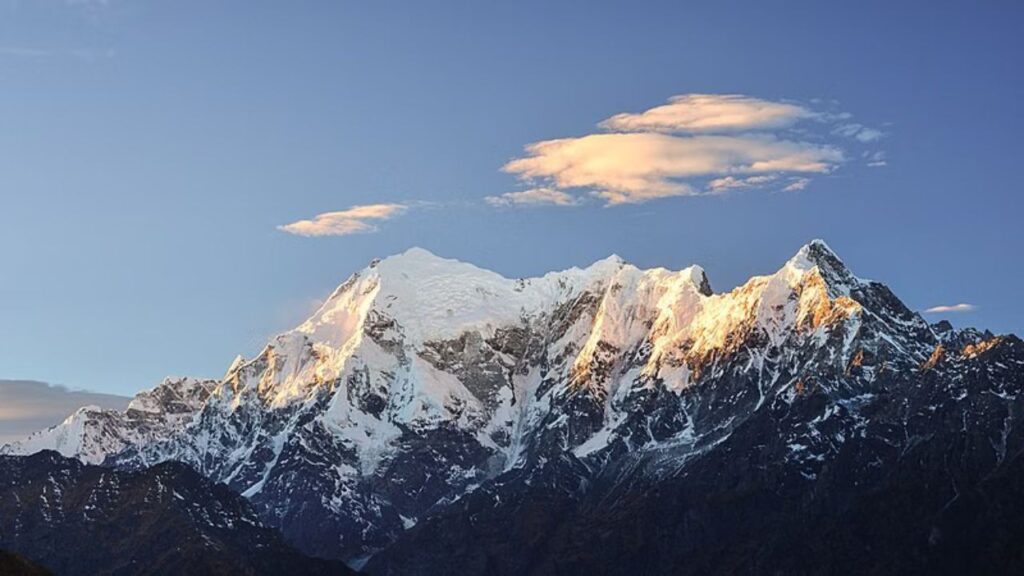

A new scientific study has revealed that even the remote and seemingly pristine regions of the Himalayas are no longer insulated from the effects of air pollution. Researchers have detected measurable levels of non-methane hydrocarbons (NMHCs) in Munsyari, a high-altitude Himalayan town, highlighting the growing influence of human activities on fragile mountain ecosystems.
The research was conducted by scientists from the Aryabhatta Research Institute of Observational Sciences (ARIES), an autonomous institute under the Department of Science and Technology (DST). The team carried out year-long measurements of NMHCs between 2022 and 2023 to understand the sources, seasonal patterns, and potential impacts of these pollutants in the region.
NMHCs are a group of reactive gases released from sources such as fuel combustion, vehicle exhaust, industrial activities, and domestic energy use. Although they do not contain methane, these compounds play a crucial role in atmospheric chemistry by contributing to the formation of ground-level ozone and secondary aerosols, both of which can affect air quality, climate, and human health.
Munsyari, located in the Kumaon region of Uttarakhand, was selected for the study because of its unique geographical setting. Known for its scenic beauty and increasing tourist footfall, the town offers an ideal location to examine how local human activities and long-range transport of pollutants influence air quality in a high-altitude environment.
The study found clear seasonal variations in NMHC concentrations. Pollution levels were comparatively lower during the winter and monsoon seasons, while significantly higher concentrations were recorded during spring and autumn. According to the researchers, these fluctuations are linked to changes in weather conditions, atmospheric circulation, and human activities throughout the year.
Detailed analysis identified household fuel use, particularly liquefied petroleum gas (LPG) and diesel consumption, as major contributors to NMHC emissions in the region. Vehicular traffic associated with tourism and local transportation was another significant source. In addition, ongoing construction activities were found to contribute to deteriorating air quality despite the area’s remote location.
Of particular concern was the presence of aromatic hydrocarbons such as benzene and xylene. These compounds were found to play a major role in the formation of secondary pollutants, especially ozone. Ground-level ozone is known to damage vegetation, reduce agricultural productivity, and adversely affect respiratory health. It also contributes to climate-related impacts in the lower atmosphere.
The researchers compared the findings from Munsyari with data from other locations in northern India. The results showed that NMHC concentrations in Munsyari were higher than those measured at another high-altitude site, Nainital. However, pollution levels remained lower than those observed in nearby urban centres such as Haldwani and Delhi, where industrial activity, dense traffic, and population growth significantly influence air quality.
Despite the relatively moderate pollution levels, the study raises concerns about the long-term implications for both environmental and public health. Researchers noted that while immediate health risks remain limited, prolonged exposure to benzene could pose serious dangers. The estimated lifetime cancer risk associated with benzene exposure was found to exceed internationally accepted safety thresholds, underscoring the need for continued vigilance.
The findings provide strong evidence that human-induced pollution is increasingly reaching remote Himalayan regions through a combination of local emissions and regional atmospheric transport. Experts warn that these sensitive mountain ecosystems are particularly vulnerable to environmental changes and require focused protection measures.
The study emphasizes the importance of continuous air quality monitoring in Himalayan regions and calls for targeted pollution-control strategies. Researchers believe that sustainable tourism practices, cleaner transportation systems, and better management of local emission sources will be essential to preserving the ecological health of these mountain environments.
As development and tourism expand across the Himalayas, the study serves as a timely reminder that even the most remote corners of nature are not immune to the growing challenge of air pollution.

Author: Shivam
Proficient Writer Contact: [email protected]