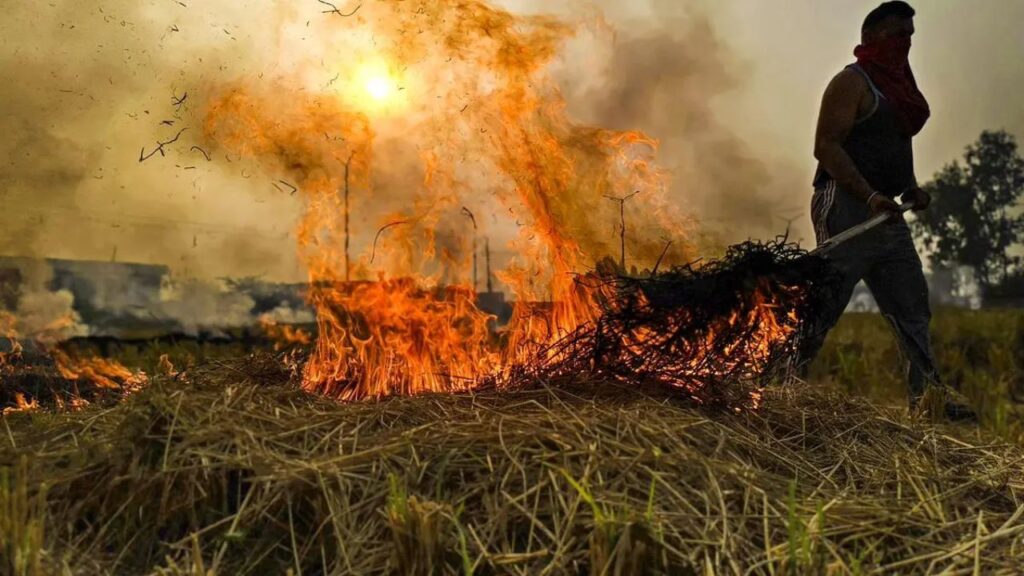

In a significant move aimed at curbing air pollution and promoting sustainable agriculture, the Centre on Wednesday reviewed the progress of crop residue management and outlined a comprehensive strategy to tackle stubble burning ahead of the upcoming paddy harvesting season.
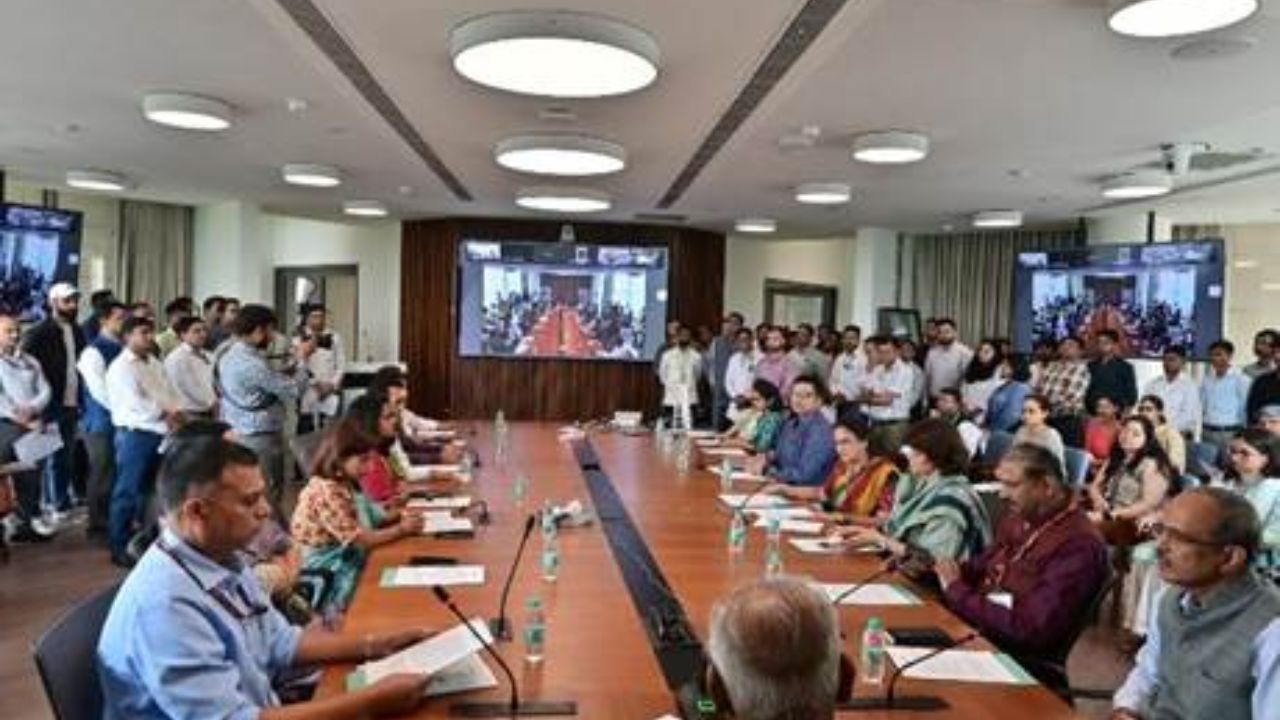
A high-level inter-ministerial meeting on stubble management was jointly chaired by Union Agriculture and Farmers’ Welfare Minister Shivraj Singh Chouhan and Union Environment, Forest and Climate Change Minister Bhupender Yadav at Krishi Bhavan in New Delhi. Senior officials from the Ministry of Agriculture, Ministry of Environment, Indian Council of Agricultural Research (ICAR), and other concerned agencies participated in the discussions.
Addressing the meeting, Chouhan stressed that stubble burning poses a serious threat to both the environment and agriculture. He noted that the practice not only contributes to air pollution but also damages soil health by destroying beneficial microorganisms and insects. The resulting decline in soil fertility affects agricultural productivity, while the smoke generated has severe consequences for public health.
The meeting reviewed the implementation of the Crop Residue Management (CRM) Scheme, which was launched in 2018-19 to address the issue of crop residue burning. According to the Agriculture Minister, the Centre has provided financial assistance of more than ₹4,266 crore to Punjab, Haryana, Uttar Pradesh, Madhya Pradesh and ICAR under the scheme. The support has enabled the distribution of over 3.54 lakh crop residue management machines and the establishment of more than 43,500 Custom Hiring Centres across the participating states.
For the financial year 2026-27, the government has earmarked ₹544.15 crore under the CRM scheme. The first instalment of ₹272.07 crore has already been released to facilitate preparations before the harvesting season.
The states have set ambitious targets for the current year, including the distribution of over 46,000 additional crop residue management machines, establishment of 910 new Custom Hiring Centres and development of 141 stubble supply chain projects. The meeting also reviewed state action plans for managing an estimated 2.76 crore tonnes of paddy residue expected during the upcoming harvest.
Officials highlighted that coordinated efforts by the Centre, state governments, ICAR institutions, Krishi Vigyan Kendras, local authorities and farmers have led to a notable decline in stubble burning incidents in recent years. However, both ministers emphasized the need for sustained action to achieve long-term solutions.
A major focus of the meeting was the expansion of ex-situ utilisation of crop residue. The ministers underlined the importance of increasing the use of stubble in biomass-based power generation, compressed biogas (CBG) production, ethanol manufacturing and pellet-making industries. Such initiatives, they said, can create a stable market for crop residue while transforming agricultural waste into a valuable economic resource.
The Centre also directed states to complete the distribution of machinery before August 2026, ensure maximum utilisation of available equipment and strengthen Custom Hiring Centres. Extensive awareness campaigns targeting farmers have also been planned to encourage adoption of sustainable residue management practices.
Another key issue discussed was the promotion of short-duration and low-water-consuming paddy varieties. Chouhan said the government is working through ICAR and state agricultural institutions to discourage the cultivation of long-duration paddy crops and encourage alternative varieties. This would help increase the gap between paddy harvesting and wheat sowing, providing farmers with more time to manage crop residue without resorting to burning.
The Agriculture Minister also announced that a “Stubble Protection Force” would be activated in at least 70 tehsils across 14 districts of the National Capital Region (NCR) to strengthen monitoring and enforcement efforts during the harvesting season.
Both ministers urged the Central Pollution Control Board (CPCB) to assess available stubble stocks and evaluate utilisation capacities of pellet and briquette units, CBG plants and thermal power stations using biomass co-firing.
Reaffirming the government’s commitment to eliminating stubble burning, Chouhan said the Centre is pursuing a multi-pronged approach that combines mechanisation, technological innovation, industrial utilisation of residue, farmer awareness and coordinated institutional efforts. The ultimate goal, he said, is to protect the environment, preserve soil fertility and enhance farmers’ incomes through sustainable agricultural practices.

Author: Shivam
Proficient Writer Contact: [email protected]