
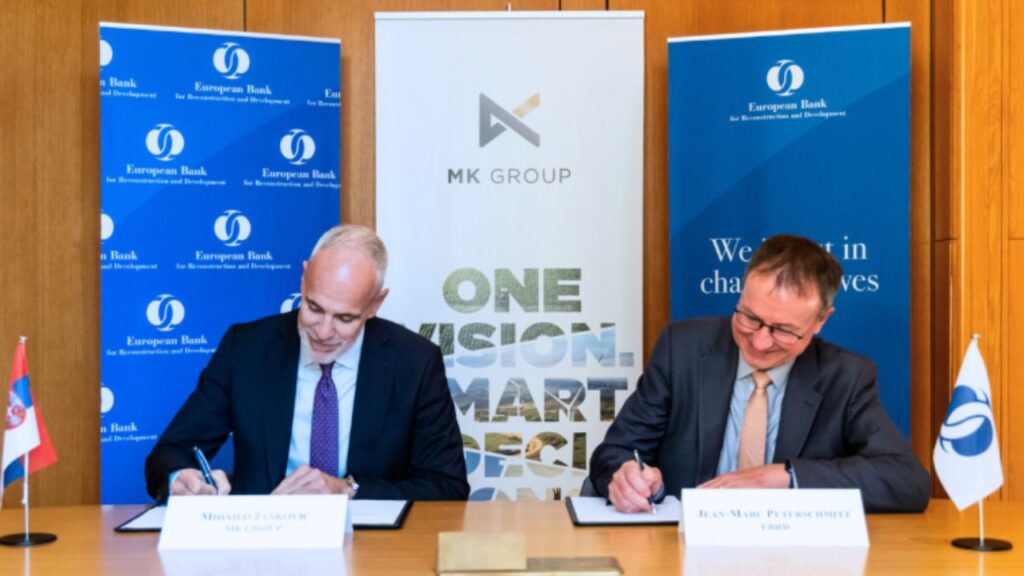

The European Bank for Reconstruction and Development (EBRD), in partnership with the European Union (EU), has introduced a new €100 million portfolio risk-sharing facility aimed at improving access to finance for micro, small, and medium-sized enterprises (MSMEs) in Serbia. The initiative is expected to strengthen the country’s private sector by enabling businesses to secure the capital needed for expansion, innovation, and long-term growth.
The facility has been launched in collaboration with ProCredit Bank Serbia, one of the country’s leading lenders to small and medium-sized businesses. Through this arrangement, the EBRD will provide an unfunded portfolio guarantee of up to €50 million, covering half of the credit risk associated with a new loan portfolio worth up to €100 million. The mechanism is designed to encourage increased lending to MSMEs while helping the bank maintain a balanced risk profile and efficient capital allocation.
The new financing initiative comes at a time when many smaller businesses continue to face challenges in obtaining affordable credit, particularly those located outside Serbia’s major urban centers. By reducing lending risks, the program is expected to improve financial access for enterprises operating in underserved regions, thereby supporting broader economic development across the country.
A significant component of the facility is the support provided by the European Union through the European Fund for Sustainable Development Plus (EFSD+). The EU-backed first-loss risk coverage enhances the EBRD’s ability to assume additional lending risks and encourages greater financing for business segments that traditionally face barriers in accessing capital. This collaboration reflects the shared commitment of the EBRD and the EU to strengthening economic opportunities and fostering sustainable growth in Serbia.
The program also places a strong emphasis on financial inclusion. Special attention will be given to women-led and youth-led businesses, which often encounter greater difficulties in securing financing. By expanding access to credit for these groups, the initiative aims to create more opportunities for entrepreneurship, job creation, and business development.
Sustainability is another central objective of the facility. At least 30 percent of the loan portfolio is expected to support green investments. Eligible projects may include energy-efficiency upgrades, renewable energy installations, climate change mitigation measures, and environmentally sustainable business practices. These investments are expected to help companies lower operating costs, reduce environmental impacts, and improve competitiveness in an increasingly sustainability-focused global economy.
Commenting on the agreement, Aleksandra Vukosavljevic, EBRD Director for Financial Institutions covering Western Balkans and Eastern Europe, highlighted the importance of combining the Bank’s risk-sharing tools with EU support under the EFSD+ framework. She noted that the partnership creates strong incentives for increased lending to Serbia’s small business sector while promoting investments that contribute to environmental sustainability and economic resilience.
Igor Anić, Chairman of the Management Board of ProCredit Bank Serbia, described the agreement as an important step in expanding support for Serbian entrepreneurs. He emphasized that the facility would enable the bank to increase lending activities, particularly for businesses located outside major cities and for companies investing in environmentally friendly technologies and sustainable business models.
ProCredit Bank Serbia has maintained a long-standing partnership with the EBRD and has earned recognition for its focus on responsible banking and support for productive business investments. The latest agreement further reinforces the bank’s role in facilitating economic development and supporting the growth of Serbia’s entrepreneurial ecosystem.
The initiative also highlights the EBRD’s continued commitment to Serbia’s development. Since beginning operations in the country, the Bank has invested more than €10 billion across sectors including infrastructure, financial services, private-sector development, competitiveness, and green transition projects. With the launch of this new facility, the EBRD and the EU are expected to play an even greater role in helping Serbian businesses access finance, adopt sustainable practices, and build long-term economic resilience in an evolving global marketplace.
Also Read: MSMEs Emerging as Key Pillar of India’s Defence Manufacturing Ecosystem: Rajnath Singh

Author: Shivam
Proficient Writer Contact: [email protected]