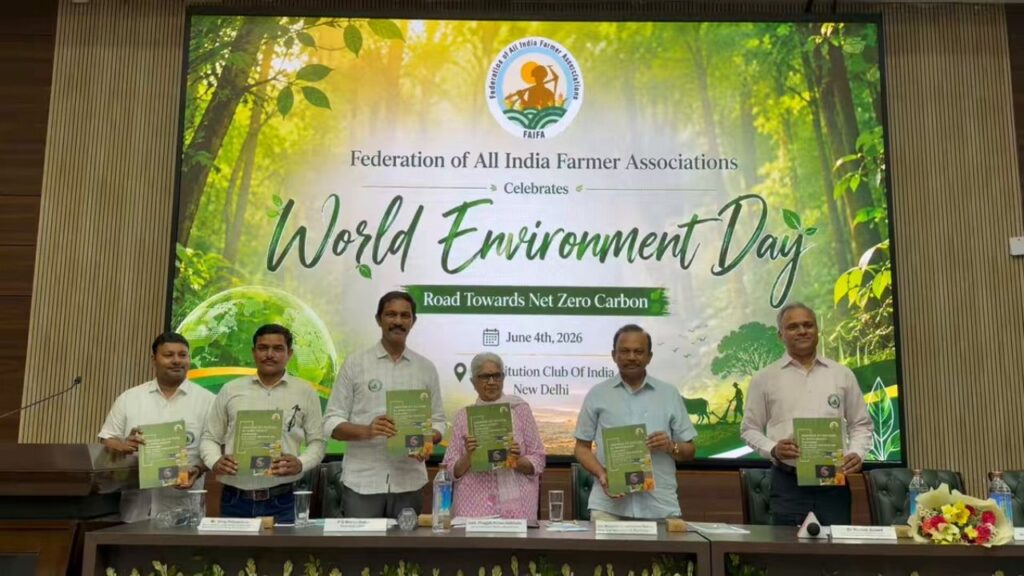

As concerns grow over the impact of El Niño on India’s agricultural sector, a new report by the Foundation of All India Farmer Associations (FAIFA) has called for a comprehensive strategy combining sustainable farming practices with digital technologies to strengthen climate resilience and safeguard farmer livelihoods.
Released on Thursday, the report highlights the urgent need for reforms in agricultural practices as India faces the prospect of a weaker monsoon in 2026. The warning comes after the India Meteorological Department (IMD) projected below-normal rainfall due to El Niño conditions, raising fears of lower crop yields, rising food prices, and economic disruptions.
El Niño, a periodic warming of sea surface temperatures in the eastern Pacific Ocean, has long been associated with erratic weather patterns across the globe. In India, it often results in reduced monsoon rainfall, affecting agriculture, which remains heavily dependent on seasonal precipitation.
According to the FAIFA report, India must pursue multiple transitions to build a climate-resilient agricultural system. These include reducing excessive reliance on chemical fertilizers and pesticides, restoring soil health, diversifying cropping patterns, improving water management, and expanding sustainable and nature-based farming practices.
The report stresses that climate variability is increasingly placing pressure on agricultural resources, leading to challenges such as soil degradation, groundwater depletion, and declining productivity. It notes that resource-intensive cultivation methods may become increasingly unsustainable as weather patterns become more unpredictable.
To address these challenges, FAIFA has recommended strengthening crop advisory systems and leveraging digital public infrastructure to provide farmers with timely, location-specific guidance. The report identifies emerging technologies such as artificial intelligence (AI), AgriStack, remote sensing, and data-driven advisory platforms as critical tools for promoting climate-smart agriculture.
These technological interventions can help farmers make informed decisions regarding crop selection, irrigation scheduling, pest management, and weather-related risks. By enabling more precise and efficient use of resources, digital tools can reduce costs while improving farm productivity and resilience.
Water conservation has also emerged as a key focus area in the report. FAIFA advocates wider adoption of precision irrigation systems and greater use of solar energy solutions to support sustainable agricultural practices. Efficient water use, the report argues, will be essential in mitigating the effects of prolonged dry spells and irregular rainfall associated with El Niño events.
At the same time, the report points to the growing importance of allied sectors such as livestock, fisheries, and agro-processing in strengthening rural incomes. These sectors provide alternative revenue streams for farming households and can help reduce vulnerability to crop losses caused by adverse weather conditions.
FAIFA President P. S. Murli Babu emphasized practical measures that farmers can adopt to prepare for potential rainfall shortages. He suggested the construction of small temporary ponds, implementation of rainwater-harvesting systems, and diversification of crops to improve resilience against climatic uncertainties.
“We have advised farmers to create temporary water storage structures, adopt diversified cropping systems, and recharge groundwater through rainwater harvesting to effectively tackle the challenges posed by El Niño,” Babu said.
The report also echoes recommendations made by several agricultural experts who advocate regenerative agriculture as a long-term solution to climate-related risks. Regenerative practices focus on improving soil organic carbon, enhancing water-retention capacity, and reducing dependence on external chemical inputs.
Experts believe healthier soils are better equipped to withstand drought conditions and irregular rainfall, enabling farms to maintain productivity even during adverse weather events. Such approaches can also contribute to environmental sustainability while supporting long-term agricultural growth.
The FAIFA report concludes that India’s agricultural future will depend on striking a balance between productivity and sustainability. It argues that strengthening farmer-centric policies, improving resource efficiency, and embracing technological innovation will be essential to building a resilient farming sector capable of withstanding climate shocks.
As the country prepares for another potentially challenging monsoon season, the report underscores that sustainable farming practices and digital transformation are no longer optional but necessary pillars of India’s agricultural resilience strategy.