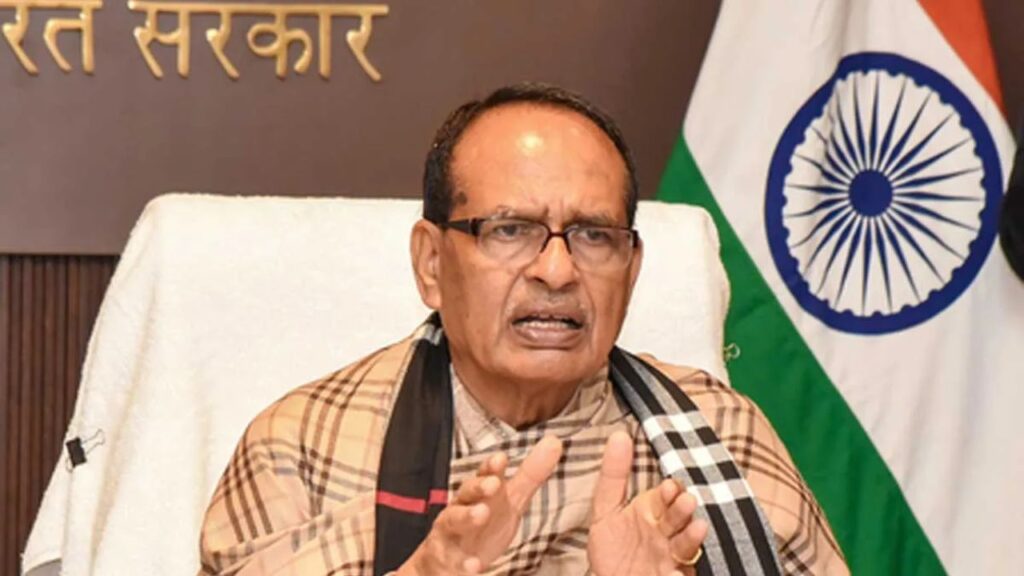

Union Agriculture and Farmers’ Welfare Minister Shivraj Singh Chouhan on Wednesday chaired a high-level review meeting in New Delhi to assess the country’s preparedness for the upcoming Kharif season amid forecasts of a potentially below-normal Southwest Monsoon and the possibility of El Niño conditions developing later this year.
The meeting, attended by officials from the Department of Agriculture and Farmers’ Welfare and other concerned agencies, focused on rainfall projections, water availability, seed reserves, crop strategies, state-level preparedness and contingency planning. Chouhan directed both central departments and state governments to intensify coordination and complete all precautionary measures well in advance to safeguard farmers and agricultural production.
Addressing concerns over weather-related uncertainties, the minister assured farmers that there was no reason for panic. He said the government was fully prepared to tackle any challenges arising from adverse climatic conditions and was working proactively to minimise the impact on agricultural activities.
According to information shared during the meeting, the India Meteorological Department (IMD) has indicated that the 2026 Southwest Monsoon could be below normal, with seasonal rainfall expected to be around 90 per cent of the Long Period Average. The forecast also suggests a possibility of El Niño conditions emerging during the monsoon season, which could influence rainfall distribution across various regions.
Chouhan emphasised that while weather forecasts are being monitored closely, the government has already initiated measures to mitigate potential risks. He highlighted the role of improved water management, irrigation expansion, technological interventions and climate-resilient farming practices in reducing the impact of rainfall deficiencies.
A major positive factor discussed during the review was the healthy status of reservoir storage across the country. Officials informed the minister that current reservoir levels stand at 127.01 per cent of the normal storage for this period, providing a strong buffer for irrigation needs during the Kharif season.
The minister stressed that contingency plans should not remain confined to paperwork but must be implemented effectively at the district level. States have been instructed to identify vulnerable regions that may experience low rainfall or prolonged dry spells and ensure continuous monitoring and timely interventions.
He also underlined the importance of district-specific planning, taking into account local water resources, cropping patterns, seed availability and rainfall conditions. Such tailored approaches, he said, would enable authorities to provide practical solutions to farmers facing weather-related challenges.
The government is placing special emphasis on area-specific and crop-specific strategies. Farmers will be encouraged to adopt alternative crops, delayed sowing practices and drought-resistant varieties wherever necessary. Chouhan said timely access to advisories, quality seeds and agricultural inputs would be critical in maintaining productivity during uncertain weather conditions.
On seed availability, officials informed the meeting that stocks for both Kharif and Rabi seasons are adequate. In addition, a National Seed Reserve has been established to address emergency requirements. The minister instructed states to ensure that only certified and high-quality seeds reach farmers and that short-duration and low-water-consuming crop varieties remain readily available for resowing if needed.
The meeting also highlighted the role of rural development programmes in strengthening water conservation efforts. Chouhan called for accelerated implementation of moisture conservation measures, water harvesting projects, farm ponds and other local infrastructure aimed at improving water retention in agricultural areas.
He further directed officials to prepare action plans for possible dry spells lasting two to four weeks, including provisions for life-saving irrigation, resowing support and alternative cropping options. Special attention was also given to pest and disease management, with instructions issued for advance monitoring and timely dissemination of advisory services.
The minister stressed the need to strengthen farmer communication systems through mobile alerts, advisories and digital platforms. He called for closer integration among departments dealing with weather forecasting, irrigation, seeds, pest management and rural development to ensure swift and coordinated responses.
Reiterating the government’s commitment to protecting farmers’ interests, Chouhan said the objective was not merely to assess risks but to ensure timely action that would help maintain farmers’ confidence and ensure a smooth and successful Kharif season despite possible climatic challenges.