
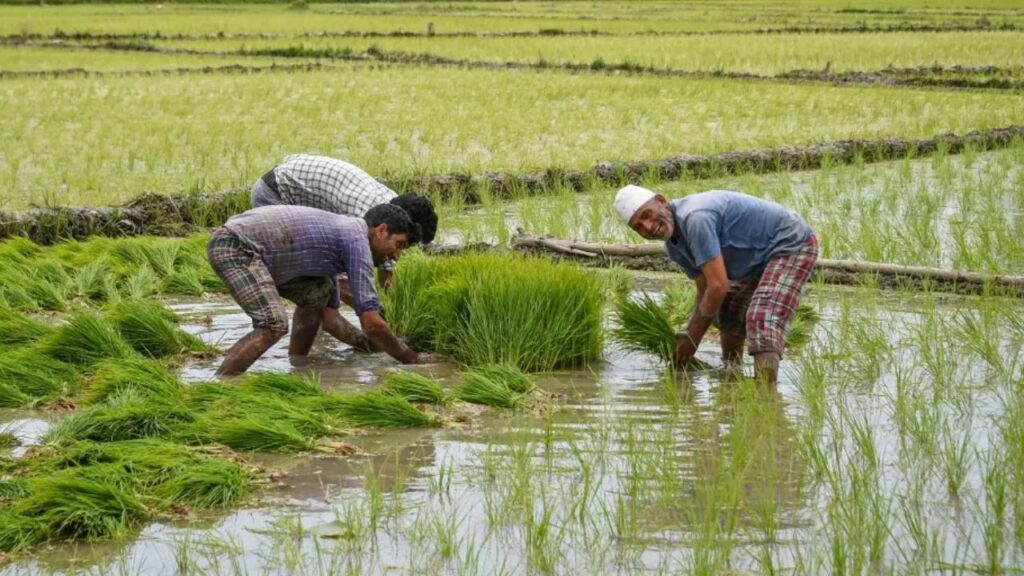

The Union Government has intensified its preparedness to safeguard the agriculture sector as the southwest monsoon continues to face uncertainty due to the possible influence of El Niño. Despite an uneven start to the rainy season, the Centre has activated a multi-layered response involving contingency planning, continuous weather monitoring, seed reserves, and financial assistance to help farmers cope with any adverse conditions.
Speaking after a high-level review meeting in New Delhi, Union Minister for Agriculture and Farmers’ Welfare and Rural Development Shivraj Singh Chouhan said the government had been preparing for the possibility of erratic rainfall well before the onset of the monsoon. He emphasized that the administration is working proactively to minimize the impact on agricultural production and protect farmers’ livelihoods.
Rainfall Situation Shows Signs of Improvement
The Minister noted that while June witnessed a significant rainfall deficit of 33 percent, weather conditions have improved during July. The overall rainfall shortfall has narrowed to 24 percent following better precipitation across several regions of the country.
He also highlighted that the number of rainfall-deficient districts has reduced considerably, falling from 262 to 178 as recent showers brought relief to many agricultural areas. According to the Minister, the government remains optimistic that rainfall activity will strengthen further in the coming weeks, creating favourable conditions for Kharif crop cultivation.
Close Monitoring Across Key Agricultural States
The Centre is closely tracking the evolving monsoon situation in major agricultural states, including Maharashtra, Madhya Pradesh, Gujarat, Uttar Pradesh, Rajasthan, Karnataka, Bihar, Jharkhand, Telangana, Andhra Pradesh, Punjab, West Bengal, and Odisha.
Officials are regularly reviewing rainfall patterns, crop progress, and field conditions to ensure timely intervention wherever required. The government expects that improved rainfall during July will accelerate sowing operations and reduce the impact of the delayed monsoon onset.
Kharif Sowing Lags Behind Last Year
According to the Agriculture Ministry, Kharif sowing has been completed over 350.85 lakh hectares so far. However, this remains nearly 91.95 lakh hectares lower than the area covered during the corresponding period last year.
The delayed arrival of monsoon rains has particularly affected the sowing of soybean and cotton, two important Kharif crops that depend heavily on timely rainfall. To address this challenge, agricultural experts have advised farmers to shift towards crops that require less water and mature within a shorter period.
Farmers have been encouraged to cultivate maize, bajra, and moong, which are considered better suited to delayed rainfall conditions and can help reduce production risks.
Preparations Began Months Before Monsoon
The government stated that preparations for a possible weather disruption began in April itself. Working in collaboration with the Indian Council of Agricultural Research (ICAR), detailed district-level contingency plans were prepared for vulnerable regions and shared with state governments well in advance.
In addition, the nationwide ‘Khet Bachao Abhiyan’ organised during June served as a major awareness campaign. More than 1.24 lakh programmes were conducted across the country, reaching over 80 lakh farmers with information on climate-resilient farming practices and crop management strategies.
Seed Reserve and Financial Support Strengthened
To ensure uninterrupted sowing, the Centre has maintained a national reserve of approximately 1.75 lakh quintals of seeds. This reserve is intended to guarantee timely availability of quality seeds in areas affected by delayed or deficient rainfall.
Financial assistance measures have also been strengthened. The ongoing Kisan Credit Card campaign has gained momentum, with over 94,000 applications approved out of nearly 1.14 lakh applications received by the end of June.
The government is also encouraging greater enrolment under the Pradhan Mantri Fasal Bima Yojana, enabling farmers to receive insurance protection against crop losses arising from adverse weather events.
Robust Monitoring Mechanism in Place
Keeping the possibility of El Niño in focus, the government has established a comprehensive monitoring framework involving the El Niño Monitoring Cell, the Crop Weather Watch Group, state-level control rooms, and designated officials.
These agencies are continuously tracking rainfall patterns, sowing progress, crop health, and market developments to ensure prompt policy decisions and field-level support.
The Agriculture Ministry reiterated that while weather uncertainties remain, the government has put in place adequate resources, planning mechanisms, and institutional coordination to support farmers throughout the Kharif season and mitigate the impact of any adverse climatic conditions.

Author: Shivam
Proficient Writer Contact: [email protected]