
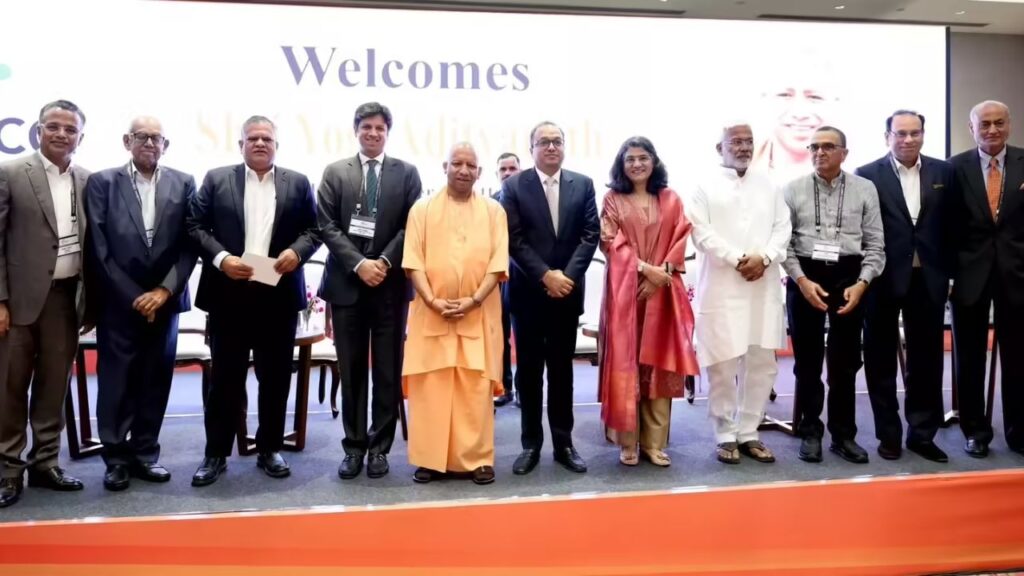

Uttar Pradesh has undergone a remarkable industrial transformation over the past nine years, evolving from a predominantly agrarian economy into one of India’s fastest-growing manufacturing and services destinations. Backed by policy reforms, infrastructure expansion, and a strong focus on investment promotion, the state is positioning itself as a leading industrial hub in the country.
Since 2017, the state government has implemented a series of initiatives aimed at creating a business-friendly environment and accelerating industrial development. The strategy has focused on strengthening traditional industries while attracting investments in emerging sectors such as electronics manufacturing, data centres, electric vehicles, aerospace, and defence production.
A key pillar of Uttar Pradesh’s industrial growth is its vast network of Micro, Small and Medium Enterprises (MSMEs). The state is home to more than 96 lakh MSME units, the largest concentration in India, providing employment to over 1.4 crore people. These enterprises play a crucial role in manufacturing, handicrafts, textiles, food processing, leather goods, engineering products, and service industries.
Traditional industrial clusters continue to drive economic activity across the state. Varanasi remains renowned for its silk sarees and handloom products, Lucknow for Chikankari and Zari-Zardozi embroidery, Bhadohi for carpets, Moradabad for brassware, and Kanpur and Agra for leather products and footwear. MSME-led exports account for a substantial share of Uttar Pradesh’s overseas trade, contributing significantly to the state economy.
To support local industries and artisans, the government launched the One District One Product (ODOP) programme, which promotes unique products from each district. The initiative has helped strengthen branding, improve product quality, enhance market access, and boost exports of traditional products such as Banarasi silk, brassware, glassware, terracotta, leather goods, and Kala Namak rice.
Ease of doing business reforms have also played a major role in attracting investors. The state’s digital single-window platform, Nivesh Mitra, has simplified approvals, clearances, and licensing procedures through an integrated online system. The latest version, Nivesh Mitra 3.0, incorporates artificial intelligence-based monitoring tools, real-time tracking, and investor assistance services. Regulatory reforms have further reduced compliance burdens, including the removal of most minor criminal provisions under several state laws.
Investment promotion efforts have delivered substantial results through large-scale investor summits and implementation-focused Ground Breaking Ceremonies (GBCs). The Global Investors Summit held in Lucknow in 2023 attracted investment proposals worth nearly ₹40 lakh crore across sectors ranging from manufacturing and renewable energy to logistics, tourism, and information technology. Subsequent GBCs have facilitated the implementation of thousands of projects, translating investment commitments into industrial activity and employment opportunities.
The state has also witnessed significant growth in foreign investment. FDI inflows increased sharply between 2017 and 2025 compared to the preceding period, reflecting growing investor confidence. The number of registered factories has more than doubled over the past decade, highlighting rapid industrial expansion.
Infrastructure development remains central to Uttar Pradesh’s industrial strategy. New industrial parks, logistics hubs, textile parks, pharma parks, and specialised manufacturing zones are being established across multiple districts. The Yamuna Expressway region is emerging as a major investment destination with projects including a Film City, Toy Park, Apparel Park, and Logistics Hub.
Meanwhile, the Uttar Pradesh Defence Industrial Corridor has become one of the state’s flagship initiatives. Spread across six nodes, the corridor has attracted numerous investment agreements and is expected to generate substantial employment while strengthening India’s defence manufacturing capabilities.
With continued policy support, infrastructure upgrades, and investor-friendly reforms, Uttar Pradesh is steadily transforming into a major economic powerhouse, reinforcing its position as a key driver of India’s industrial growth story.
Also Read: KVIC Marks International Yoga Day with Mass Yoga Session and Tree Plantation Drive in New Delhi

Author: Shivam
Proficient Writer Contact: [email protected]